
Bitcoin News Today: Bitcoin Dips on Hashrate Slide, Contrarian Signals Emerge: VanEck
Bitcoin's price slid nearly 9% in December as volatility surged to over 45%, the highest level since April 2025, according to VanEck. The asset manager highlighted a sharp drop in Bitcoin's hashrate-down 4% over the past month-which marked the most significant decline since April 2024. Miner stress and shifting market dynamics have sparked renewed debate about Bitcoin's near-term trajectory.
On-chain metrics have also softened, with reduced transaction fees, fewer new wallet addresses, and lower hash rates signaling cautious behavior among traders and users. Despite this, corporate treasuries have been net buyers, accumulating 42,000 BTC between mid-November and mid-December-the largest such purchase since mid-2025.
Meanwhile, BitcoinBTC-- ETP holdings dropped by 120 basis points, reflecting a shift in investor sentiment as some stepped back amid rising uncertainty. These developments highlight a mixed market environment with long-term holders maintaining positions while shorter-term traders sell off.
Why the Hashrate Drop Matters
VanEck analysts have identified the recent hashrate contraction as a potential contrarian signal. 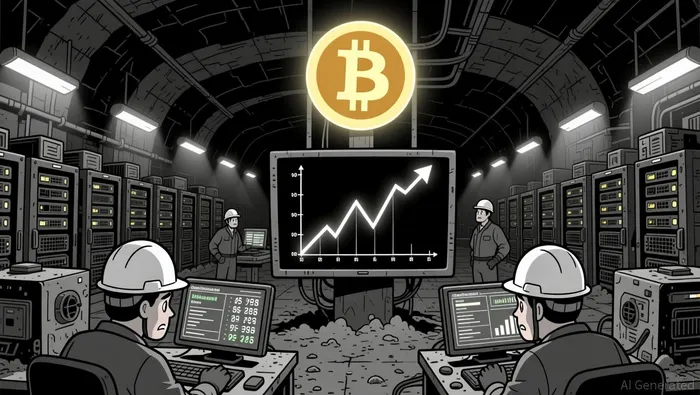 Historical data since 2014 shows Bitcoin's forward returns have been stronger following periods of declining hashrate. For example, 90-day returns were positive 65% of the time after a 30-day hashrate drop, compared to 54% when hashrate increased. The firm also noted that extended hashrate declines often precede stronger Bitcoin price performance. Over 180 days, negative 30-day hashrate growth led to positive returns in 77% of cases, with an average gain of 72%. By contrast, gains averaged only 48% when hashrate rose. These patterns suggest that miner capitulation-when less profitable operations shut down-can signal a market bottom rather than a prolonged downturn.
Risks to the Outlook
Despite these bullish indicators, challenges remain. Miner profitability has weakened, with breakeven electricity costs for S19 XP miners dropping from $0.12 in December 2024 to $0.077 by mid-December 2025. This decline reflects reduced efficiency and tighter margins as energy costs rise and Bitcoin prices fall.
In China's Xinjiang region, 1.3 gigawatts of mining capacity was reportedly shut down, potentially removing up to 10% of global hashpower. This exodus of mining activity highlights structural pressures in the industry, as operators seek more cost-effective solutions or shift energy toward higher-margin workloads, such as AI computing.
What This Means for Investors
Corporate and institutional behavior has diverged during the recent sell-off. While Bitcoin ETP holdings fell, digital asset treasuries added 42,000 BTC, driven largely by Strategy, which accounted for 29,400 of those purchases. This trend underscores a growing preference for direct on-chain accumulation over exchange-traded products.
Long-term holders remain relatively stable, with balances for coins held more than five years showing little change. In contrast, medium-term investors-those with holdings of one to five years have sold off significant portions of their positions, reflecting uncertainty. This contrast suggests that while short-term traders are reacting to price weakness, long-term conviction remains strong.
Technical indicators also suggest potential stabilization. Bitcoin's 30-day RSI fell to around 32 near the end of November, signaling an oversold condition. Perpetual futures basis rates also dropped to 3.7–5%, showing reduced speculative leverage in the market.
Looking Ahead
VanEck's GEO framework-assessing global liquidity, ecosystem leverage, and on-chain activity-points to tentative signs of recovery. Despite weak on-chain metrics and high volatility, the firm believes the market is in a "healthy reset" rather than a prolonged downturn.
Investors are also watching the broader context, including regulatory shifts and geopolitical developments. The U.S. recently announced new tariffs on Chinese semiconductors, which could reshape energy allocation and affect Bitcoin's mining landscape. Meanwhile, countries like Russia and Japan continue to support mining as a strategic use of energy resources as reported in recent developments.
For now, Bitcoin's price remains under pressure, having fallen below $88,000. However, historical patterns and on-chain behavior suggest a potential rebound could be on the horizon if miner stress continues to intensify.






Comentarios
Aún no hay comentarios