
Bitcoin News Today: Bitcoin's $73k-$84k Pain Zone: Capitulation or Deeper Turmoil?
Bitcoin's recent volatility has intensified speculation about a potential market bottom, with analysts pointing to a critical price range dubbed the "max-pain zone" between $73,000 and $84,000. This threshold, tied to cost bases of major institutional players like BlackRock's IBIT ETF ($84,000) and MicroStrategy's purchases ($73,000), has emerged as a focal point for whether capitulation has already occurred or if further declines loom.
Bitwise Research Head André Dragosch argues that BitcoinBTC-- is nearing a region where selling pressure from large holders could accelerate, but also where deep-value buyers may step in. He cited historical patterns where institutional cost bases often coincide with cycle lows, noting that the current "max-pain zone" reflects psychological and liquidity stress points for major investors. This view aligns with data showing 3.5% of total ETF assets under management flowing out in the past month, signaling waning short-term confidence despite stablecoin reserves rising to $72 billion-a potential indicator of sidelined capital.
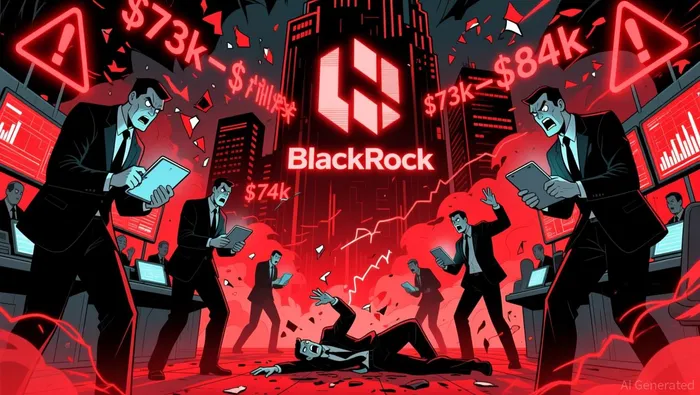 The debate has sharpened as Bitcoin fell below $82,000, erasing all 2025 gains and triggering anxiety across crypto markets. While some analysts, like Bitfinex observers, argue that record ETF outflows reflect tactical positioning rather than fading institutional interest, others warn of deeper risks. Arthur Hayes, co-founder of Bitmex and CIO of Maelstrom, projected Bitcoin could slide further to $80,000–$85,000 amid tightening liquidity and declining dollar conditions. He also speculated that a broader market collapse could propel Bitcoin toward $200,000–$250,000 by year-end if central banks resort to aggressive money-printing measures.
Market participants remain divided on whether capitulation has already occurred. Dragosch noted that previous cycles often bottomed near institutional cost bases as leveraged traders unwound positions, but recent support levels at $90,000, $88,000, and $85,000 have repeatedly failed. Meanwhile, Robert Kiyosaki's recent sale of $2.25 million in Bitcoin and reinvestment into real-world assets highlights shifting risk appetites among high-profile investors.
The Trump family's crypto holdings, including DJT and memeMEME-- coins, have also been impacted by the selloff, underscoring the asset class's systemic reach according to analysis. However, proponents of a near-term rebound point to structural factors: stablecoin reserves remain robust, and the Risk-Adjusted Staking Protocol launched by GeekStake aims to stabilize networks during volatile periods .
Bitcoin's path forward remains uncertain. While Dragosch and Hayes both acknowledge the fragility of current conditions, their outlooks diverge-Dragosch sees the max-pain zone as a likely bottoming catalyst, whereas Hayes emphasizes macroeconomic risks that could extend the downturn. With institutional flows pulling back and leverage unwinding, the coming weeks may determine whether this correction marks a cyclical low or a prelude to deeper turmoil.





Comentarios
Aún no hay comentarios