
Bitcoin Network Security and Mining Difficulty Trends: Long-Term Investment Implications of Rising Hashrate and Infrastructure Commitment
The BitcoinBTC-- network's evolution in 2023–2025 has been nothing short of transformative. As institutional adoption accelerates and technological innovation reshapes mining infrastructure, the interplay between hashrate growth, network security, and mining difficulty is becoming a critical focal point for long-term investors. This analysis unpacks how these trends are not only fortifying Bitcoin's security but also creating a flywheel of confidence that could redefine its role as a global store of value.
Hashrate Growth: A Barometer of Institutional Confidence
Bitcoin's hashrate-a measure of the computational power securing the network-has surged dramatically in recent years. By 2023, it had more than doubled, driven by institutional investment, public miner expansion, and Bitcoin's growing legitimacy as a mainstream asset. This momentum carried into 2024 and 2025, with the hashrate climbing further as larger miners scaled operations and deployed next-generation ASICs. The 2025 surge, in particular, underscores a pivotal shift: mining infrastructure is increasingly powered by renewable energy sources, aligning with global sustainability goals while reducing operational costs. According to Binance, the hashrate surged in 2025 amid institutional growth.
This growth is not accidental. Institutional players are treating Bitcoin mining as a strategic asset class, allocating capital to secure low-cost energy and advanced hardware. For example, post-2024 halving, tighter profit margins forced operational innovation, with hybrid models combining owned infrastructure and third-party hosting gaining traction. Such adaptability ensures the network remains resilient even as block rewards halve, a dynamic that historically has led to short-term volatility but long-term strengthening of the ecosystem.
Mining Difficulty and Network Security: A Symbiotic Relationship
Bitcoin's mining difficulty-a metric that adjusts to maintain consistent block times-has risen in tandem with the hashrate. In 2025, mining difficulty increased by approximately 35%, reflecting sustained investment in infrastructure and the network's growing computational demands. This is a double-edged sword: while higher difficulty makes it harder for malicious actors to execute attacks like 51% attacks, it also raises energy consumption and electronic waste, posing environmental and economic challenges.
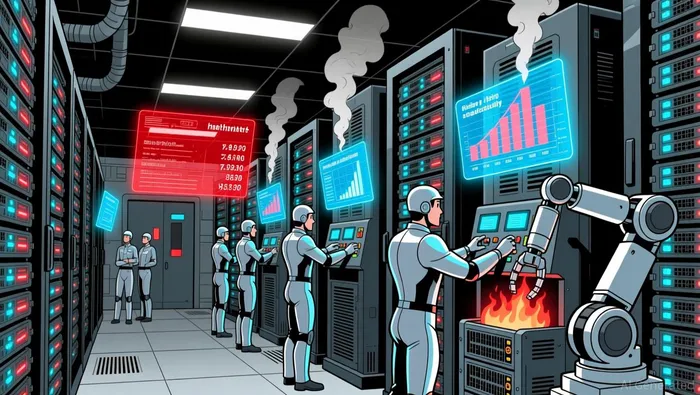
However, the security benefits outweigh these risks. A higher hashrate directly correlates with stronger network security, as it becomes exponentially more expensive and technically infeasible for bad actors to compromise the blockchain. This security premium is a cornerstone of Bitcoin's value proposition, fostering trust among institutional and retail investors alike. According to a report by VanEck, historical data even suggests that a falling hashrate can be a bullish signal for Bitcoin's long-term price performance, as it often precedes positive forward returns.
Long-Term Investment Implications: A Flywheel of Confidence
For long-term investors, the convergence of rising hashrate, robust infrastructure, and enhanced security creates a self-reinforcing cycle. Stronger network security reduces perceived risks, attracting more capital into Bitcoin and its ecosystem. This capital, in turn, funds further infrastructure upgrades, driving the hashrate higher and compounding security benefits.
The 2024 halving event accelerated this dynamic. As smaller, less efficient miners exited, larger firms consolidated operations, securing access to low-cost energy and economies of scale. This consolidation is not a sign of centralization but a natural evolution toward efficiency-a trend that mirrors the maturation of traditional industries. For investors, it means a more stable and predictable mining landscape, reducing volatility in Bitcoin's supply chain and reinforcing its appeal as a hedge against macroeconomic uncertainty.
Challenges and the Path Forward
Despite these positives, challenges remain. The environmental impact of Bitcoin mining-particularly energy consumption and e-waste-demands innovation in recycling and renewable energy integration. However, the industry's pivot toward green energy and modular mining hardware suggests a proactive approach to these issues.
Moreover, the post-halving environment has forced miners to optimize operations, leading to hybrid models that balance flexibility with cost efficiency. These adaptations position the industry to weather future headwinds, ensuring Bitcoin's network remains secure and attractive to capital.
Conclusion: A Foundation for Decade-Long Growth
Bitcoin's network security and mining infrastructure are no longer niche concerns-they are central to its long-term viability as a global asset. The sustained growth in hashrate, driven by institutional investment and technological innovation, is a testament to Bitcoin's resilience and adaptability. For investors, this translates to a network that is increasingly secure, efficient, and aligned with global trends in sustainability and decentralization.
As we approach 2026, the focus should shift from short-term volatility to the structural strengths underpinning Bitcoin's ecosystem. The rising hashrate is not just a technical metric; it is a signal of confidence in Bitcoin's future. And for those with a long-term horizon, that confidence is well-placed.






Comentarios
Aún no hay comentarios