
Bitcoin Munari: A Regulatory-Ready Asset for 2026 Growth
Regulatory Alignment: A Foundation for Institutional Trust
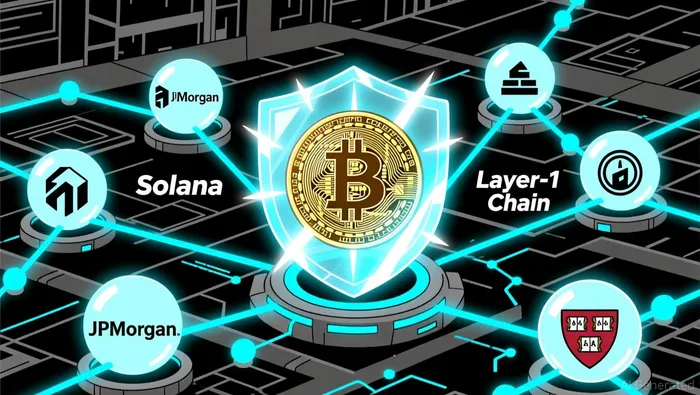
Bitcoin Munari's appeal to institutional investors is rooted in its proactive approach to regulatory alignment. By late 2025, the broader Bitcoin ecosystem had already seen a surge in institutional adoption, driven by the launch of U.S. spot Bitcoin ETFs and enhanced oversight from bodies like the SEC and CFTC. For instance, Harvard University's 257% increase in investment in BlackRock's iShares Bitcoin TrustIBIT-- (IBIT) to $442.8 million in Q3 2025 underscores the growing legitimacy of digital assets as a strategic asset class. Similarly, JPMorgan's 64% boost in holdings to $343 million highlights how institutions are recalibrating their portfolios to include Bitcoin as a hedge against macroeconomic volatility.
Bitcoin Munari builds on this momentum by embedding regulatory compliance into its core infrastructure. The project's presale contracts and Solana-phase smart contracts have undergone independent audits by firms like Solidproof and Spy Wolf, ensuring transparency and security for early-stage participants. Additionally, the team has completed KYC verification, a critical step for institutions that prioritize due diligence in high-risk, high-reward ventures. These measures align BTCM with the compliance expectations of institutional players, who often require verifiable governance and operational clarity before committing capital.
Institutional Adoption Drivers: Architecture Meets Enterprise Needs
Bitcoin Munari's technical architecture is engineered to satisfy the functional demands of institutional adoption. The project combines a fixed-supply model (capped at 21,000,000 tokens) with a phased rollout strategy that transitions from SolanaSOL-- to a dedicated Layer-1 chain by 2027. This dual-phase approach allows institutions to engage with BTCM in a controlled environment: the Solana phase offers fast transfers and early liquidity, while the mainnet phase introduces staking, governance, and privacy tools. The 1:1 migration bridge between Solana and the mainnet further ensures supply consistency, a feature critical for enterprises evaluating blockchain systems for long-term integration.
The project's emphasis on predictable performance and programmable functionality mirrors the criteria institutions use to assess blockchain platforms. For example, the inclusion of validator participation and smart contract capabilities aligns with the needs of enterprises seeking customizable, enterprise-grade solutions. As noted in a report by Cryptopolitan, BTCM's architecture has already attracted major blockchain players who view it as a viable alternative to traditional systems. This institutional interest is further amplified by BTCM's fixed-supply model, which mirrors Bitcoin's scarcity while expanding utility through programmable features-a hybrid approach that resonates with both conservative and innovative institutional investors.
Presale ROI: A Strategic Entry Point for 2026
Bitcoin Munari's public presale, which began in 2023, presents a compelling ROI opportunity for early participants. The presale is structured across ten rounds, with token prices escalating from $0.10 in the first round to $3.00 in the final phase according to the presale details. With 53% of the total 21 million BTCM supply allocated to presale participants, early buyers stand to benefit from a potential 30x price appreciation if the token reaches its $3.00 target. All presale tokens will unlock simultaneously on January 20, 2026, coinciding with the launch of the SPL token on Solana-a timing strategy designed to maximize liquidity and market exposure.
This presale model is particularly attractive in the context of 2026's anticipated regulatory and market shifts. According to Sygnum's analysis, 61% of institutional investors plan to increase their digital asset holdings by year-end 2026, driven by diversification needs and evolving risk management strategies. For BTCM presale participants, this trend suggests a strong likelihood of capital appreciation as institutional demand for regulatory-ready assets intensifies.
Conclusion: A 2026 Growth Catalyst
Bitcoin Munari's strategic alignment with regulatory frameworks, institutional-grade architecture, and presale ROI potential positions it as a standout asset for 2026. By addressing the compliance, scalability, and liquidity concerns of institutional investors, BTCM not only capitalizes on the broader Bitcoin adoption wave but also offers a structured pathway for enterprises to integrate blockchain into their portfolios. As the project transitions from its Solana phase to a fully realized Layer-1 network, the convergence of regulatory readiness and institutional demand will likely drive BTCM to the forefront of the 2026 growth narrative.





Comentarios
Aún no hay comentarios