
Bitcoin Mining's Local Impact on Community Relations and Regulatory Risk: Assessing Long-Term Viability and ESG Alignment
Environmental Challenges and Renewable Energy Shifts
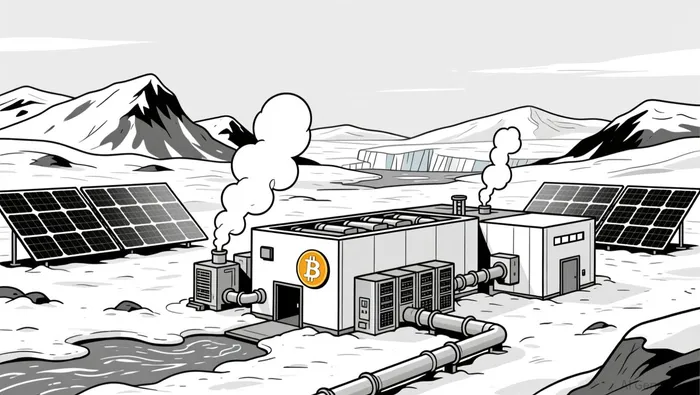
Bitcoin's energy consumption remains a contentious issue. Annual usage of 150 TWh-equivalent to a small nation's grid-has drawn scrutiny from policymakers and climate advocates, according to a Coingeek analysis. Critics argue that reliance on fossil fuels, particularly in regions like Kazakhstan and Texas, exacerbates carbon emissions, as reported in a Batcoinz report. However, the industry has responded by migrating operations to renewable energy sources. For example, Batcoinz reports that 52.4% of Bitcoin mining now runs on sustainable energy, including hydroelectric power in Canada, geothermal energy in El Salvador, and wind farms in Texas.
A key challenge lies in the "lottery-like" nature of Proof-of-Work (PoW) mining, where success depends on computational dominance rather than energy source, as noted in a ScienceDirect study. This disadvantages green miners, as renewable energy's intermittency and infrastructure gaps make it harder to compete with fossil-fuel-powered operations. Policy interventions, such as Pigouvian-like subsidies for renewable energy, could level the playing field. Meanwhile, projects like Bitcoin mining in Bhutan-using surplus hydroelectricity to boost government revenue-demonstrate how the industry can align with climate goals (reported by Batcoinz).
Regulatory Fragmentation and ESG Pressures
Regulatory responses to Bitcoin mining have diverged sharply. Kuwait banned mining in 2025 due to grid strain (covered in the Coingeek analysis), while the U.S. under the Trump administration relaxed environmental rules to attract operations. In contrast, the European Union and Canada have imposed consumption-based taxes and electricity caps. These disparities create regulatory risk for miners, who must navigate a patchwork of local laws.
ESG alignment has become a structural necessity for mining firms seeking institutional investment. For instance, Marathon Digital Holdings has committed to carbon neutrality by sourcing 100% renewable energy, according to Kenson Investments, while BlackRock integrates ESG scoring into its digital asset strategies (noted by Kenson Investments). However, the industry faces criticism for greenwashing. A 2023 United Nations study estimated Bitcoin mining's carbon footprint at 84 billion pounds of coal burned annually (reported in the Coingeek analysis), underscoring the need for transparent reporting and third-party verification.
Community Relations: Jobs, Infrastructure, and Social Conflicts
Bitcoin mining has revitalized economies in energy-rich but economically stagnant regions. In Texas, former industrial sites have been repurposed into data centers, creating high-skill jobs in engineering and logistics. El Salvador's adoption of Bitcoin as legal tender in 2021 has spurred foreign investment and geothermal-powered mining, reducing carbon footprints while generating employment.
Yet social conflicts persist. Noise pollution from cooling systems in Texas has led to lawsuits and calls for quieter technologies like immersion cooling (described in the Coingeek analysis). In some cases, renewable energy projects for mining have displaced communities from access to clean power (also noted in the Coingeek analysis). These tensions highlight the need for inclusive planning and community engagement. For example, Bitcoin mining in rural Africa has delivered electricity to underserved populations (covered by Batcoinz), but similar projects must avoid replicating the extractive patterns of traditional energy industries.
ESG Alignment and the Path Forward
Bitcoin mining's ESG narrative is shifting from a perceived environmental burden to a driver of grid innovation and sustainability. Independent studies confirm its role in monetizing stranded renewable energy, reducing methane emissions at landfills, and stabilizing grids by acting as a flexible load (documented by Batcoinz). For instance, Bitcoin mining in Finland recycles heat to warm communities, cutting CO2 emissions by 455 tonnes annually (reported by Batcoinz).
However, challenges remain. E-waste from short-lifecycle ASIC hardware and the energy costs of mining's "security premium" complicate ESG alignment (Batcoinz highlights these issues). To address these issues, miners must adopt circular economy practices, such as recycling hardware, and collaborate with regulators to standardize sustainability reporting.
Conclusion: Balancing Viability and Responsibility
Bitcoin mining's long-term viability depends on its ability to harmonize profitability with ESG imperatives. While renewable energy adoption and grid integration offer promising pathways, regulatory uncertainty and social conflicts pose risks. Investors should prioritize projects with transparent ESG frameworks, community partnerships, and diversified energy portfolios. As the industry matures, Bitcoin mining's role in the energy transition-and its capacity to meet institutional ESG demands-will determine its place in the future of finance and infrastructure.






Comentarios
Aún no hay comentarios