
Bitcoin Mining in 2025: Assessing Profitability Amidst Halving and Energy Transition
The 2024 BitcoinBTC-- halving reshaped the mining landscape, slashing block rewards from 6.25 BTC to 3.125 BTC and forcing operators to confront a stark reality: survival hinges on energy efficiency, infrastructure optimization, and access to low-cost power. By May 2025, the network hashrate surged to 831 EH/s, a 77% increase from the 2024 low of 519 EH/s, as miners raced to offset reduced rewards through technological and operational upgrades, according to a Cointelegraph analysis. Yet, profitability remains a tightrope walk, with hashprice plummeting from $0.12 in April 2024 to $0.049 by April 2025, while network difficulty hit an all-time high of 123T, according to a CompareForexBrokers study. This analysis unpacks how cost-competitive infrastructure and energy arbitrage are redefining post-halving reward dynamics.
The Cost Structure: CAPEX, OPEX, and the Energy Overhead
Bitcoin mining's economic model is now dominated by two pillars: capital expenditures (CAPEX) and operational expenditures (OPEX). CAPEX includes upfront investments in ASICs, cooling systems, and facility infrastructure, while OPEX-particularly electricity-accounts for 60–80% of ongoing costs, according to a Hashlabs breakdown. Post-halving, the industry has seen a 20% surge in CAPEX as miners adopt next-gen hardware like Bitmain's Antminer S21+ (16.5 J/TH) and MicroBT's WhatsMiner M66S+ (17 J/TH) to mitigate energy waste, according to a uMiners article.
However, even the most efficient hardware cannot offset the drag of high electricity costs. In the U.S., industrial power rates exceed $0.10/kWh, rendering operations unprofitable unless Bitcoin prices remain above $65,000, according to a BTC Covert guide. Conversely, miners in the UAE and Oman leverage government-subsidized energy at $0.035–$0.07/kWh, securing a 50–70% cost advantage, according to a BitcoinsGuide post. This energy arbitrage has triggered a global migration of mining operations, with the Middle East and Africa now hosting 32% of global hashrate-a 15% increase from 2024, according to a KCEX analysis.
Energy Transition: From Fossil Fuels to Renewables and AI
The energy transition is no longer a buzzword-it's a business imperative. By July 2025, 68% of Bitcoin mining utilizes renewable energy, up from 28% in 2020, as operators seek to reduce both costs and carbon footprints, according to Bitcoin Mining Economics 101. Solar, wind, and hydroelectric power now underpin 45% of mining operations in the Middle East, where abundant sunlight and wind resources complement low-cost grid power, according to a BTC Untold post.
Institutional miners are also deploying AI-driven load balancing and predictive maintenance to optimize energy use. For example, immersion cooling systems reduce energy consumption by 30% compared to traditional air cooling, while AI algorithms dynamically allocate hashrate to periods of cheapest electricity, according to a LinkedIn analysis. These innovations are critical for maintaining margins in a post-halving world where block rewards are halved but operational costs remain intact.
Regional Arbitrage: The New Geopolitics of Mining
Energy arbitrage has rewritten the geopolitical map of Bitcoin mining. The UAE and Oman now lead in institutional-scale operations, with their subsidized energy rates enabling break-even costs as low as $37,856 per Bitcoin, according to a CoinShares report. In contrast, U.S. miners face a harsh reality: with electricity costs above $0.10/kWh, their break-even price exceeds $53,000 per Bitcoin, leaving little room for error in a volatile market, according to a Bitcoinstair piece.
This shift has also spurred regulatory competition. Countries like Saudi Arabia and Kazakhstan are offering tax incentives and dedicated mining zones to attract capital, while the U.S. grapples with grid constraints and environmental scrutiny, according to a RebarLabs analysis. The result? A bifurcated industry where energy-cost leaders dominate, and high-cost regions see consolidation or exit.
Future Outlook: Efficiency as the Ultimate Currency
Looking ahead, Bitcoin mining's profitability will hinge on three factors:
1. Energy Pricing: Sustained access to low-cost, stable energy will determine which operators survive.
2. Hardware Innovation: Next-gen ASICs with sub-15 J/TH efficiency could further narrow profit margins.
3. Diversification: Miners are exploring ancillary revenue streams, such as AI co-hosting and grid stabilization services, to offset Bitcoin price volatility, according to a Cointelegraph explainer.
For investors, the key takeaway is clear: the post-halving era rewards those who prioritize energy arbitrage and operational efficiency. While Bitcoin's price above $60,000 in mid-2025 provides a buffer, the long-term viability of mining operations will depend on their ability to adapt to a world where energy costs outweigh block rewards. 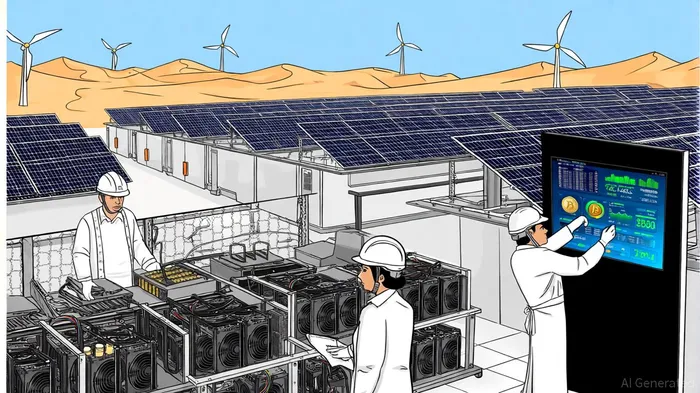






Comentarios
Aún no hay comentarios