
Bitcoin Miner Sales: A Hidden Bullish Signal Amid Strategic Resilience
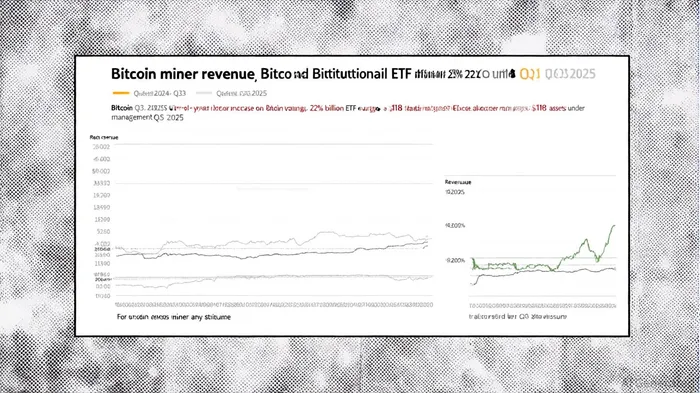
The BitcoinBTC-- mining sector in 2025 has emerged as a paradoxical blend of financial strain and strategic resilience, with miner sales and institutional adoption forming a unique axis of bullish momentum. While companies like Bitdeer Technologies GroupBTDR-- reported a $147.73 million net loss in Q2 2025, their self-mining output surged 39% year-over-year to 282 Bitcoins, driven by energized SEALMINERs [5]. This duality—declining margins paired with expanding hash rates—reflects a sector recalibrating to post-halving realities while capitalizing on institutional demand.
Strategic Resilience: Miner Sales as a Proxy for Institutional Confidence
Bitcoin miner sales have become a critical barometer of market sentiment, particularly as institutional players increasingly treat Bitcoin as a strategic asset. Bitdeer's Q2 2025 revenue of $155.6 million, a 57% year-over-year increase, underscores robust demand for ASICs, with the company shipping 5.3 exahash of SealMiner A2 rigs [5]. Meanwhile, GLXY's pivot to AI and high-performance computing (HPC) infrastructure—committing 800 megawatts to CoreWeave—highlights a broader industry trend of diversification to sustain profitability amid volatile crypto markets [6].
This strategic resilience is further amplified by institutional adoption. U.S. spot Bitcoin ETFs, now managing $219 billion in assets by September 2025, have normalized Bitcoin as a mainstream asset class [1]. BlackRock's iShares Bitcoin Trust (IBIT) alone holds $86 billion, effectively removing 18% of Bitcoin's circulating supply from active trading [1]. Such institutional hoarding not only stabilizes price action but also reduces liquidity, creating a self-reinforcing cycle of scarcity and demand.
Contrarian Dynamics: Miner Behavior as a Leading Indicator
Bitcoin miner sales and institutional confidence form a contrarian feedback loop. During bull markets, miners—unlike retail traders—tend to accumulate Bitcoin rather than sell, as seen in late 2024 when companies like CleanSparkCLSK-- expanded their treasuries to over $1 billion in Bitcoin [5]. Conversely, bear markets often force miners to liquidate holdings to cover operational costs, creating short-term selling pressure. However, 2025 has defied this pattern: despite a 359% surge in home miner sales by CanaanCAN-- and a 91% revenue increase for CleanSpark, exchange balances remain at multi-year lows, indicating fewer coins are available for short-term selling [1].
This divergence is critical. Institutional investors, now holding 709,420 BTC collectively ($82.38 billion), continue to allocate up to 22% of net income to Bitcoin, treating it as a hedge against macroeconomic instability [3]. Meanwhile, miners like DMG Blockchain Solutions—despite mining only 84 Bitcoins in Q3 2025—maintained a $62 million cash reserve and prioritized hash rate expansion, signaling long-term confidence [2].
The Institutionalization of Bitcoin: A New Equilibrium
The institutionalization of Bitcoin has reshaped its market dynamics. Corporate holdings now exceed 6% of the total supply, with inflows totaling $12.5 billion in 2025 alone [4]. This trend is not merely speculative; companies like LM Funding AmericaLMFA--, Inc. doubled their Bitcoin treasury to 164 BTC in August 2025, valuing it at $33.8 million [2]. Such moves reflect a shift from viewing Bitcoin as a volatile asset to a store of value akin to gold.
Moreover, the negative correlation between Bitcoin and the U.S. dollar index has intensified, with Bitcoin reaching $123,838 in July 2025 amid dollar weakness and pro-crypto legislation [6]. This inverse relationship, coupled with the Fed's anticipated rate cuts, positions Bitcoin as a macro hedge—a role traditionally reserved for assets like gold or Treasury bonds.
Conclusion: A Bullish Signal Amid Structural Shifts
Bitcoin miner sales in 2025 are more than a technical metric; they are a testament to the sector's strategic adaptability and institutional validation. While challenges like negative margins for companies like MARA HoldingsMARA-- persist [2], the broader narrative is one of resilience. Institutional adoption, AI infrastructure pivots, and a contrarian divergence between retail and institutional behavior all point to a maturing market.
For investors, the message is clear: Bitcoin miner sales and institutional confidence are not just bullish signals—they are harbingers of a new financial equilibrium where digital assets occupy a central role. As the sector navigates macroeconomic headwinds and regulatory scrutiny, the interplay between miner resilience and institutional demand will likely remain a defining feature of Bitcoin's next chapter.





Comentarios
Aún no hay comentarios