
Bitcoin's Market Cap Surpassing Amazon: A Paradigm Shift in Global Asset Allocation
In September 2025, a seismic shift in global finance occurred as Bitcoin's market capitalization surpassed Amazon's for the first time, reaching $2.4 trillion compared to Amazon's $2.34 trillion, as detailed in a Cointelegraph explainer. This milestone, driven by record-breaking spot BitcoinBTC-- ETF inflows, institutional adoption, and regulatory clarity, underscores a broader redefinition of how assets are valued and allocated. The event marks not just a numerical victory for Bitcoin but a paradigm shift in the interplay between traditional and digital asset valuation frameworks.
Traditional Valuation Metrics: Earnings, Cash Flows, and Multiples
Traditional assets like stocks and real estate are evaluated using metrics rooted in cash flow generation and intrinsic value. For example, Amazon's valuation relies on its revenue growth, profit margins, and dominance in e-commerce and cloud computing. Analysts use price-to-earnings (P/E) ratios, discounted cash flow (DCF) models, and revenue multiples to assess its worth, referencing Amazon's market capitalization. These methods assume that a company's value is derived from its ability to generate future earnings and serve tangible economic needs.
However, Bitcoin defies such logic. It produces no revenue, pays no dividends, and lacks the operational infrastructure of a corporation. As a result, traditional metrics fail to capture its value proposition. This disconnect has forced investors and analysts to develop alternative frameworks tailored to digital assets.
Digital Valuation Metrics: Scarcity, Network Effects, and On-Chain Data
Bitcoin's valuation is instead anchored in scarcity, network effects, and on-chain metrics. The Stock-to-Flow (S2F) model, for instance, posits that Bitcoin's value is driven by its fixed supply of 21 million coins and the diminishing rate of new issuance, as explained in Citrine Capital Advisors' guide. Similarly, Metcalfe's Law suggests that a network's value grows with the square of its users, implying that Bitcoin's utility-and thus its price-increases exponentially as adoption expands, according to Mehta's Medium analysis.
On-chain metrics further refine this analysis. The Network Value to Transactions (NVT) ratio compares Bitcoin's market cap to its daily transaction volume, offering a gauge of whether the asset is overvalued or undervalued relative to its usage, as noted in a DeFiMarketCap analysis. Meanwhile, the Puell Multiple-a ratio of miner revenue to the 365-day average-helps assess mining profitability and potential price inflection points, described in a 21Shares primer. These tools, while nascent, provide a lens through which Bitcoin's value can be quantified beyond traditional paradigms.
The Catalysts Behind Bitcoin's Rise
Bitcoin's ascent to a top-five global asset was fueled by a confluence of factors. Regulatory developments, such as the CLARITY Act and the introduction of spot Bitcoin ETFs, legitimized the asset for institutional investors (covered in the Cointelegraph explainer). In July 2025 alone, U.S.-listed Bitcoin ETFs saw inflows of $1.17 billion and $1.03 billion on consecutive days, signaling unprecedented demand (the Cointelegraph piece documents these flows).
Macroeconomic conditions also played a role. With global inflation persisting and central banks adopting dovish policies, Bitcoin emerged as a hedge against currency devaluation. By September 2025, over 265 public and private companies held 853,000 BTC, while spot ETFs controlled 1.4 million BTC-6.6% of the total supply (reported by the Cointelegraph explainer). This institutional accumulation underscored Bitcoin's transition from speculative asset to portfolio staple.
Redefining Global Asset Allocation
Bitcoin's market cap milestone has profound implications for asset allocation strategies. Historically, investors treated Bitcoin as a high-risk, low-correlation asset. However, its recent correlation with equities-now at 0.87-reflects its integration into the broader risk asset category (the Cointelegraph explainer highlights this shift). This shift challenges the traditional dichotomy between "safe" and "risky" assets, as Bitcoin's volatility is increasingly seen as a feature rather than a flaw in diversified portfolios.
Academic models like the Kelly Criterion and Risk Parity now advocate for small allocations (1–5%) to Bitcoin, balancing its volatility with its potential to enhance risk-adjusted returns, as discussed in a MarketClutch piece. Fidelity Investments' Jurrien Timmer has further emphasized Bitcoin's adoption curve, noting that while its growth has slowed, it remains steeper than that of the internet in its early stages, according to a Bitcoin Magazine interview.
The Road Ahead: Challenges and Opportunities
Despite its triumph, Bitcoin faces headwinds. September 2025's "Red September" saw a 11% price drop, triggering $1.7 billion in liquidations and a $162 billion crypto market cap decline, detailed in the DeFiMarketCap analysis. Yet, year-to-date gains of 17% and accumulation by large holders suggest long-term optimism. Analysts project Bitcoin could surpass Apple and Microsoft in market cap by 2026, contingent on sustained institutional demand and regulatory stability (the Cointelegraph explainer presents these projections).
For traditional investors, the challenge lies in reconciling Bitcoin's digital-native valuation models with legacy frameworks. As Citrine Capital Advisors notes, Bitcoin's value is increasingly tied to macroeconomic conditions, adoption dynamics, and network resilience rather than earnings, a point echoed in an Analytics Insight article. This evolution demands a rethinking of asset allocation, where Bitcoin's role as a store of value and inflation hedge is weighed against its volatility.
Conclusion
Bitcoin's market cap surpassing AmazonAMZN-- is more than a headline-it is a harbinger of a new era in asset valuation. By transcending traditional metrics and embracing network effects, scarcity, and on-chain data, Bitcoin has redefined what it means to be a "valuable" asset. For investors, this shift necessitates a recalibration of portfolios, blending digital and traditional assets to navigate an increasingly interconnected financial landscape. As the lines between old and new money blur, one thing is clear: the future of global asset allocation will be written in both balance sheets and blockchain. 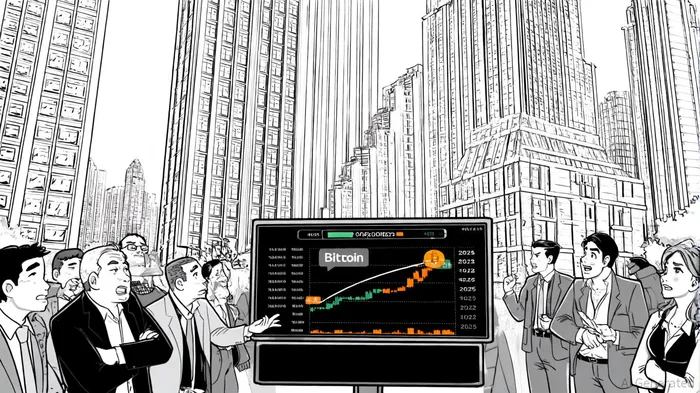





Comentarios
Aún no hay comentarios