
Bitcoin's Margin Call Crisis: A Systemic Risk in the Age of Leverage-Driven Derivatives
The 2025 BitcoinBTC-- margin call crisis exposed a fragile underbelly of the crypto market: a leverage-driven derivatives ecosystem teetering on the edge of systemic collapse. As the largest options expiry in crypto history—$23 billion in Bitcoin and EthereumETH-- contracts—approached, the market faced a perfect storm of volatility, positioning imbalances, and cascading liquidations. This event, occurring as Bitcoin approached critical resistance and support levels, triggered price swings of up to $20,000 in either direction, testing the resilience of both retail and institutional players [1].
The Mechanics of the Crisis: Max Pain and Leverage Amplification
The crisis was fueled by a phenomenon known as “max pain,” where asset prices gravitate toward strike prices where the most contracts expire worthless. In early 2025, this dynamic intensified as heavy positioning in both put and call options around specific strike prices created a self-fulfilling prophecy of volatility. Over the weekend of the expiry, nearly record-breaking liquidations occurred, with Bitcoin dropping below $115,000 and triggering the forced closure of over $1.7 billion in leveraged positions [3]. Retail traders, who had aggressively bought long positions during a prior “Uptober” rally, were disproportionately affected, with 94% of liquidations targeting longs [4].
The notional value of crypto derivatives in Q2 2025 had already ballooned to $8.94 trillion in monthly trading volume, with Bitcoin and Ethereum derivatives accounting for 68% of this total [5]. Open interest in Bitcoin futures alone peaked at $70 billion by May 2025, driven by institutional participation and the proliferation of spot ETFs [1]. This leverage, while amplifying returns in bullish cycles, created a precarious environment where minor price corrections could trigger cascading defaults.
Systemic Risk Spillovers to Traditional Markets
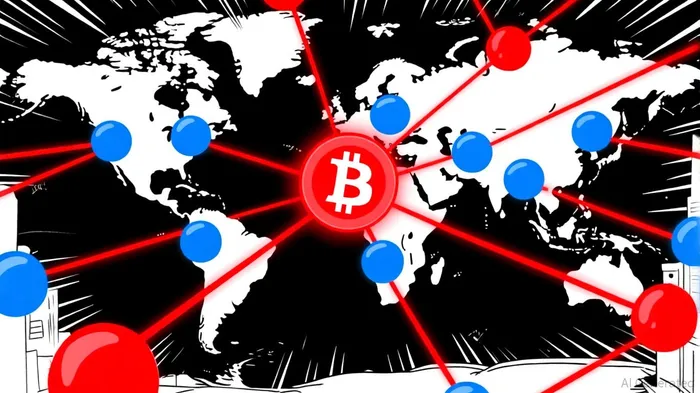
The interconnectedness between crypto derivatives and traditional financial systems became starkly evident during the crisis. As Bitcoin's price plummeted, the S&P 500 fell over 12% in April 2025, reflecting heightened investor anxiety amid geopolitical tensions and macroeconomic uncertainty [6]. U.S. Treasury yields surged to 4.80%, driven by inflation concerns and a loss of confidence in the dollar's safe-haven status [6]. The crisis also exposed vulnerabilities in prime brokerage models, with hedge funds and prime brokers like Bank of America facing counterparty risks as leveraged portfolios collapsed [2].
The spillover effects were not confined to equities and bonds. Tokenized investment funds, which had gained traction as a hybrid of DeFi and traditional finance, faced redemption pressures as liquidity dried up. These funds, designed to reduce friction in asset settlement, instead amplified interconnectedness with traditional markets, creating new channels for contagion [7].
Regulatory Responses and the Path Forward
Regulators scrambled to address the fallout. The U.S. Securities and Exchange Commission (SEC) accelerated its Spring Sprint Toward Crypto Clarity initiative, hosting roundtables to clarify rules for tokenized securities and leverage-heavy derivatives [8]. Meanwhile, the European Union's Markets in Crypto-Assets (MiCA) regulation began imposing stricter oversight on asset-backed tokens, aiming to prevent future crises [8].
Despite these efforts, systemic risks persist. The approval of Bitcoin ETFs in 2024 and 2025 has institutionalized crypto exposure, but it has also deepened the integration of volatile derivatives markets with traditional finance. JPMorgan analysis revealed that Bitcoin's 90-day correlation with the S&P 500 rose from 0.2 to 0.6, signaling that macroeconomic forces now directly influence crypto prices [2]. This convergence, while beneficial for long-term adoption, has introduced new fragilities.
Conclusion: Balancing Innovation and Stability
The 2025 margin call crisis underscores a critical tension in the crypto ecosystem: the need to balance innovation with systemic stability. While leverage and derivatives have democratized access to crypto markets, they have also created feedback loops that can destabilize both digital and traditional financial systems. The path forward requires robust regulatory frameworks, improved risk management tools, and a reevaluation of leverage limits in derivatives trading.
As the crypto market matures, the lessons from 2025 will shape its next phase. The question is no longer whether crypto will integrate with traditional finance but how it will do so without repeating the mistakes of the past.







Comentarios
Aún no hay comentarios