
Bitcoin's Macroeconomic Exposure: Navigating U.S. Fiscal Policy and Yield Curve Dynamics
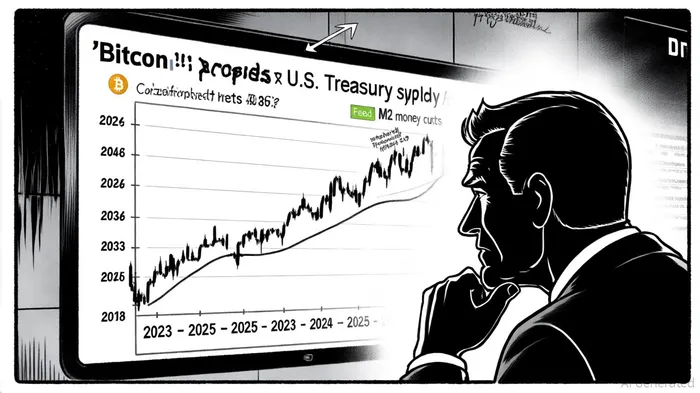
The interplay between U.S. fiscal policy and Bitcoin's macroeconomic exposure has become a defining feature of the 2020s. As the U.S. government expands its deficit-driven spending and the Federal Reserve navigates yield curve dynamics, Bitcoin's role as a hedge against fiat debasement and a strategic reserve asset is being redefined. This analysis explores how fiscal and monetary policy shifts from 2023 to 2025 have shaped Bitcoin's trajectory, with a focus on institutional adoption, inflationary pressures, and the Fed's evolving stance.
U.S. Fiscal Policy: A Catalyst for Bitcoin Demand
The U.S. fiscal landscape has grown increasingly complex, with policies like the CHIPS and Science Act, the Inflation Reduction Act, and the “One Big Beautiful Bill Act” (OBBBA) driving deficits toward $35 trillion by 2025 [1]. These measures, coupled with President Trump's 2025 Executive Order establishing a Strategic BitcoinBTC-- Reserve, have positioned Bitcoin as a counterbalance to traditional fiscal profligacy. The introduction of Bitcoin-Enhanced Treasury Bonds (BitBonds)—which allocate 10% of proceeds to Bitcoin purchases—further institutionalizes the cryptocurrency's role in national finance [2].
According to a report by Forbes, BitBonds offer investors a 1% annual USD coupon and a Bitcoin-linked payout at maturity, creating an asymmetric return structure that benefits from Bitcoin's appreciation [2]. This innovation not only reduces the U.S. government's borrowing costs but also signals a broader acceptance of Bitcoin as a tool for managing long-term fiscal risks. As Grayscale Research notes, Bitcoin's fixed supply and decentralized nature make it an attractive hedge against the erosion of fiat value in an era of unchecked deficit spending [3].
The May 2025 downgrade of the U.S. sovereign credit rating by Moody's further accelerated Bitcoin's adoption, with investors seeking non-sovereign assets to diversify portfolios [3]. By September 2025, Bitcoin had surged to an all-time high of $112,000, driven by macroeconomic imbalances and the Fed's dovish pivot [4].
Federal Reserve Policies and Bitcoin's Macroeconomic Exposure
While fiscal policy sets the stage, the Federal Reserve's yield curve control (YCC) measures and interest rate decisions have directly influenced Bitcoin's price volatility. Historically, Bitcoin has exhibited a negative correlation with rising interest rates, as higher yields divert capital toward bonds and savings accounts [5]. However, the Fed's 2024–2025 rate-cutting cycle—culminating in a 0.25% reduction on September 17, 2025—has reshaped this dynamic [6].
Academic research underscores Bitcoin's sensitivity to monetary policy shocks: a 1 basis point unexpected tightening by the FOMC correlates with a 0.25% decline in Bitcoin prices [7]. Conversely, rate cuts have historically stimulated liquidity, boosting risk-on sentiment and Bitcoin demand. For example, the 2020 pandemic-era rate cuts drove Bitcoin from $7,000 to $28,000 within a year [8]. The September 2025 rate cut appears to follow this pattern, with Bitcoin's price surging as investors anticipated lower borrowing costs and a weaker U.S. dollar [6].
The Fed's yield curve dynamics also play a critical role. While short-term rates have declined, long-term Treasury yields remain elevated due to persistent inflation expectations [9]. This divergence reflects market skepticism about the Fed's ability to sustain rate cuts, creating a volatile environment for Bitcoin. However, institutional adoption—bolstered by Bitcoin ETF approvals and corporate treasury purchases—has mitigated some of this volatility, as large investors continue to accumulate Bitcoin despite macroeconomic uncertainties [10].
The Interplay of Fiscal and Monetary Policy
The alignment of fiscal and monetary policy has further complicated Bitcoin's macroeconomic exposure. Expansionary fiscal measures, such as the OBBBA, increase the U.S. debt burden, prompting the Fed to maintain loose monetary conditions to manage interest rates [1]. This creates a feedback loop: higher deficits drive inflationary pressures, which in turn fuel demand for Bitcoin as a hedge.
The Strategic Bitcoin Reserve, established in March 2025, exemplifies this interplay. By allocating a portion of government spending to Bitcoin, the U.S. aims to leverage its appreciation potential while diversifying its asset base [11]. This move signals a recognition that Bitcoin's scarcity and decentralization offer unique advantages in a world of fiat currency depreciation.
However, the Fed's yield curve control policies remain a wildcard. While YCC has not been directly implemented since 2025, discussions of its potential use highlight the central bank's willingness to intervene in bond markets to stabilize rates [12]. Such measures could indirectly affect Bitcoin by altering inflation expectations and capital flows, though the cryptocurrency's speculative nature means its response may remain unpredictable.
Investment Implications and the Road Ahead
For investors, Bitcoin's macroeconomic exposure presents both opportunities and risks. The convergence of fiscal expansion, Fed easing, and institutional adoption suggests a bullish outlook in the short term. However, the asset's volatility—exacerbated by geopolitical tensions and regulatory shifts—requires a cautious approach.
Key considerations include:
1. Fiscal Sustainability: The U.S. debt-to-GDP ratio exceeding 100% raises concerns about long-term inflation and currency devaluation, which could drive further Bitcoin adoption.
2. Monetary Policy Uncertainty: The Fed's ability to balance rate cuts with inflation control will dictate Bitcoin's price trajectory.
3. Institutional Momentum: ETF approvals and corporate treasury purchases are likely to stabilize Bitcoin's price, reducing its sensitivity to macroeconomic shocks.
As the U.S. navigates a fiscal and monetary crossroads, Bitcoin's role as a macroeconomic barometer and store of value will continue to evolve. Investors must remain attuned to policy developments, leveraging Bitcoin's unique position in a world of increasing fiscal complexity.







Comentarios
Aún no hay comentarios