
Bitcoin's Long-Term Price Potential: Riding Macroeconomic Tailwinds and Institutional Adoption
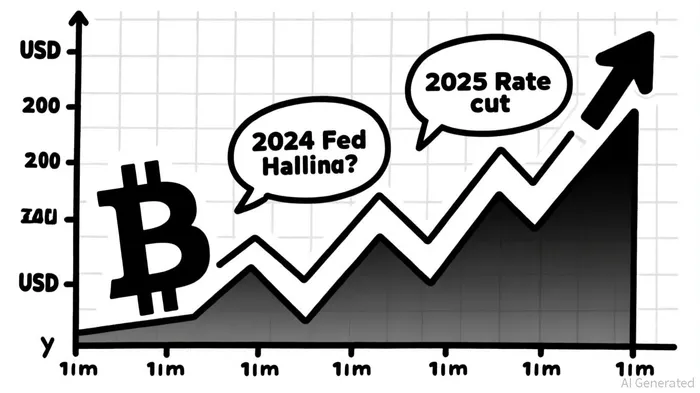
Bitcoin's long-term price potential is being shaped by a powerful confluence of macroeconomic tailwinds and institutional adoption. As we approach the tail end of 2025, the Federal Reserve's first rate cut in September—reducing the federal funds rate to 4.00%-4.25%—has signaled a shift toward accommodative monetary policy[1]. This move, coupled with a cooling inflation rate (2.9% as of August 2025[2]) and a projected return to 2.0% inflation by 2028[3], creates a fertile environment for risk-on assets like BitcoinBTC--. Historically, Bitcoin has thrived in low-rate environments, as investors reallocate capital from low-yield bonds to higher-return assets[4].
Macroeconomic Tailwinds: A Perfect Storm for Bitcoin
The Fed's gradual rate cuts—from 3.6% in Q4 2025 to 3.1% by 2028[3]—are expected to lower borrowing costs and stimulate liquidity. This dynamic is particularly favorable for Bitcoin, which functions as a hedge against inflation and a store of value in a low-interest-rate world. According to a report by the St. Louis Fed, the FOMC's forward guidance emphasizes balancing inflation control with economic growth, a duality that could sustain Bitcoin's appeal[5].
Moreover, the post-halving bull case remains intact. Historical patterns suggest a significant price surge between April and October 2025, following the April 2024 halving[6]. With Bitcoin's supply scarcity narrative amplified, the asset is increasingly positioned as a “digital gold” in portfolios seeking diversification[7].
Institutional Adoption: From Skepticism to Mainstream Embrace
Institutional adoption has been a game-changer. Major financial firms like BlackRock, BNY Mellon, and Fidelity have integrated Bitcoin into their offerings, while corporate treasuries (e.g., MicroStrategy, Tesla) have amassed billions in BTC holdings[8]. The approval of spot Bitcoin ETFs by the SEC and the U.S. GENIUS Act's regulatory clarity for stablecoins have further normalized Bitcoin as a legitimate asset class[9].
These developments are not just symbolic. They've reduced market volatility and unlocked new capital inflows. For instance, pension funds and retirement accounts are now allocating portions of their portfolios to Bitcoin, treating it as a long-term store of value[10]. According to a Forbes analysis, institutional inflows could stabilize Bitcoin's price and drive its adoption in global wealth management[11].
Technological Advancements: Scaling for the Future
Bitcoin's utility is expanding beyond its role as a store of value. Innovations like the Lightning Network and layer-2 solutions (e.g., Ark, Fedimints) are enhancing scalability and transaction efficiency, making Bitcoin a viable medium of exchange[12]. These upgrades, combined with growing acceptance in corporate and retail sectors, reinforce Bitcoin's position as a cornerstone of the digital financial ecosystem[13].
Challenges and the Road Ahead
Despite the bullish case, risks persist. Regulatory resistance in certain jurisdictions and macroeconomic volatility could temper short-term gains. Additionally, the specter of a “crypto winter” in 2026 looms if broader market conditions deteriorate[14]. However, the long-term fundamentals—driven by monetary policy normalization, institutional trust, and technological progress—remain robust.
Expert price predictions for 2025 range from $145,000 to $250,000[15], with some outliers projecting over $1 million. These forecasts are anchored in historical cycles, institutional inflows, and Bitcoin's potential to capture a larger share of global wealth.






Comentarios
Aún no hay comentarios