
Bitcoin's Long-Term Investment Resilience Amid Regulatory and Technological Shifts
The year 2026 marks a pivotal inflection point for BitcoinBTC--, as institutional adoption accelerates amid a confluence of regulatory clarity, technological innovation, and evolving market dynamics. For institutional investors, the asset's journey from speculative fringe to mainstream portfolio consideration has been underpinned by structural tailwinds-yet it remains shadowed by risks that demand rigorous scrutiny. This analysis examines Bitcoin's resilience in the context of 2026's regulatory and technological landscape, evaluating its potential as an institutional-grade asset while highlighting critical vulnerabilities.
Regulatory Tailwinds: A Framework for Legitimacy
Bitcoin's institutional ascent has been catalyzed by a wave of regulatory developments that have transformed the asset's legal and operational environment. The approval of the first U.S. spot Bitcoin exchange-traded products in January 2024 marked a watershed moment, providing institutional investors with a familiar, regulated vehicle to access the cryptocurrency market. By late 2025, total crypto ETF assets under management had surged to $191 billion, underscoring the rapid institutionalization of digital assets.
Parallel progress in global regulatory harmonization has further bolstered confidence. The European Union's Markets in Crypto-Assets (MiCA) regulation, implemented in June 2024, created a unified framework across member states, while Hong Kong, Japan, and Singapore finalized stablecoin frameworks to address cross-border compliance challenges. In the U.S., the passage of the GENIUS Act in July 2025 introduced comprehensive oversight for stablecoins, enhancing transparency for issuers and users alike.
The Trump administration's "Strengthening American Leadership in Digital Financial Technology" Executive Order, issued in 2025, has further solidified Bitcoin's institutional credibility. By prioritizing responsible innovation and promoting dollar-backed stablecoins, the policy framework has aligned with institutional demand for assets that hedge against fiat currency debasement. Notably, the collaboration between the U.S. Treasury, Labor, and SEC on integrating crypto into retirement solutions has expanded Bitcoin's utility as a long-term investment vehicle, with 60% of institutional investors now preferring exposure through registered vehicles like ETPs.
Technological Advancements: Infrastructure for Scalability
Technological progress in 2026 has addressed key barriers to institutional adoption, particularly in scalability and security. The anticipated passage of bipartisan U.S. crypto market structure legislation is expected to facilitate the integration of public blockchains into mainstream finance, enabling regulated trading of digital asset securities. This development, coupled with the maturation of blockchain infrastructure, has positioned Bitcoin as a viable alternative to traditional assets.
Privacy-enhancing technologies such as zero-knowledge proofs (ZKPs) and fully homomorphic encryption (FHE), gaining traction, are addressing institutional concerns around transaction transparency without compromising security. 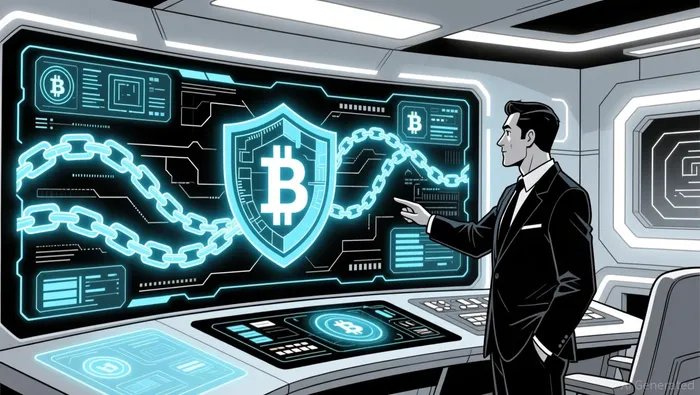 Meanwhile, the tokenization of real-world assets has unlocked new use cases, with tokenized equities offering advantages in liquidity and composability. These innovations have not only diversified Bitcoin's ecosystem but also reinforced its role as a foundational asset in a broader digital economy.
However, technological optimism must be tempered with caution. Quantum computing, though unlikely to pose an immediate threat in 2026, remains a long-term risk to cryptographic security. Additionally, the concentration of custody services-exemplified by Coinbase holding up to 85% of global Bitcoin ETF assets-introduces operational fragility. Institutional investors must prioritize diversified custody solutions to mitigate single points of failure.
Risks and Challenges: Volatility, Security, and Competition
Despite its institutional appeal, Bitcoin's volatility persists as a double-edged sword. While the asset is projected to break its four-year price cycle and set new all-time highs, its price swings remain more pronounced than those of traditional equities like Nvidia according to market analysis. This volatility, combined with macroeconomic uncertainties, necessitates hedging strategies and risk management frameworks tailored to digital assets.
Security threats have also evolved in complexity. North Korean cybercriminals, for instance, escalated their crypto thefts in 2025, siphoning $2.02 billion through sophisticated impersonation tactics and compromised IT workers. These attacks highlight the need for robust key management and multi-layered authentication protocols. Furthermore, the proliferation of over 100 crypto-linked ETFs in 2026 has introduced liquidity risks, particularly for altcoins with thin markets, where wide spreads could erode returns.
Competition from emerging technologies, though limited, warrants attention. While Bitcoin and EthereumETH-- are expected to retain dominance due to their first-mover advantages and regulatory clarity, niche innovations in application-specific blockchains and tokenized assets may carve out specialized niches. Institutional investors must remain selective, favoring well-established, regulated structures over speculative altcoins.
Conclusion: A Balancing Act for the Long Term
Bitcoin's long-term investment resilience in 2026 and beyond hinges on its ability to navigate a rapidly evolving regulatory and technological landscape. The structural tailwinds-ranging from ETP adoption to global regulatory harmonization-have undeniably elevated its institutional legitimacy. Yet, risks such as custody concentration, quantum computing threats, and security vulnerabilities demand proactive mitigation.
For institutional investors, the path forward lies in adopting a balanced approach: leveraging Bitcoin's role as a hedge against fiat erosion while hedging against its inherent volatility and operational risks. As the asset continues to mature, its success will depend not only on its intrinsic properties but also on the robustness of the infrastructure and governance frameworks that support it.





Comentarios
Aún no hay comentarios