
Bitcoin as a Lifestyle and Wealth Sovereignty Tool: Decentralized Finance and the Future of Personal Economic Autonomy
In 2025, BitcoinBTC-- has transcended its origins as a speculative asset to become a cornerstone of personal economic empowerment, particularly in regions plagued by inflation, currency devaluation, and systemic financial instability. Its adoption in such environments is notNOT-- merely a trend but a response to the urgent need for wealth sovereignty-the ability to control one's financial destiny without reliance on centralized institutions. Coupled with the rise of decentralized finance (DeFi), Bitcoin is reshaping how individuals interact with money, offering tools for autonomy, security, and global economic participation.
Bitcoin as a Hedge Against Economic Instability
Bitcoin's adoption in high-inflation economies underscores its role as a store of value and a hedge against fiat currency collapse. In Nigeria, where 27% of the population owns crypto, Bitcoin is used to counter inflation and facilitate peer-to-peer trading, bypassing a struggling naira, as discussed in Top DeFi use cases and in reviews of Bitcoin DeFi apps. Similarly, Argentina's 31% adoption rate reflects its population's reliance on Bitcoin to preserve savings amid chronic inflation and a devalued peso, as shown in DeFi real-world applications. Ukraine, grappling with geopolitical and economic challenges, leverages Bitcoin for cross-border remittances and international aid, with 23% of its population using crypto.
India, with over 100 million Bitcoin users and an adoption index of 1.00, exemplifies how scale and infrastructure can drive mass adoption. Here, Bitcoin serves both as an investment vehicle and a tool for remittances, circumventing restrictive banking systems. Even in countries like Pakistan, where Bitcoin lacks legal recognition, its use as a wealth preservation tool persists, driven by the need to counter currency devaluation.
Decentralized Finance: The New Frontier of Economic Autonomy
Beyond its role as a store of value, Bitcoin is increasingly integrated into DeFi ecosystems, which empower users to manage their assets without intermediaries. DeFi platforms enable decentralized lending and borrowing, where users can earn interest on crypto deposits or access loans without credit checks. Protocols like Sovryn and AaveAAVE-- automate these processes via smart contracts, ensuring transparency and reducing transaction times. For instance, a user in Brazil-where Bitcoin adoption stands at 17.5%-can lock their Bitcoin in a DeFi protocol to generate yield, bypassing traditional banks that often exclude unbanked populations.
Decentralized exchanges (DEXs) further enhance autonomy by allowing peer-to-peer trading directly from wallets. Platforms like UniswapUNI-- and SushiSwapSUSHI-- eliminate the need for centralized exchanges, reducing risks of hacking and censorship, as explored in DeFi use cases. Stablecoins, which peg their value to fiat currencies, bridge the gap between Bitcoin's volatility and everyday usability, enabling transactions and lending in stable, predictable terms.
Yield farming and staking have also democratized access to passive income. By locking assets in liquidity pools or staking protocols, users earn rewards without relying on traditional financial institutions. Liquid staking innovations, such as derivative tokens, allow users to retain liquidity while earning yields-a critical feature for populations in volatile economies.
Case Studies: Real-World Impact
In Latin America, Bitcoin adoption has surged to 15.2% in 2025, driven by inflation hedging and cross-border payment needs. A farmer in Argentina, for example, might use Bitcoin to hedge against peso devaluation while simultaneously staking their holdings on a DeFi platform to generate income. Meanwhile, in Vietnam, where 17.4% of the population owns Bitcoin, young, tech-savvy users leverage DEXs and stablecoins for international trade, bypassing cumbersome remittance fees.
The rise of decentralized insurance and DAOs (Decentralized Autonomous Organizations) further illustrates Bitcoin's transformative potential. These systems allow communities to govern financial protocols collectively, ensuring transparency and resilience against systemic failures, as argued in top DeFi use cases.
The Road Ahead: Challenges and Opportunities
While Bitcoin and DeFi offer unprecedented autonomy, challenges remain. Regulatory uncertainty, scalability issues, and user education gaps must be addressed to sustain growth. However, the data is clear: in 2025, Bitcoin is not just a digital asset-it is a lifestyle tool for financial independence, enabling individuals to reclaim control over their wealth in an increasingly unstable world. 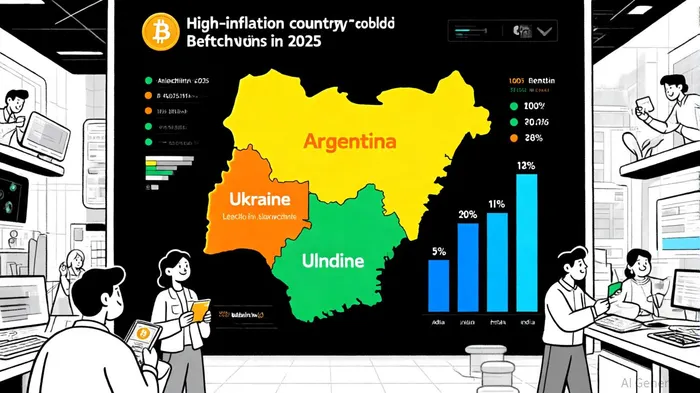






Comentarios
Aún no hay comentarios