
Bitcoin's Institutional Ascendancy: Short-Seller Retreat and Macroeconomic Realignment in 2025
Short-Seller Behavior: From Bearish Bets to Strategic Retreat
The year 2025 has witnessed a dramatic pivot in short-seller positioning against Bitcoin. A pivotal moment came when James Chanos, the legendary bearish investor, closed his long-standing short position against MicroStrategy-a move that effectively signaled the end of a 11-month trade hedged with a long Bitcoin position, according to a HashKey and Kraken partnership report. This decision, triggered by MicroStrategy's market-adjusted net asset value dropping below Chanos's cover threshold, underscores a broader trend: institutional skepticism is yielding to strategic participation.
Meanwhile, American BitcoinABTC-- Corp. has defied market sell-offs by expanding its reserves to 4,004 BTC through a mix of mining and purchases, as noted in a ScienceDirect study. This resilience highlights a key dynamic: institutions are no longer viewing Bitcoin as a speculative fad but as a portfolio diversifier with intrinsic value. The recent $558.4 million net outflow from Bitcoin spot ETFs, reported by Invezz, further illustrates a recalibration of risk sentiment, as short-term liquidity shifts give way to long-term accumulation.
Macroeconomic Positioning: Bitcoin as a New Inflation Hedge
Bitcoin's fixed supply of 21 million coins has positioned it as a compelling alternative to fiat currencies, particularly in an environment of persistent inflation and monetary expansion. While empirical studies on its inflation-hedging properties remain mixed, a ScienceDirect study suggests that its performance correlates with inflation expectations over multi-year horizons. Institutional adoption is accelerating. Sovereign wealth funds and pension plans are increasingly allocating Bitcoin to portfolios, treating it as a digital counterpart to gold, according to a EzBlockchain article.
The U.S. tariff announcement in April 2025 serves as a case study. Despite an initial 12% dip, Bitcoin rebounded within two weeks, reflecting investor confidence in its scarcity and decentralized nature, as noted in the EzBlockchain article. This resilience contrasts with traditional assets like the S&P 500, which often react more sluggishly to macroeconomic shocks. The next Bitcoin halving in 2028-reducing block rewards and further tightening supply-adds to its narrative as a deflationary asset, as described in a Cash2Bitcoin guide.
However, Bitcoin's volatility remains a double-edged sword. Annualized volatility of 60-80%, according to the Cash2Bitcoin guide, poses short-term risks, yet over multi-year horizons, its correlation with inflation expectations outperforms realized CPI. This duality has led institutions to adopt a "buy-the-dip" strategy, using price corrections as opportunities to accumulate at lower costs, as noted in a Bitcoin Sistemi article.
The Path Forward: A Maturing Asset Class
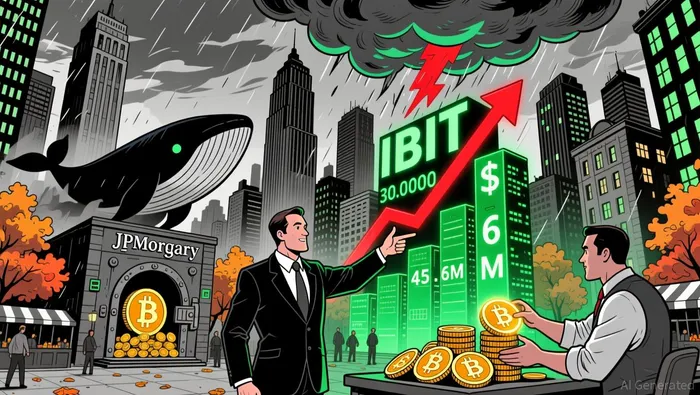
The interplay between short-seller behavior and macroeconomic positioning reveals a maturing market. Whale wallets now control a record share of Bitcoin's realized capitalization, according to a Coinotag article, while ETF outflows suggest a temporary liquidity shift rather than a rejection of Bitcoin's long-term value. Institutions are increasingly viewing Bitcoin through the lens of traditional asset management, balancing its volatility with its potential to hedge against systemic risks.
As the 2028 halving looms and regulatory clarity emerges, Bitcoin's institutional relevance will likely deepen. The question is no longer whether Bitcoin belongs in institutional portfolios but how quickly it will be integrated into the broader financial architecture.





Comentarios
Aún no hay comentarios