
Bitcoin's Institutional Adoption Momentum and Market Stability in a Volatile Macro Environment
The "Silent IPO" of Bitcoin
The transfer of BitcoinBTC-- ownership from early adopters to institutional investors-a process dubbed a "silent IPO" by macro-investor Jordi Visser-has been a defining trend of the past two years. Early adopters, who once held the majority of Bitcoin's supply, are increasingly selling their holdings, which are being absorbed by funds, banks, and ETFs. This dynamic has created a professionalized market structure, reducing the influence of retail speculation and aligning Bitcoin's price action with broader macroeconomic cycles, as noted in a Cryptonewsland analysis.
For example, the Federal Reserve's dovish pivot in 2025-marked by rate cuts and a weaker U.S. dollar-has amplified Bitcoin's appeal. As bond yields decline and traditional markets face headwinds, capital is reallocating to risk assets with structural advantages. Bitcoin's capped supply of 21 million units makes it a natural hedge against inflation and currency devaluation, a narrative that resonates in an era of quantitative easing and geopolitical instability, according to a Coinotag forecast.
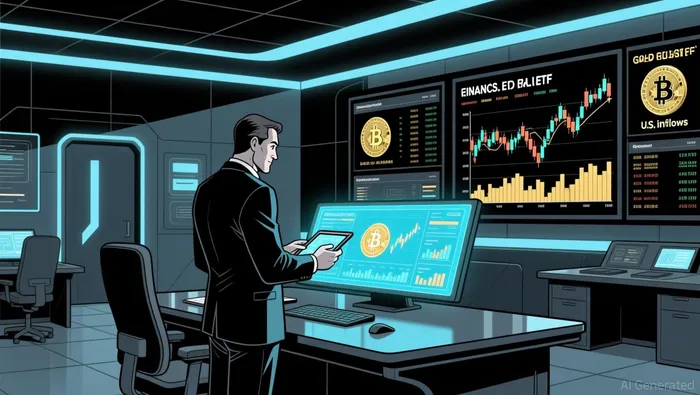
ETFs: The On-Ramp to Mainstream Adoption
The launch of Spot Bitcoin ETFs in 2024-2025 has been a game-changer. By April 2025, these funds had amassed over $65 billion in assets under management (AUM), with BlackRock's iShares Bitcoin Trust (IBIT) leading the charge. Harvard's endowment fund, for instance, allocated $100 million to a U.S. Bitcoin ETF by June 30, 2025, signaling institutional confidence, as reported by a Coinotag update.
These ETFs have also tamed Bitcoin's volatility. Realized volatility has dropped by 75% from historical levels, as institutional buyers absorb supply and reduce price swings, according to a Pinnacle Digest report. This stability is critical for long-term investors who previously shied away from Bitcoin due to its reputation for wild swings.
Strategic Allocation in a Volatile World
Institutional investors are now treating Bitcoin as a core portfolio asset. By Q2 2025, 59% of institutional portfolios included at least 10% exposure to Bitcoin and other digital assets, according to a Pinnacle Digest report. This allocation is driven by three factors:
1. Diversification: Bitcoin's low correlation with equities and bonds makes it an effective hedge.
2. Scarcity: Its fixed supply contrasts with the infinite liquidity of fiat currencies.
3. Liquidity: ETFs and institutional-grade custody solutions have made Bitcoin as accessible as gold.
Analysts project that even a modest 0.2% shift in global assets toward Bitcoin could inject $94 billion into the market, further solidifying its role as a long-term store of value, according to a Coinotag forecast.
The Road Ahead: Stability and Growth
Bitcoin's price trajectory in 2025 is increasingly tied to macroeconomic fundamentals. With the U.S. dollar weakening and bond yields falling, the asset is poised to benefit from capital flows seeking yield and protection. Projections suggest a price range of $200,000 to $210,000 within 12-18 months, driven by stock-to-flow models and sustained institutional inflows, according to a Pinnacle Digest report.
However, the path isn't without risks. A sudden reversal in Fed policy or a global economic downturn could trigger short-term volatility. Yet, the structural trends-ETF adoption, reduced volatility, and macro alignment-suggest Bitcoin's institutional era is here to stay.
Conclusion: Positioning for the Long Game
For investors navigating a volatile macro environment, Bitcoin offers a compelling case for long-term exposure. Its transition from speculative asset to institutional staple is underpinned by real-world adoption, regulatory clarity, and macroeconomic tailwinds. While caution is warranted in the near term, the broader narrative points to a future where Bitcoin is a standard component of diversified portfolios.
As the market continues to evolve, the key takeaway is clear: Bitcoin's institutional adoption is not a passing trend-it's a foundational shift in how value is stored and transferred in the 21st century.





Comentarios
Aún no hay comentarios