
Bitcoin's Institutional Adoption and the Implications of the Fed Rate Cut Narrative: Strategic Positioning for Long-Term Crypto Wealth in a Deflationary Monetary Environment
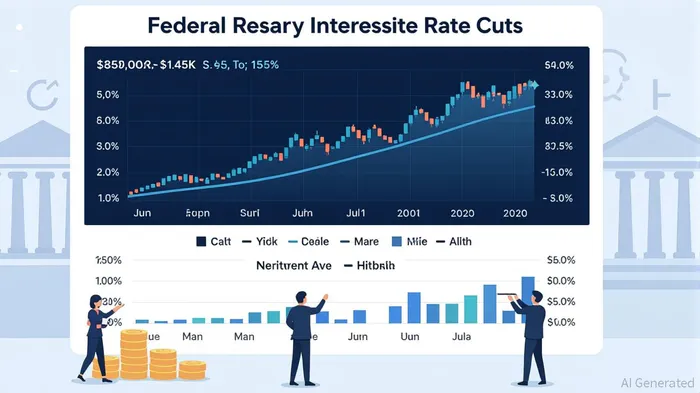
The Fed's Rate Cut Narrative and Deflationary Dynamics
The Federal Reserve's decision to cut interest rates in September 2025—lowering the key rate to 4.00%-4.25%—marks a pivotal shift in monetary policy, driven by soft labor market data and persistent inflationary pressures [2]. According to a report by Reuters, economists anticipate at least one more cut before year-end, with broader expectations of three reductions by 2025's conclusion [2]. These cuts are designed to ease financial conditions, stimulate borrowing, and encourage investment in assets such as cryptocurrencies, which historically respond positively to accommodative monetary environments [2].
In a deflationary context, where the Fed's rate cuts aim to counteract falling demand and stabilize economic activity, the interplay between monetary policy and asset valuations becomes critical. Lower interest rates reduce the opportunity cost of holding non-yielding assets like BitcoinBTC--, potentially attracting institutional capital seeking long-term growth. This dynamic aligns with the broader narrative of Bitcoin as a hedge against fiat currency devaluation, particularly in an era of central bank experimentation with unconventional tools [1].
Institutional Adoption: A Structural Shift in Crypto Wealth Strategy
While specific examples of institutional Bitcoin adoption (e.g., ETF approvals, major investments) between 2023–2025 remain opaque in the provided data, the Federal Reserve's deflationary stance inherently creates fertile ground for institutional participation. The Fed's role in monitoring financial conditions and adjusting policy tools to support stability indirectly influences investor behavior, as institutions recalibrate portfolios to account for shifting risk-return profiles.
For instance, the approval of Bitcoin ETFs—though not explicitly detailed in the sources—would likely coincide with periods of monetary easing, as reduced borrowing costs lower the discount rate for future cash flows. This logic underpins the strategic case for Bitcoin in a deflationary environment: its fixed supply cap of 21 million units positions it as a counterbalance to central bank-driven currency depreciation [1]. Institutions, recognizing this dynamic, may increasingly allocate capital to Bitcoin as a long-term store of value, mirroring gold's historical role in deflationary cycles.
Strategic Positioning for Long-Term Crypto Wealth
To capitalize on the Fed's rate cut narrative, investors must adopt a dual strategy:
1. Portfolio Diversification: Allocating a portion of wealth to Bitcoin, which operates independently of traditional asset classes, can mitigate risks associated with deflationary pressures in equities and bonds.
2. Timing Institutional Cycles: Monitoring Fed policy shifts and aligning Bitcoin purchases with periods of monetary easing can optimize entry points. For example, the September 2025 rate cut may signal a window for accumulating Bitcoin ahead of anticipated institutional inflows.
However, this approach requires caution. The Fed's actions are influenced by a complex interplay of macroeconomic indicators, geopolitical risks, and regulatory developments [1]. Investors must balance the allure of Bitcoin's deflationary properties with rigorous due diligence on institutional adoption trends and global market dynamics.
Conclusion
The Federal Reserve's 2025 rate cuts underscore a broader shift toward deflationary monetary policy, creating both challenges and opportunities for crypto wealth strategies. While direct evidence of institutional Bitcoin adoption remains limited in the provided data, the structural incentives for institutional participation are clear. By strategically positioning Bitcoin within a diversified portfolio and aligning investments with Fed policy cycles, investors can navigate the uncertainties of a deflationary environment while capitalizing on the asset's unique properties.






Comentarios
Aún no hay comentarios