
Bitcoin's Inheritance Crisis: Unresolved Custodial and Estate Planning Risks Threaten Long-Term Wealth Transfer
Bitcoin, the first and most dominant cryptocurrency, has evolved from a speculative asset to a cornerstone of modern wealth accumulation. Yet, as its adoption grows, a critical vulnerability emerges: the inability to transfer BitcoinBTC-- across generations. This "inheritance crisis" stems from unresolved custodial risks and systemic gaps in estate planning for digital assets, threatening to render trillions of dollars in value irretrievable for heirs.
The Problem: Lost Keys, Lost Wealth
The core issue lies in the technical nature of Bitcoin itself. Unlike traditional assets, Bitcoin is secured by cryptographic private keys-strings of data that grant access to wallets. Once lost, these keys cannot be recovered, even by courts or institutions. According to a report by , tens of millions of dollars in cryptocurrency have been rendered inaccessible due to lost private keys, with one case involving a decedent's heirs discovering a $200,000 cold wallet they could not unlock.
The problem is compounded by poor estate planning. Only 24% of Americans have a will, and of those, many fail to address digital assets. Traditional legal tools, such as wills and trusts, are ill-equipped to handle the technical complexities of cryptocurrency. For instance, a revocable living trust can grant immediate access to a designated trustee, but this requires meticulous documentation of private keys and wallet addresses-steps many investors neglect.
Legal Ambiguity and Custodial Risks
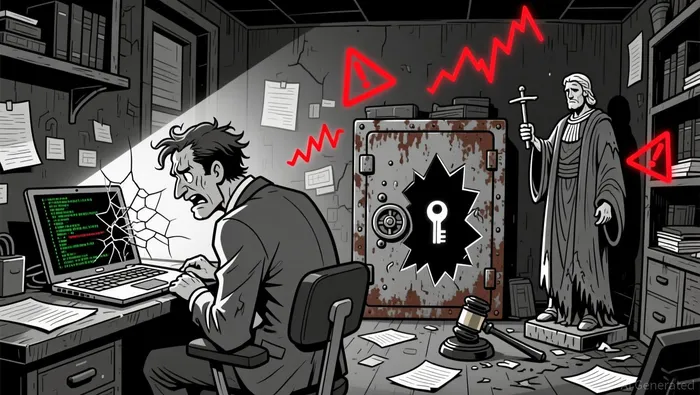
The legal landscape for digital assets remains fragmented. While the U.S. District Court for the Northern District of California upheld Coinbase's arbitration agreements in 2025, other courts have ruled against enforcing such clauses, creating uncertainty for custodial platforms. Meanwhile, the collapse of exchanges like FTX and Bybit has exposed the risks of centralized custody. When a user stores Bitcoin on an exchange, they often surrender control of their private keys, leaving their assets vulnerable to operational failures or fraud.
Even when assets are held in personal wallets, custodial risks persist. A 2025 report by highlights that commingling funds, inadequate security protocols, and lack of regulatory oversight in custodial services can lead to irreversible losses. For example, a bridge token sold to institutional investors was recently deemed a security by a federal court, complicating its inheritance and transfer.
The Human Cost: Emotional and Financial Fallout
The consequences of poor planning are both emotional and financial. Heirs often discover their loved one's Bitcoin holdings too late or without the necessary credentials to access them. A widow in North Carolina, for instance, learned her late husband had stored $200,000 in a cold wallet but lacked the seed phrase to unlock it. Traditional fiduciaries, untrained in cryptocurrency, frequently refuse to manage these assets, forcing families to appoint special trustees or pay exorbitant fees to crypto-specific inheritance services.
Regulatory Progress, But Gaps Remain
2025 saw incremental progress in clarifying the legal status of digital assets. The SEC's no-action letter for DePIN tokens, such as DoubleZero's 2Z2Z-- token, signaled a pragmatic approach to regulating decentralized networks. Additionally, the GENIUS Act, passed in July 2025, excluded stablecoins from the definition of securities, shifting oversight to banking regulators. However, these developments do not resolve the core issue of private key management or the lack of standardized estate planning tools for digital assets.
Solutions on the Horizon
To mitigate these risks, experts recommend:
1. Revocable Living Trusts: These allow designated trustees immediate access to crypto assets, bypassing probate delays.
2. Crypto-Specific Inheritance Services: Platforms like AnchorWatch offer secure storage and transfer solutions for private keys.
3. Comprehensive Documentation: Investors must inventory their holdings, track cost basis, and share access credentials with trusted individuals.
4. Regulatory Clarity: Policymakers must standardize custodial requirements and integrate digital assets into estate planning frameworks.
Despite these solutions, adoption remains low. A 2025 study by found that 76% of crypto holders still lack a clear inheritance strategy. Until this changes, Bitcoin's promise as a long-term store of value will remain undermined by its fragility in the face of death.
Conclusion
Bitcoin's inheritance crisis is not merely a technical or legal issue-it is a systemic failure to adapt estate planning for the digital age. As custodial risks and legal ambiguities persist, the onus falls on investors to prioritize documentation, education, and proactive planning. For Bitcoin to fulfill its role as a generational wealth transfer vehicle, the industry must address these unresolved challenges with urgency and innovation.





Comentarios
Aún no hay comentarios