
Bitcoin's Governance Crossroads: BIP-444 and the Battle for Protocol Neutrality
BIP-444: A Temporary Fix or a Slippery Slope?
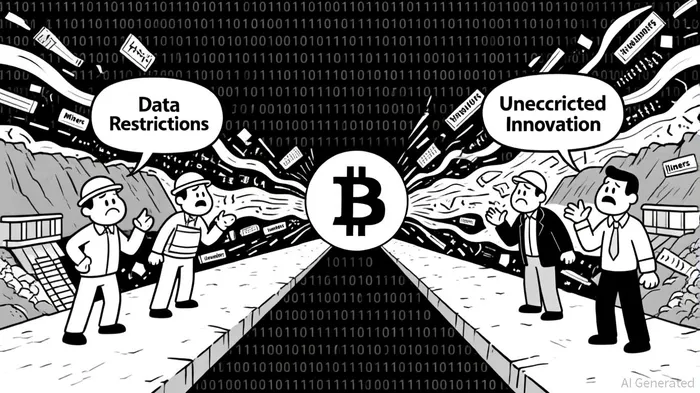
BIP-444, proposed by Bitcoin Core developer Luke Dashjr, seeks to limit non-transactional data in blocks by capping OP_RETURN outputs at 83 bytes and disabling Ordinals-style inscriptions for approximately 1.27 years, according to a CoinTurk article. The self-expiring soft fork is framed as a "temporary emergency response" to mitigate spam, reduce block space congestion, and address legal risks from hosting illegal content like CSAM, as argued in a 99Bitcoins piece. However, its critics, including major mining pool F2Pool, argue that protocol-level data restrictions undermine Bitcoin's neutrality, warning that such changes erode the network's permissionless ethos, as reported in a Coinotag article.
The debate mirrors historical conflicts, such as the 2017 block size wars, where disagreements over scaling solutions led to the Bitcoin CashBCH-- fork. If BIP-444 fails to achieve consensus, a similar chain split could occur, fragmenting hashpower and user adoption, according to another Coinotag analysis. For investors, this scenario highlights the fragility of Bitcoin's governance model and the risks of protocol changes that prioritize short-term efficiency over long-term decentralization.
Mining Economics: Revenue Shifts and Centralization Risks
The economic impact of BIP-444 on miners is nuanced. While the proposal does not directly alter block subsidies, it could indirectly affect fee revenue by reducing the volume of data-heavy transactions. In 2024, mining revenue plummeted post-halving, with block subsidies dropping from $1.93 billion to $1.5 billion in April alone, according to a Bitcoin.com analysis. By curbing non-financial data, BIP-444 might lower block space demand, further compressing fee income. However, proponents counter that spam reduction could stabilize fees and prevent network congestion, ultimately benefiting miners.
Yet, the broader concern lies in centralization. Large mining pools like F2Pool, which controls over 10% of the network's hash rate, wield disproportionate influence over protocol upgrades. Their opposition to BIP-444 signals a philosophical divide: should miners act as neutral validators, or as gatekeepers shaping the network's direction? This tension echoes the 2021 debate over EIP-1559 in EthereumETH--, where miner revenue shifts sparked contentious hard forks. For Bitcoin, the risk is that protocol changes become tools for power consolidation, undermining the decentralized ethos that underpins its value proposition.
Investor Trends: Layer-1 Struggles and Layer-2 Opportunities
The BIP-444 debate has also reshaped investor sentiment toward Bitcoin's layer-1 and layer-2 ecosystems. Layer-1 projects, already grappling with post-halving revenue declines, face additional headwinds. The recent collapse of KadenaKDA-- (KDA) underscores the challenges of sustaining layer-1 initiatives amid stiff competition from Ethereum and SolanaSOL--, as detailed in an Investor Empires report. Conversely, layer-2 solutions are gaining traction. Platforms like Little PepePEPE-- (LILPEPE), a meme-focused layer-2 blockchain, are leveraging Bitcoin's security while offering low fees and niche use cases, according to a FinanceFeeds piece.
Strategic partnerships are further bolstering layer-2 adoption. For instance, VerifiedX's collaboration with Halborn to enhance security audits highlights how layer-1 projects can differentiate themselves through innovation, reported in a TheCoinrise report. Investors should monitor these trends, as layer-2 ecosystems may offer more flexibility in navigating governance disputes like BIP-444.
Strategic Insights for Investors
For investors positioning in the Bitcoin ecosystem, the BIP-444 debate underscores three key considerations:
1. Diversify Exposure: Allocate capital across layer-1 and layer-2 projects to hedge against protocol-specific risks. While layer-1 projects like Bitcoin face governance headwinds, layer-2 innovations offer scalable solutions for niche markets.
2. Monitor Hashpower Dynamics: Track miner behavior and hashpower distribution. Centralization risks, as seen with F2Pool's opposition, could signal broader instability in the network.
3. Engage with Governance: Participate in community discussions or support projects that prioritize decentralized governance models. The outcome of BIP-444 will likely shape Bitcoin's trajectory for years to come.
Conclusion
BIP-444 is more than a technical proposal-it is a litmus test for Bitcoin's ability to balance scalability, neutrality, and decentralization. While the debate over data restrictions is far from resolved, investors must remain vigilant to the evolving risks and opportunities. In a landscape where protocol changes can redefine market dynamics overnight, adaptability and strategic foresight will be paramount.






Comentarios
Aún no hay comentarios