
Bitcoin and Ethereum's Bull Run: Macro Tailwinds and On-Chain Signals Align
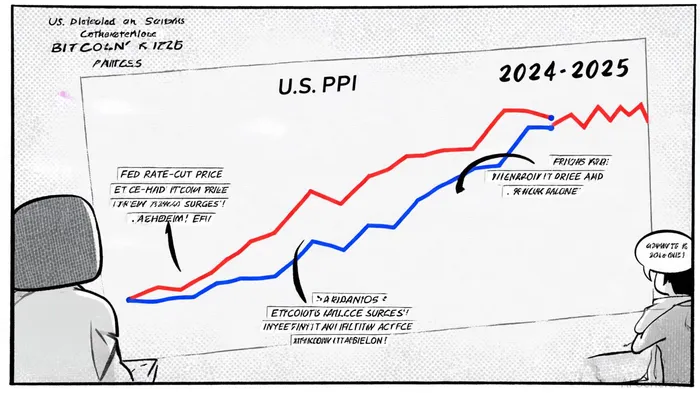
The cryptocurrency market is entering a pivotal phase as macroeconomic tailwinds and on-chain metrics converge to signal a stronger bull cycle for BitcoinBTC-- (BTC) and EthereumETH-- (ETH). With the U.S. Producer Price Index (PPI) cooling and the Federal Reserve poised to cut interest rates in September 2025, the stage is set for risk-on assets to outperform. Meanwhile, on-chain data reveals growing network activity and valuation shifts that align with historical bull market patterns.
Macro Tailwinds: Cooling Inflation and Rate-Cut Expectations
The U.S. PPI for final demand fell by 0.1% month-on-month in August 2025, marking the first decline since April 2025[1]. This cooling trend, driven by a 0.2% drop in services prices and a 1.7% decline in trade service margins[2], suggests that wholesale inflation is easing. On a year-over-year basis, core PPI inflation stands at 2.8%, the largest annual increase since March 2025[3], but this figure reflects lingering cost pressures from high tariffs rather than overheating demand.
The Federal Reserve's response to this environment is critical. J.P. Morgan analysts argue that recent changes in the Fed's governing board, including the nomination of Stephen Miran, could push the September 2025 meeting toward a 25 basis point rate cut[4]. The CME FedWatch Tool further supports this, projecting two 25 basis point cuts in 2025 (September and December) and two more by the end of 2026[5]. These cuts would bring the federal funds rate to 4.00%-4.25%, a level last seen in 2022.
The Fed's pivot toward easing is driven by a cooling labor market and global tariff wars, which have increased downside risks to growth[6]. Lower interest rates reduce the opportunity cost of holding non-yielding assets like Bitcoin and Ethereum, making them more attractive to investors seeking inflation hedges and capital appreciation.
On-Chain Signals: Network Activity and Valuation Metrics
Bitcoin and Ethereum's on-chain metrics reinforce the case for a bull cycle. For Bitcoin, the Network Value to Transactions (NVT) ratio has dipped to 187.33, indicating that transaction volume is outpacing market cap—a sign of healthy network activity[7]. This aligns with the post-2024 halving cycle, where Bitcoin's scarcity premium and institutional adoption have driven long-term price appreciation[8].
Ethereum's on-chain dynamics are equally compelling. The NVT ratio for ETH reached 2044 in Q3 2025, suggesting potential overvaluation relative to transaction volumes[9]. However, this divergence between usage and price is not uncommon during bull cycles. Ethereum's active address count surged past 356,000, and daily transaction volumes exceeded 1.5 million, the highest since early 2023[10]. These figures are bolstered by a 400% surge in Ethereum ETF inflows, reflecting growing institutional demand[11].
Both networks are also experiencing supply-side tightening. Ethereum's liquid supply has shrunk as ETH is siphoned into cold wallets and staking, while Bitcoin's post-halving scarcity narrative continues to attract long-term holders[12].
The Bull Case: Macro and On-Chain Convergence
The interplay between macroeconomic easing and on-chain strength creates a powerful bull case. Lower interest rates reduce the discount rate for future cash flows, inflating the valuations of assets like Bitcoin and Ethereum. Meanwhile, rising transaction volumes and NVT ratios signal growing utility and adoption, which are critical for sustaining price gains.
For Bitcoin, the 2024 halving event has set the stage for a 12-18 month cycle toward a potential peak in 2025[13]. Ethereum's ETF-driven inflows and active address growth suggest it is entering a similar phase, with its NVT ratio hinting at latent upside as network utility catches up to price.
Risks and Cautions
While the case for a bull run is strong, risks remain. Persistent core PPI inflation (2.8% YoY) and global tariff wars could delay rate cuts. Additionally, Bitcoin's NVT dip to 187.33 may signal speculative fervor rather than sustainable demand[14]. Investors should monitor on-chain metrics like the MVRV Z-score (which indicates underwater holders) and Fed policy shifts for early signs of volatility.
Conclusion
Bitcoin and Ethereum are poised to capitalize on a rare alignment of macroeconomic tailwinds and on-chain strength. As the Fed pivots toward easing and PPI inflation cools, crypto assets are becoming increasingly attractive to both retail and institutional investors. Meanwhile, rising transaction volumes, tightening supply dynamics, and NVT trends suggest that the bull cycle is gaining structural momentum. For investors, the key is to balance optimism with caution, leveraging both macro and on-chain signals to navigate the evolving landscape.






Comentarios
Aún no hay comentarios