
Bitcoin ETFs and Their Role in a Diversified Portfolio: Balancing Growth and Risk in a Macro Uncertain World
In the evolving landscape of global finance, BitcoinBTC-- ETFs have emerged as a unique asset class, straddling the dual roles of high-growth driver and risk-mitigation tool. As macroeconomic uncertainty persists-marked by shifting interest rates, geopolitical tensions, and regulatory developments-investors are increasingly turning to these instruments to navigate volatility while capitalizing on long-term opportunities. This analysis explores how Bitcoin ETFs function within diversified portfolios, leveraging both their growth potential and their asymmetric diversification benefits.
The High-Growth Case: Institutional Adoption and Regulatory Clarity
Bitcoin ETFs have attracted significant institutional capital, driven by regulatory clarity and technological advancements. By June 2025, the iShares Bitcoin Trust (IBIT) alone held 662,571 BTC, reflecting a broader trend of institutional confidence, according to a Coin Edition recap. Total year-to-date inflows for Bitcoin ETFs reached $21.5 billion in 2025, despite intermittent outflows tied to macroeconomic jitters, as noted in a BeInCrypto analysis. This resilience underscores Bitcoin's appeal as a long-term accumulation vehicle, particularly as U.S. federal laws governing digital assets have reduced regulatory ambiguity, a point highlighted in that Coin Edition recap.
However, growth is not without volatility. For instance, a $900 million outflow in late September 2025-a single-week record-pushed Bitcoin's price below $110,000, as reported in a Coin-Views article. Such fluctuations highlight the tension between Bitcoin's speculative allure and its role as a store of value. Yet, experts like Eric Balchunas argue that these outflows are cyclical rather than indicative of a structural decline, emphasizing the enduring institutional support for Bitcoin ETFs, as the BeInCrypto analysis observes.
Risk Mitigation: Diversification and Asymmetric Benefits
Bitcoin ETFs' value as a risk-mitigation tool lies in their low correlation with traditional assets. Over the past decade, Bitcoin's correlation with the S&P 500 has averaged 0.15, significantly lower than equities' self-correlation, according to a BlackRock analysis. This dynamic becomes critical during periods of high economic policy uncertainty (EPU), where Bitcoin has demonstrated asymmetric diversification benefits. Studies show that portfolios incorporating Bitcoin alongside the Fama-French 5 risk factors improve risk-adjusted returns during high-EPU periods but offer minimal value-or even detract from performance-when uncertainty is low, as documented in the BeInCrypto analysis.
For example, during Q3 2025, Bitcoin ETFs helped stabilize portfolios amid geopolitical tensions and shifting interest rate expectations. While EthereumETH-- ETFs saw a 215% price gain compared to Bitcoin's 198%, institutional investors selectively reallocated capital to Bitcoin as a safer bet, a trend highlighted in the BeInCrypto analysis. This behavior aligns with Bitcoin's historical role as a "digital gold," offering a hedge against liquidity risk and macroeconomic shocks, as an MDPI study finds.
Navigating the Duality: Strategic Allocation in a Macro-Driven World
The dual nature of Bitcoin ETFs-growth and risk mitigation-demands strategic allocation. During low-EPU periods, their utility as a diversifier diminishes, and investors may prioritize alternatives like Ethereum for higher growth. Conversely, in high-EPU environments, Bitcoin ETFs act as a stabilizer, particularly when paired with gold (which has a -0.01 correlation with equities), a relationship noted in the BlackRockBLK-- analysis.
This duality is further amplified by Bitcoin's dynamic relationship with traditional assets. While it behaves as a risk asset during market stress (positively correlated with equities and commodities), it also serves as a hedge against the U.S. dollar in the long term, a nuance discussed in the BeInCrypto analysis. Such complexity requires investors to align their Bitcoin ETF allocations with prevailing macroeconomic conditions. For instance, during stagflation risks-where growth stagnates and inflation rises-Bitcoin's low correlation with bonds and equities could enhance portfolio resilience, as the Coin-Views article suggests.
Conclusion: A Tool, Not a Panacea
Bitcoin ETFs are neither a guaranteed growth engine nor a foolproof hedge. Their effectiveness depends on the economic context, investor risk tolerance, and portfolio structure. As macroeconomic uncertainty remains a defining feature of the 2025 landscape, these instruments offer a unique blend of innovation and caution. However, their integration into portfolios must be deliberate, balancing the allure of high-growth potential with the need for risk management.
For investors, the key takeaway is clear: Bitcoin ETFs are a versatile tool, but their value is contingent on strategic alignment with macroeconomic realities. As the market evolves, so too must the frameworks through which we assess their role.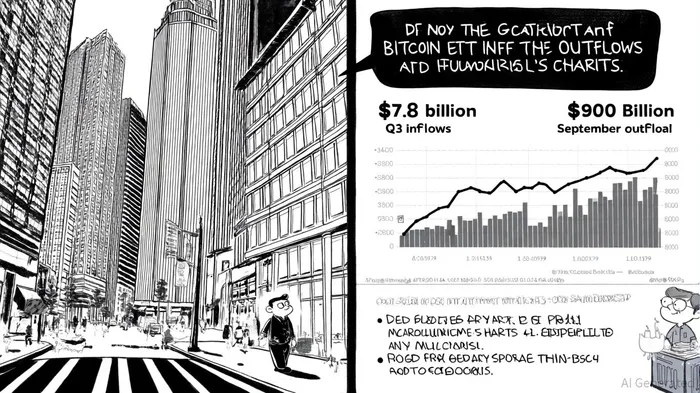





Comentarios
Aún no hay comentarios