
Bitcoin ETF Outflows and the Shadow of Year-End De-Risking: A Seasonal Liquidity Analysis
The fourth quarter of 2025 has delivered a stark reminder of the fragility of crypto market sentiment, as BitcoinBTC-- ETFs faced a wave of outflows that amplified downward price pressure and exposed institutional caution. With U.S. spot Bitcoin ETFs recording net outflows of $188.6 million in a single day-BlackRock's IBIT alone losing $157.3 million-investors are grappling with a sharp reversal from the inflows of just a week prior according to Crowdfund Insider. This exodus, part of a broader $497.1 million outflow over seven days, underscores the interplay between seasonal liquidity dynamics and year-end de-risking behavior, reshaping the landscape for both institutional and retail participants.
The Q4 2025 Outflow Surge: A Confluence of Factors
The recent outflows are not isolated but part of a larger pattern of investor behavior tied to end-of-year cycles. According to a report by Bloomberg, the decline in ETF inflows coincided with Bitcoin's 23% price drop in Q4, driven by profit-taking and forced deleveraging after the asset peaked near $126,000 in October. This trend aligns with historical precedents: in November 2025 alone, U.S.-listed Bitcoin ETFs lost $3.5 billion, nearing the record $3.6 billion outflow set in February. BlackRock's IBIT, the largest fund in the category, accounted for $2.2 billion of these redemptions, marking its worst month since the ETFs' launch.
The mechanics of these outflows reveal a self-reinforcing cycle. Citi Research estimates that every $1 billion withdrawn from Bitcoin ETFs correlates with a 3.4% drop in Bitcoin's price according to MEXC. This feedback loop has intensified as ETFs, once catalysts for price surges, now amplify bearish momentum. The ETFs' role as liquidity conduits has also been strained: market depth in Bitcoin fell 30% from its 2025 peak, exacerbating volatility during periods of heavy selling.
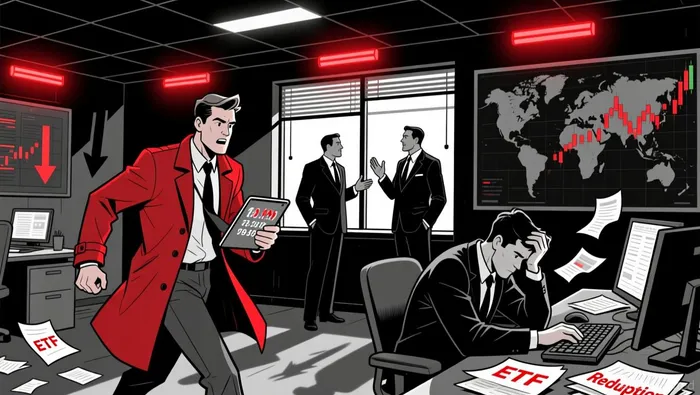
The timing of these outflows aligns with tax-loss harvesting strategies and profit realization, as investors rebalance portfolios ahead of the new year. A report by Crowdfund Insider notes that the pre-holiday period often sees reduced market depth, compounding the impact of redemptions. This dynamic is further amplified by Bitcoin's growing correlation with risk assets, making it more susceptible to broad market corrections.
Institutional Strategies and Regulatory Context
Institutional de-risking in 2025 has been shaped by evolving regulatory frameworks. The U.S. passage of the GENIUS Act for stablecoin regulation and the EU's MiCA framework have provided clarity, but they have also raised compliance costs, prompting a shift from speculative exposure to strategic allocation . Corporations like MicroStrategy have adopted multi-layer risk frameworks, including stablecoin reserves and automated rebalancing triggers, to manage crypto holdings according to PowerDrill.
Yet, the broader institutional landscape remains cautious. The Basel Committee's reevaluation of prudential rules for crypto exposures signals a softening of regulatory stances, but uncertainty persists. This environment has driven a preference for diversified, risk-managed approaches, with Bitcoin ETFs serving as both a tool and a liability in portfolio management .
Implications for Market Sentiment and the Road Ahead
The Q4 2025 outflows highlight a critical inflection point for Bitcoin's institutional adoption. While the asset's historical seasonal strength-typically a rally in December-has been muted this year, the underlying structural factors-regulatory progress and institutional-grade infrastructure-remain intact according to KhanFK. However, the ETF-driven feedback loops and liquidity constraints suggest that Bitcoin's path to recovery will require more than macroeconomic optimism; it will need a catalyst to reignite buying momentum.
For investors, the lesson is clear: the interplay between seasonal liquidity and institutional behavior will continue to shape Bitcoin's trajectory. As the year closes, the focus shifts to whether the market can stabilize and whether the Q4 selloff will be remembered as a temporary correction or a harbinger of deeper challenges.





Comentarios
Aún no hay comentarios