
Bitcoin's Energy Transition: A Strategic Nexus for Institutional Investment in 2025
Bitcoin's energy infrastructure is undergoing a seismic shift, driven by institutional demand and the urgent global transition to renewable energy. For investors, this convergence presents a unique opportunity: a sector where capital can align with sustainability while capitalizing on Bitcoin's growing legitimacy as a strategic asset. By 2025, BitcoinBTC-- mining consumes 138 TWh annually-0.5% of global electricity demand-yet 52.4% of this energy now comes from non-fossil sources, including 42.6% from renewables like hydro, wind, and solar, according to a Steptoe-Johnson analysis. This marks a 14.8% increase in clean energy adoption since 2022, per Coinlaw statistics, signaling a maturing industry that is increasingly attractive to institutional players prioritizing ESG (Environmental, Social, and Governance) criteria.
The Institutionalization of Bitcoin Mining
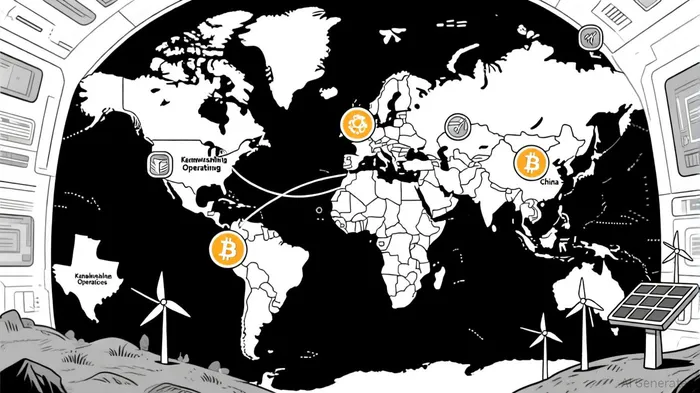
Institutional investment in Bitcoin has surged, with specialized treasury companies now accounting for 76% of business Bitcoin purchases since January 2024, according to Business Initiative. These firms, often leveraging equity offerings and convertible debt, have amassed $100 billion+ in capital to acquire approximately 1,400 Bitcoin daily, a trend described in that report. Their focus extends beyond mere asset acquisition: many are directly investing in mining operations powered by surplus renewable energy, creating a feedback loop where Bitcoin mining monetizes stranded energy resources. For example, Texas-home to 37.8% of the global hash rate-has become a hub for miners utilizing 2.3 GW of electricity, with operations designed to curtail power use during grid stress, according to a Global Electricity report.
The U.S. Strategic Bitcoin Reserve and regulatory clarity from FASB, SEC, and CFTC have further legitimized Bitcoin as a corporate asset, the Business Initiative report adds. Institutions now favor "virgin" Bitcoin-mined using clean energy-over spot purchases, driving demand for mining infrastructure with transparent energy sourcing, as highlighted in a Lokamining analysis. This trend is mirrored globally, with sovereign wealth funds like Abu Dhabi's $1 trillion fund and BlackRock allocating capital to Bitcoin operations that align with decarbonization goals, as the same analysis describes.
Energy Transition: Challenges and Innovations
Despite progress, Bitcoin mining remains a significant emitter, producing 39.8 million tons of CO₂ annually-equivalent to Slovakia's emissions, a point noted in the Steptoe-Johnson analysis. Critics argue that the industry's reliance on 38.2% natural gas and 8.9% coal undermines its green credentials, as the Steptoe-Johnson analysis also observes. However, proponents counter that Bitcoin mining accelerates renewable adoption by absorbing surplus energy that would otherwise be curtailed. For instance, flared gas in oil fields and excess hydroelectric power in regions like Kazakhstan are being repurposed for mining, reducing waste and creating economic value, a dynamic described by Steptoe-Johnson.
Innovations in efficiency are critical. Top-tier ASIC miners in 2025 achieve 46 J/TH-12% better than 2024 models, according to Coinlaw statistics-while hydro direct liquid cooling (DLC) systems, pioneered by firms like DMG Blockchain, reduce heat waste and improve energy efficiency, as noted by Steptoe-Johnson. Modular mining infrastructure and long-term offtake contracts are also enabling institutions to scale operations with predictable costs and carbon footprints, a trend discussed in the Lokamining analysis.
Competitive Dynamics: Bitcoin vs. AI
The energy transition is not without competition. AI data centers, which now consume 1% of global electricity, are vying for the same cheap, renewable power sources as Bitcoin miners, the Lokamining analysis explains. This rivalry could drive further innovation in energy storage and grid flexibility, benefiting both sectors. For institutions, the key lies in securing access to underutilized renewable assets-such as solar farms in deserts or wind turbines in remote areas-where Bitcoin mining can act as a "load balancer" to stabilize supply, a role explored by Global Electricity.
Risks and the Road Ahead
Challenges persist. Water consumption in mining hubs like Kazakhstan rose 53.7% from 2020 to 2021, raising environmental concerns noted by Steptoe-Johnson. Regulatory shifts, particularly in jurisdictions with coal-dependent mining, could also disrupt operations. However, the industry's pivot toward renewables and ESG-aligned strategies suggests a long-term trajectory toward sustainability.
For investors, the opportunity lies in infrastructure: companies developing clean energy-powered mining facilities, modular hardware, and grid-integrated solutions. As Bitcoin's energy footprint becomes increasingly green, it is poised to play a pivotal role in the global energy transition-transforming stranded energy into value while securing its place in institutional portfolios.






Comentarios
Aún no hay comentarios