
Bitcoin vs. Emerging Altcoins in 2025: High-Conviction Opportunities in a Shifting Crypto Landscape
The crypto market in 2025 is witnessing a pivotal shift. While BitcoinBTC-- (BTC) remains the dominant asset, its market share has declined from 65% in May to 59% in August 2025, signaling a broader rotation into altcoins, according to a CryptoTale analysis. This trend, driven by institutional adoption, regulatory clarity, and thematic catalysts like stablecoin growth and decentralized finance (DeFi), has created fertile ground for high-conviction altcoin opportunities. For investors, the challenge lies in balancing Bitcoin's proven resilience with the innovation and volatility-adjusted returns of emerging projects.
Bitcoin's Resilience in a Fragmented Market
Bitcoin's price action in Q3 2025 has been characterized by stability, trading within a $108,000–$118,000 range despite a 50% surge in altcoin market capitalization to $1.7 trillion, as noted in the CryptoTale analysis. This stability is underpinned by institutional demand, with ETF inflows and macroeconomic tailwinds-such as expectations for a Federal Reserve rate cut-providing a floor for BTC's price, according to a BeInCrypto report. By late September, Bitcoin had already recorded an 8% gain, its second-best September performance since 2012, according to Cointelegraph. However, its underperformance relative to altcoins like EthereumETH-- (ETH) and SolanaSOL-- (SOL) highlights a structural shift in market dynamics.
The ETH-BTC ratio, a key indicator of altcoin strength, reached a multi-year high in August 2025, reflecting Ethereum's 17% gains compared to Bitcoin's 7% decline, per Capwolf data. This divergence underscores a broader trend: investors are increasingly allocating capital to utility-driven platforms that offer tangible use cases beyond store-of-value speculation.
High-Conviction Altcoin Opportunities
Ethereum (ETH): The Infrastructure Play
Ethereum's Q3 2025 outperformance is no accident. The Pectra upgrade, which enhanced transaction speed and reduced gas fees, catalyzed a 50% rise in its market cap to $550 billion, according to The Currency Analytics. Institutional demand for Ethereum ETFs-exceeding $4 billion in inflows-further solidified its position as the leading smart contract platform, as the CryptoTale analysis noted. Additionally, the GENIUS Act's regulatory clarity for stablecoins boosted Ethereum's role as a settlement layer for DeFi and real-world assets (RWAs), according to a CoinEdition recap.
Solana (SOL): Scalability and TVL Surge
Solana's price surged above $200 in Q3 2025, driven by a 30% increase in total value locked (TVL) to $30.5 billion and a 20% network capacity upgrade, as reported by The Currency Analytics. Its decentralized exchange (DEX) volume hit $120 billion monthly, outpacing many competitors, per Capwolf. Solana's focus on high-throughput, low-cost transactions positions it as a prime beneficiary of the growing demand for Web3 infrastructure.
BNB Chain (BNB): Ecosystem Expansion
Binance's native token, BNBBNB--, saw robust performance as BNB Chain's DEX volumes hit record highs. The chain's integration with cross-chain bridges and its role in decentralized derivatives platforms like Hyperliquid, noted in the CryptoTale analysis, highlight its utility in a fragmented crypto ecosystem. BNB's open interest dominance also rose to 40%, reflecting strong speculative activity, according to the CoinEdition recap.
XRP: Regulatory Hurdles and ETF Potential
Ripple's XRPXRP--, though volatile, remains a speculative play. Its potential approval for an ETF and the easing of global trade tensions could unlock significant value. XRP's market cap growth in Q3 2025 was supported by increased adoption in cross-border payments, particularly in emerging markets, as The Currency Analytics reported.
Regulatory and Market Catalysts
The U.S. regulatory landscape has been a critical enabler for altcoins. The GENIUS Act's stablecoin framework and the CLARITY Act's jurisdictional clarity for Ethereum and Bitcoin, noted in the CoinEdition recap, have reduced uncertainty for institutional investors. Meanwhile, decentralized exchange activity-spurred by platforms like Hyperliquid and Drift-has driven liquidity to altcoins, according to the CryptoTale analysis.
Macro factors also favor altcoins. A dovish Federal Reserve policy and rising M2 money supply are creating a pro-liquidity environment, as detailed in the BeInCrypto report. Additionally, the rise of stablecoins (now exceeding $290 billion in supply) has provided a stable base for altcoin trading volumes, the CryptoTale analysis notes.
Investment Considerations
While Bitcoin's dominance may rebound in October 2025, as Cointelegraph suggested, investors should not overlook the structural tailwinds propelling altcoins. A diversified portfolio balancing Bitcoin's stability with high-conviction altcoins like Ethereum, Solana, and BNB could capture both macro trends and innovation-driven growth. However, volatility remains a risk-altcoins like BONKBONK-- and FLOKIFLOKI--, while outperforming Bitcoin in Q3, are subject to speculative swings, as observed in the CryptoTale analysis.
Conclusion
The 2025 crypto market is a tale of two assets: Bitcoin's enduring appeal and altcoins' explosive innovation. For investors seeking high-conviction opportunities, Ethereum's infrastructure upgrades, Solana's scalability, and BNB Chain's ecosystem expansion present compelling cases. Yet, these opportunities must be weighed against Bitcoin's role as a macro hedge and the regulatory risks inherent in a rapidly evolving sector. As the year progresses, the interplay between Bitcoin's dominance and altcoin momentum will define the next chapter of crypto investing.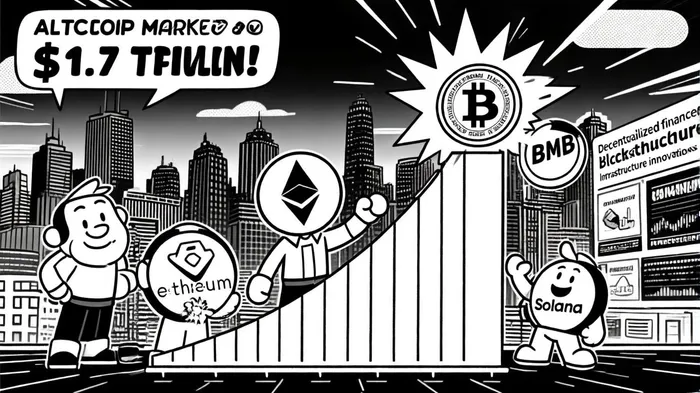







Comentarios
Aún no hay comentarios