
Bitcoin Dips Below $97,000: Trump Tariffs Spark Market Downturn
Generado por agente de IAWesley Park
domingo, 2 de febrero de 2025, 8:10 pm ET2 min de lectura
BTC--
Bitcoin, the world's leading cryptocurrency, has taken a tumble, dipping below the $97,000 mark following President Donald Trump's recent tariff orders. The move has sent shockwaves through the crypto market, with smaller cryptocurrencies also experiencing significant declines. As investors grapple with the implications of these geopolitical events, let's delve into the reasons behind the market downturn and explore potential strategies for capitalizing on these trends.
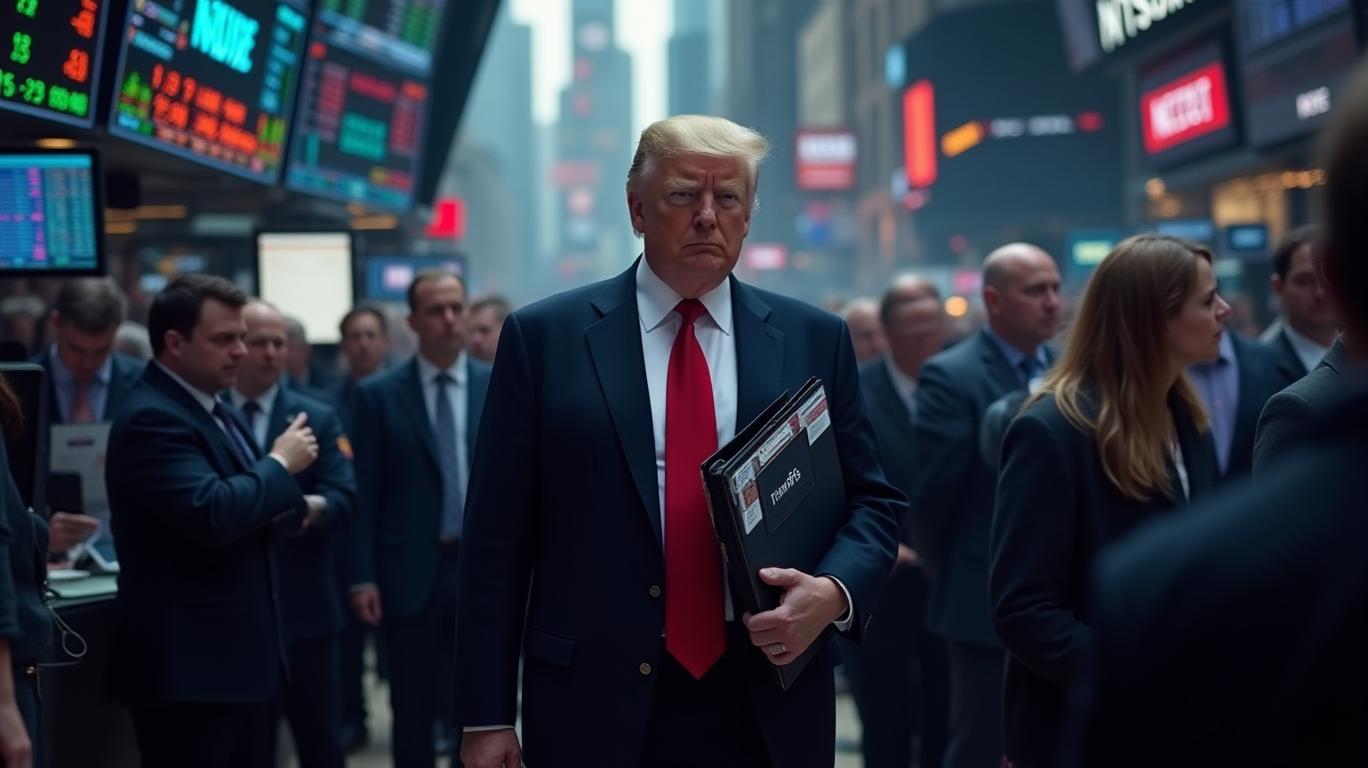
Trump's Tariffs: A Double-Edged Sword for Cryptocurrencies
Trump's tariffs, which include a 25% tariff on Canadian and Mexican goods and a 10% tariff on Chinese imports, are expected to have significant impacts on the global economy. These tariffs can lead to increased costs for imported goods, benefiting domestic businesses but potentially causing inflation due to higher prices for consumers. Additionally, they may result in trade disputes and economic uncertainty, which can negatively affect financial markets, including cryptocurrencies like Bitcoin.
In the long term, the effects of Trump's tariffs on cryptocurrencies are uncertain. While some analysts, like Jeff Park of Bitwise Asset Management, believe that a sustained tariff war could be "amazing" for Bitcoin due to a potential weakening of the dollar and U.S. rates, others argue that Bitcoin may respond negatively to uncertainty around the trade war in the short term. This is because Bitcoin often trades like a risk asset in the short term, and investors may pull back from riskier assets like crypto during periods of uncertainty.
Moreover, the correlation between Bitcoin's price movements and traditional financial markets, such as the S&P 500, has been increasing. This means that Bitcoin's price movements may be influenced by broader market trends and geopolitical events, including Trump's tariff policies. If the proposed tariffs on Mexico and Canada take effect, they could disrupt traditional and digital asset markets, leading to increased volatility in cryptocurrencies like Bitcoin.
Smaller Cryptocurrencies: Reacting to Market Downturns
Smaller cryptocurrencies, often referred to as altcoins, tend to react more significantly to market downturns compared to larger cryptocurrencies like Bitcoin. This is due to their lower market capitalization and higher volatility. For instance, during the recent market decline on February 3, 2025, Ethena (ENA), an altcoin, dropped by 8.7% in a single day, while Bitcoin only experienced a 3% decline (Source: Materials).
To identify undervalued assets during market downturns, investors can employ the following strategies:
1. Fundamental Analysis: Evaluate the project's technology, team, roadmap, and partnerships. For example, Ethena's (ENA) unique features and partnerships could make it an attractive investment during a market downturn, as its fundamentals remain strong despite the price decline.
2. Relative Strength Index (RSI): Use the RSI indicator to identify oversold conditions. If an altcoin's RSI is below 30, it might be undervalued and a good candidate for investment. For instance, during the February 3, 2025, market decline, ENA's RSI could have been checked to determine if it was oversold.
3. Support and Resistance Levels: Identify key support and resistance levels for the altcoin. If the price is trading near or below a significant support level, it might be undervalued. For example, ENA's key support level of $0.938 could have been monitored to determine if it was holding or breaking down.
4. Market Capitalization: Consider the altcoin's market capitalization relative to its peers. Smaller-cap altcoins might be more undervalued during market downturns, as they are more susceptible to price swings. For instance, ENA's market capitalization could have been compared to other altcoins to assess its relative value.
5. Diversification: Allocate a portion of your portfolio to smaller-cap altcoins to take advantage of potential undervalued opportunities. This strategy can help investors achieve higher returns during market recoveries, as undervalued altcoins often experience more significant price increases than larger cryptocurrencies.
By employing these strategies, investors can identify undervalued altcoins during market downturns and potentially benefit from their recovery. However, it is essential to remember that these strategies do not guarantee success, and thorough research and risk management are crucial when investing in the crypto market.
In conclusion, the recent market downturn, sparked by President Trump's tariff orders, has led to a decline in Bitcoin's price and a tumble for smaller cryptocurrencies. While the long-term effects of Trump's tariffs on cryptocurrencies are uncertain, investors can capitalize on these trends by diversifying their portfolios, timing the market, investing in Bitcoin ETFs, and staying informed. Additionally, identifying undervalued altcoins during market downturns can provide opportunities for significant gains as the market recovers.
Bitcoin, the world's leading cryptocurrency, has taken a tumble, dipping below the $97,000 mark following President Donald Trump's recent tariff orders. The move has sent shockwaves through the crypto market, with smaller cryptocurrencies also experiencing significant declines. As investors grapple with the implications of these geopolitical events, let's delve into the reasons behind the market downturn and explore potential strategies for capitalizing on these trends.
Trump's Tariffs: A Double-Edged Sword for Cryptocurrencies
Trump's tariffs, which include a 25% tariff on Canadian and Mexican goods and a 10% tariff on Chinese imports, are expected to have significant impacts on the global economy. These tariffs can lead to increased costs for imported goods, benefiting domestic businesses but potentially causing inflation due to higher prices for consumers. Additionally, they may result in trade disputes and economic uncertainty, which can negatively affect financial markets, including cryptocurrencies like Bitcoin.
In the long term, the effects of Trump's tariffs on cryptocurrencies are uncertain. While some analysts, like Jeff Park of Bitwise Asset Management, believe that a sustained tariff war could be "amazing" for Bitcoin due to a potential weakening of the dollar and U.S. rates, others argue that Bitcoin may respond negatively to uncertainty around the trade war in the short term. This is because Bitcoin often trades like a risk asset in the short term, and investors may pull back from riskier assets like crypto during periods of uncertainty.
Moreover, the correlation between Bitcoin's price movements and traditional financial markets, such as the S&P 500, has been increasing. This means that Bitcoin's price movements may be influenced by broader market trends and geopolitical events, including Trump's tariff policies. If the proposed tariffs on Mexico and Canada take effect, they could disrupt traditional and digital asset markets, leading to increased volatility in cryptocurrencies like Bitcoin.
Smaller Cryptocurrencies: Reacting to Market Downturns
Smaller cryptocurrencies, often referred to as altcoins, tend to react more significantly to market downturns compared to larger cryptocurrencies like Bitcoin. This is due to their lower market capitalization and higher volatility. For instance, during the recent market decline on February 3, 2025, Ethena (ENA), an altcoin, dropped by 8.7% in a single day, while Bitcoin only experienced a 3% decline (Source: Materials).
To identify undervalued assets during market downturns, investors can employ the following strategies:
1. Fundamental Analysis: Evaluate the project's technology, team, roadmap, and partnerships. For example, Ethena's (ENA) unique features and partnerships could make it an attractive investment during a market downturn, as its fundamentals remain strong despite the price decline.
2. Relative Strength Index (RSI): Use the RSI indicator to identify oversold conditions. If an altcoin's RSI is below 30, it might be undervalued and a good candidate for investment. For instance, during the February 3, 2025, market decline, ENA's RSI could have been checked to determine if it was oversold.
3. Support and Resistance Levels: Identify key support and resistance levels for the altcoin. If the price is trading near or below a significant support level, it might be undervalued. For example, ENA's key support level of $0.938 could have been monitored to determine if it was holding or breaking down.
4. Market Capitalization: Consider the altcoin's market capitalization relative to its peers. Smaller-cap altcoins might be more undervalued during market downturns, as they are more susceptible to price swings. For instance, ENA's market capitalization could have been compared to other altcoins to assess its relative value.
5. Diversification: Allocate a portion of your portfolio to smaller-cap altcoins to take advantage of potential undervalued opportunities. This strategy can help investors achieve higher returns during market recoveries, as undervalued altcoins often experience more significant price increases than larger cryptocurrencies.
By employing these strategies, investors can identify undervalued altcoins during market downturns and potentially benefit from their recovery. However, it is essential to remember that these strategies do not guarantee success, and thorough research and risk management are crucial when investing in the crypto market.
In conclusion, the recent market downturn, sparked by President Trump's tariff orders, has led to a decline in Bitcoin's price and a tumble for smaller cryptocurrencies. While the long-term effects of Trump's tariffs on cryptocurrencies are uncertain, investors can capitalize on these trends by diversifying their portfolios, timing the market, investing in Bitcoin ETFs, and staying informed. Additionally, identifying undervalued altcoins during market downturns can provide opportunities for significant gains as the market recovers.


Divulgación editorial y transparencia de la IA: Ainvest News utiliza tecnología avanzada de Modelos de Lenguaje Largo (LLM) para sintetizar y analizar datos de mercado en tiempo real. Para garantizar los más altos estándares de integridad, cada artículo se somete a un riguroso proceso de verificación con participación humana.
Mientras la IA asiste en el procesamiento de datos y la redacción inicial, un miembro editorial profesional de Ainvest revisa, verifica y aprueba de forma independiente todo el contenido para garantizar su precisión y cumplimiento con los estándares editoriales de Ainvest Fintech Inc. Esta supervisión humana está diseñada para mitigar las alucinaciones de la IA y garantizar el contexto financiero.
Advertencia sobre inversiones: Este contenido se proporciona únicamente con fines informativos y no constituye asesoramiento profesional de inversión, legal o financiero. Los mercados conllevan riesgos inherentes. Se recomienda a los usuarios que realicen una investigación independiente o consulten a un asesor financiero certificado antes de tomar cualquier decisión. Ainvest Fintech Inc. se exime de toda responsabilidad por las acciones tomadas con base en esta información. ¿Encontró un error? Reportar un problema


SOBRE NOSOTROS
Nuestra historiaAutores de noticiasBase de conocimientosPolítica de privacidadTérmino de usoDescargo de responsabilidad de corretaje de tercerosTérminos de uso de AIMEDivulgaciones de riesgos de AInvest AICarrerasCONTÁCTENOS
Email: support@ainvest.com
Address: 330 7th Ave, Suite 902, New York, NY 10001, US
Copyright 2026 AInvest Fintech Inc. All rights reserved.


Comentarios
Aún no hay comentarios