
Bitcoin's Cultural Capital: How Tangible Artifacts Like the History of Bitcoin First Edition Drive Long-Term Value and Institutional Adoption
Bitcoin's journey from an abstract digital experiment to a globally recognized asset class has been marked by pivotal cultural milestones. These milestones-ranging from the first tangible transaction to the emergence of physical BitcoinBTC-- collectibles-have not only shaped Bitcoin's narrative but also catalyzed its institutional adoption. As cultural preservation initiatives increasingly intersect with blockchain technology, the line between financial innovation and cultural heritage is blurring, creating a feedback loop that enhances Bitcoin's legitimacy and long-term value.
Tangible Artifacts: The Foundation of Bitcoin's Cultural Capital
Bitcoin's cultural capital begins with its earliest tangible artifacts. The 2010 transaction where 10,000 BTC were exchanged for two pizzas remains a cornerstone of Bitcoin's history, symbolizing its transition from theoretical concept to real-world utility according to historical records. This event, commemorated annually as Bitcoin Pizza Day, has become a cultural touchstone, embedding Bitcoin into the collective consciousness of the cryptocurrency community. Similarly, physical Bitcoin coins like Mike Caldwell's Casascius coins-launched in 2011-bridged the gap between digital innovation and traditional numismatics. These coins, with their tamper-evident holographic seals and embedded private keys, transformed Bitcoin into a collectible artifact, blending cryptographic security with historical significance as research shows.
The scarcity of these early artifacts has further amplified their value. Regulatory challenges in the U.S. halted production of funded physical Bitcoin, creating artificial scarcity and elevating the historical importance of existing coins. This scarcity, combined with Bitcoin's fixed supply cap of 21 million coins, reinforces its narrative as a digital equivalent to gold-a store of value immune to inflation.
Cultural Preservation and Blockchain: A New Frontier
Beyond physical artifacts, blockchain technology itself is becoming a tool for cultural preservation. Museums and cultural institutions are leveraging NFTs and blockchain to tokenize and authenticate digital and physical artifacts, ensuring their provenance and accessibility. For instance, the British Museum and the Uffizi Gallery have explored NFT collections, signaling a broader institutional interest in blockchain's potential to democratize cultural heritage according to reports. These initiatives not only preserve cultural assets but also introduce new revenue streams through fractional ownership and decentralized stewardship as research indicates.
The integration of blockchain into cultural preservation aligns with Bitcoin's core principles of decentralization and immutability. By creating verifiable records of ownership and provenance, blockchain enhances trust in digital assets-a trait that extends to Bitcoin itself. As institutions adopt blockchain for cultural projects, they indirectly validate the technology's reliability, fostering greater institutional confidence in Bitcoin as an investment vehicle according to experts.
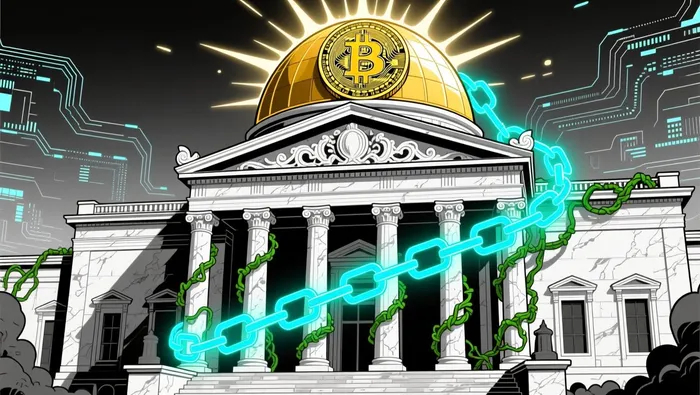
Institutional Adoption: From Cultural Legitimacy to Financial Integration
The cultural legitimacy of Bitcoin is increasingly translating into institutional adoption. By 2025, major corporations like Tesla and MicroStrategy had allocated significant portions of their balance sheets to Bitcoin, while spot Bitcoin ETFs-such as BlackRock's iShares Bitcoin Trust (IBIT)-had amassed over $18 billion in assets under management. These developments reflect a maturing market where Bitcoin is no longer viewed as a speculative asset but as a strategic reserve asset, akin to gold or short-term Treasuries according to financial analysis.
Cultural preservation projects have played a subtle yet critical role in this shift. For example, the Toledo Museum of Art's 2023 acquisition of the NFT "Abyssinian Queen" using USDCUSDC-- (a stablecoin) marked a milestone in institutional acceptance of blockchain-based transactions. Such actions normalize the use of cryptocurrency in high-trust environments, indirectly encouraging institutional investors to view Bitcoin as a credible asset class. Similarly, the Los Angeles County Museum of Art (LACMA) and the Centre Pompidou have acquired blockchain-based artworks, signaling a cultural shift toward embracing digital innovation according to cultural reports.
Case Studies: Cultural Projects as Catalysts for Institutional Trust
Several case studies illustrate how cultural preservation initiatives directly influence institutional Bitcoin adoption. The "Digital Dunhuang Open Material Library," which tokenizes cultural artifacts on blockchain, has demonstrated the technology's potential for preserving heritage while generating revenue. This model has inspired institutional investors to explore Bitcoin as a complementary asset, given its role in decentralized systems.
Another example is the integration of NFTs into corporate art collections. Companies like JPMorgan Chase and UBS have historically used art to build brand identity, and their recent forays into Bitcoin-themed NFTs reflect a strategic alignment with blockchain's cultural and financial promise according to industry analysis. These collections not only enhance corporate cultural capital but also serve as a bridge to Bitcoin investment, as institutions recognize the long-term value of digital assets.
The Future: Cultural Capital as a Driver of Institutionalization
As Bitcoin's cultural capital continues to grow, its institutional adoption will likely accelerate. The maturation of blockchain-based cultural projects-such as tokenized art and decentralized heritage preservation-creates a feedback loop where cultural legitimacy reinforces financial legitimacy. Institutions that engage with these projects gain firsthand experience with blockchain's capabilities, reducing perceived risks and fostering trust in Bitcoin as a store of value according to research.
Moreover, the rise of Bitcoin spot ETFs and institutional holdings (with listed firms collectively holding around one million BTC by October 2025) underscores a broader acceptance of Bitcoin as a core portfolio component. This trend is further supported by regulatory clarity and infrastructure advancements, which lower barriers to entry for institutional investors according to financial analysis.
Conclusion
Bitcoin's cultural capital-rooted in tangible artifacts and blockchain-based preservation initiatives-has become a linchpin for its institutional adoption. From the first pizza transaction to museum NFT acquisitions, these cultural milestones have transformed Bitcoin from a niche digital experiment into a globally recognized asset. As institutions increasingly engage with blockchain for cultural preservation, they indirectly validate Bitcoin's role as a decentralized, trustless store of value. For investors, this convergence of culture and finance presents a compelling case: Bitcoin's long-term value is not just tied to its financial properties but also to its evolving cultural narrative.






Comentarios
Aún no hay comentarios