
Bitcoin Core v30 Wallet Migration Bug: Risks and Implications for Institutional Exposure
The BitcoinBTC-- Core v30 wallet migration bug, discovered in late 2025, has exposed critical vulnerabilities in legacy custody systems, raising urgent questions about the operational risks of centralized software dependencies in institutional Bitcoin exposure. While the bug itself is not consensus-critical-meaning the Bitcoin network itself remains secure-it highlights a systemic risk: the overreliance on a single implementation (Bitcoin Core, which powers ~78% of reachable nodes) for custody and key management. For institutions, this incident underscores the necessity of diversified wallet strategies to mitigate fund loss and operational fragility.
Technical Overview of the Bug
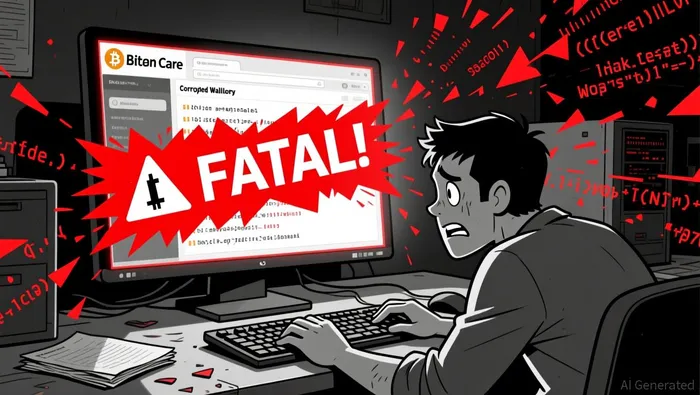
The bug, identified in Bitcoin Core versions 30.0 and 30.1, occurs during wallet migration under specific conditions. If a user attempts to migrate an unnamed legacy wallet.dat file stored in a custom directory while pruning is enabled, the software's cleanup logic may erroneously delete the entire wallet directory, erasing access to funds. This flaw primarily affects older Berkeley DB (BDB) wallets, which are increasingly rare but still hold significant value for early adopters and institutions with legacy holdings according to warnings.
Bitcoin Core developers swiftly pulled the affected versions from official download sites and advised users to avoid migrations until the release of version 30.2, which includes a fix. The team emphasized that existing users not performing migrations could continue operating without risk. However, the incident revealed a critical gap: the lack of robust safeguards in legacy systems, which remain vulnerable to software-specific errors.
Operational Risks for Institutions
Institutional custodians face unique risks from this bug. Unlike individual users, institutions often manage large, multi-million-dollar portfolios with complex infrastructure. For these entities, the absence of backups or outdated configurations could lead to irreversible fund loss. The bug also amplifies concerns about single points of failure: if a custodian relies heavily on Bitcoin Core for key management, a single software error could compromise a significant portion of its holdings.
This vulnerability is compounded by the broader trend of institutional adoption. In 2025, regulatory clarity spurred a surge in institutional Bitcoin allocations. However, many institutions rushed to adopt Bitcoin without fully modernizing their custody infrastructure. The v30 bug serves as a wake-up call: legacy systems, even if functional, are inherently fragile in the face of software updates and unforeseen bugs.
Diversified Wallet Strategies as a Mitigation
The Bitcoin Core v30 bug has accelerated the adoption of diversified custody strategies among institutions. Key approaches include:
Migration to Descriptor Wallets: Bitcoin Core v30 marked the end of support for legacy BDB wallets, forcing users to transition to descriptor wallets. These modern wallets offer improved key management and compatibility with hardware wallets. Institutions like BitGo have already adopted descriptor wallets as part of their custody infrastructure, leveraging them to reduce technical debt.
Multi-Party Computation (MPC) and Multi-Signature (Multi-Sig) Solutions: Post-2025, institutions increasingly rely on MPC and multi-sig wallets to distribute private key control across multiple parties or devices. This reduces the risk of single-point failures and aligns with regulatory expectations. For example, Anchorage Digital and Fireblocks now offer MPC-based custody solutions that allow institutions to maintain control without exposing private keys to a single entity according to industry analysis.
Multi-Layered Redundancy: Advanced custodians are adopting hybrid strategies that combine cold storage, hardware wallets, and multi-node setups. Cold storage remains ideal for long-term holdings, while hot wallets provide liquidity for trading as market analysis indicates. Additionally, multi-node architectures ensure redundancy, minimizing exposure to software-specific vulnerabilities.
Regulatory Compliance and Insurance: The post-2025 regulatory environment has pushed institutions to adopt custodians with insurance coverage and auditable records. Platforms like Gemini and Fidelity Digital Assets now offer compliance tools that align with U.S. SEC and EU MiCA requirements, providing an additional layer of protection against operational risks.
Regulatory and Market Developments Supporting Diversification
The v30 bug emerged against a backdrop of significant regulatory progress. The U.S. SEC's expanded Safeguarding Rule and the passage of the GENIUS Act in 2025 created a clearer legal framework for digital asset custody, encouraging institutions to adopt diversified strategies. Meanwhile, the repeal of the SPBD framework allowed traditional broker-dealers to offer custody services, fostering competition and innovation.
Market dynamics also favor diversification. The institutional crypto custody market is projected to exceed $3.28 billion by 2025, driven by demand for secure, scalable solutions. This growth reflects a shift from "storage-only" models to integrated platforms that support staking, lending, and trading while maintaining compliance.
Conclusion: The Urgency of Action
The Bitcoin Core v30 bug is a cautionary tale for institutional investors. While the immediate risk of fund loss is limited to legacy setups, the broader lesson is clear: overreliance on a single software implementation or wallet type introduces unacceptable operational risk. Institutions must prioritize diversification-both in terms of wallet types (descriptor, MPC, hardware) and custody providers-to mitigate vulnerabilities like the v30 bug.
As the crypto ecosystem matures, the line between technical robustness and institutional trust will only narrow. For institutions, the v30 incident is not just a software update-it's a call to action to rethink custody strategies in a world where operational resilience is non-negotiable.






Comentarios
Aún no hay comentarios