
Bitcoin's "Buy the Dip" Paradox: Behavioral Traps and Strategic Caution in a Volatile Market
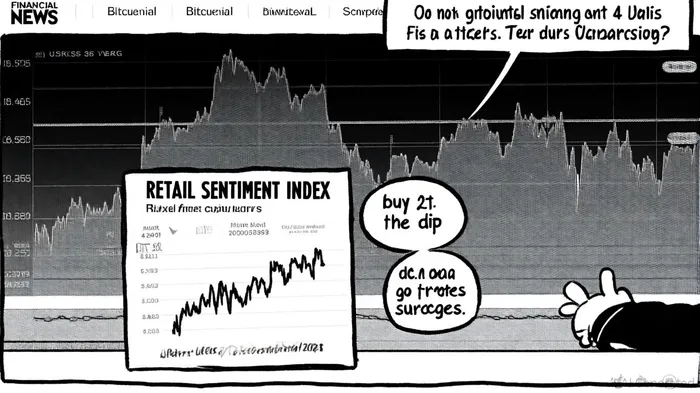
Bitcoin's price dynamics have long been shaped by the interplay of speculative fervor and institutional calculus, but recent market behavior underscores a growing tension between retail investor psychology and macroeconomic fundamentals. As the cryptocurrency approaches critical price levels, the resurgence of "buy the dip" sentiment—driven by behavioral biases and social media narratives—has emerged as both a catalyst for short-term optimism and a warning sign for contrarian investors.
Behavioral Finance and the "Buy the Dip" Reflex
Behavioral finance frameworks reveal that retail investors in the BitcoinBTC-- market are particularly susceptible to cognitive biases such as herd mentality, overconfidence, and fear of missing out (FOMO) [2]. These biases are amplified by the decentralized, high-volatility nature of crypto assets, which create environments where emotional decision-making often overrides rational analysis [3]. For instance, a study analyzing CoinbaseCOIN-- transaction data found a statistically significant correlation between rising retail sentiment and Bitcoin price increases, with this relationship persisting even after controlling for macroeconomic variables [1]. However, the same study noted that sentiment-driven buying tends to peak during market downturns, when "buy the dip" rhetoric surges on platforms like X (formerly Twitter) and Reddit [3].
This dynamic creates a paradox: while short-term optimism can delay selling pressure by attracting new buyers, it also signals an overbought market. According to a recent analysis, retail bullishness metrics—such as stablecoin-margined futures long% on Binance—have historically reached inflection points just before Bitcoin's price tops [3]. For example, in March 2025, a sharp decline in retail positioning coincided with institutional accumulation on Coinbase, suggesting a shift in market power from retail to professional investors [5].
Diverging Retail and Institutional Behaviors
The contrast between retail and institutional investor behavior further complicates Bitcoin's price trajectory. While retail traders often act on short-term sentiment, institutional actors tend to focus on longer-term value accrual and macroeconomic signals. Data from Q2 2025 shows that institutional buying pressure on Coinbase intensified as Bitcoin approached $107,000—a level historically associated with liquidity bottlenecks—despite retail investors expressing caution [4]. This divergence is reflected in technical indicators such as the leverage gap, which has tightened to levels last seen during 2024's bear market bottom, suggesting increased dip-buying activity by long-term holders [5].
However, the dominance of retail-driven narratives remains a double-edged sword. A report by the Journal of Behavioral and Experimental Finance notes that social media sentiment often precedes price peaks by weeks, acting as a contrarian indicator [3]. For instance, the recent surge in "buy the dip" calls, despite Bitcoin's 15% correction in late September 2025, may signal a market nearing exhaustion [3]. This aligns with the Bitcoin Misery Index (BMX), which combines volatility and fear metrics to show asymmetric impacts on price, particularly during periods of heightened retail participation [2].
Strategic Implications for Investors
For investors navigating this landscape, the key lies in balancing behavioral insights with technical rigor. Rising retail optimism, while initially supportive of Bitcoin's price, often reflects a market nearing a turning point. Historical patterns suggest that periods of intense "buy the dip" activity are frequently followed by sharp corrections as overleveraged positions are liquidated [1]. This was evident in 2024, when a 20% rally in Bitcoin was swiftly reversed after retail investors overextended their bullish bets [5].
A strategic approach would involve:
1. Monitoring Sentiment Divergences: Tracking retail positioning metrics (e.g., futures long% on Binance) alongside institutional buying signals (e.g., Coinbase inflows).
2. Technical Caution: Using tightening leverage gaps and accumulation/distribution indicators to identify potential inflection points.
3. Counter-Trend Positioning: Considering short-term hedging or profit-taking as retail optimism peaks, while maintaining exposure to Bitcoin's long-term value proposition.
Conclusion
Bitcoin's susceptibility to "buy the dip" sentiment underscores the enduring influence of behavioral finance in crypto markets. While retail optimism can temporarily buoy prices, it often serves as a leading indicator of overbought conditions. Investors who recognize this paradox—leveraging both psychological insights and technical analysis—may find opportunities to navigate volatility with greater precision. As the market approaches critical price levels, the interplay between retail exuberance and institutional discipline will likely determine Bitcoin's next directional move.





Comentarios
Aún no hay comentarios