
Bitcoin's Bull Market and the Rise of Institutional-Grade Lending & Layer-2 Innovation
The rise of institutional-grade lending is intertwined with Bitcoin's evolving utility beyond mere value storage. Layer-2 innovations-particularly the Lightning Network, rollups, and sidechains-are addressing Bitcoin's scalability limitations while unlocking new financial applications. The Lightning Network, for instance, enables near-instant, low-cost transactions through payment channels, making Bitcoin viable for micropayments and remittances, according to a 101Blockchains analysis. Meanwhile, protocols like Liquid Network and BitVM are expanding Bitcoin's capabilities into tokenization and smart contracts. These advancements are not just technical upgrades; they are foundational to Bitcoin's transition into a dynamic, yield-generating asset.
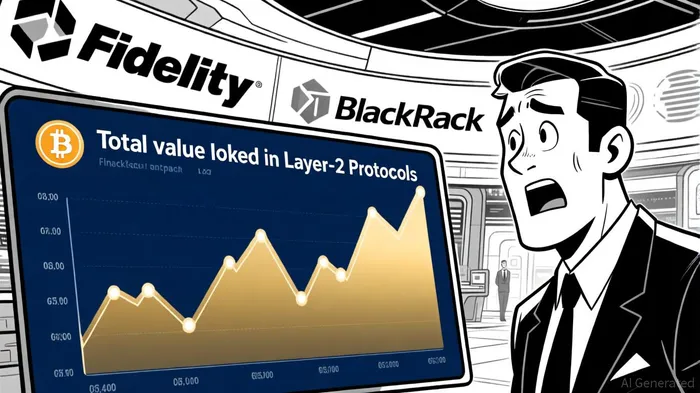
Institutional capital allocation strategies for 2024-2025 are increasingly prioritizing Bitcoin's liquidity infrastructure. According to XBTO, institutions are allocating 60-70% of their crypto portfolios to core assets like Bitcoin, with 20-30% directed toward altcoins and Layer-2 solutions such as DeFi protocols. This diversification is not speculative-it is a calculated move to optimize returns while mitigating volatility through dynamic rebalancing and sector rotation. Token Metrics further highlights the role of AI-powered crypto indices in systematizing these strategies, enabling precise allocation to high-utility Layer-2 tokens.
The convergence of Bitcoin's bull market, institutional lending, and Layer-2 innovation is reshaping the asset's narrative. Protocols like BabylonBABY-- and LombardBARD-- have demonstrated robust total locked value (TVL) and institutional-grade compliance, allowing BTCBTC-- to be staked and collateralized across decentralized finance (DeFi) applications, as noted in a ChainCatcher report. Coupled with Taproot upgrades and BRC-20 tokens, Bitcoin is no longer a passive reserve asset but a cornerstone of a maturing financial ecosystem.
As Bitcoin's utility expands, so too does its appeal to traditional financial institutions. The approval of spot Bitcoin ETFs and regulatory clarity have normalized its inclusion in institutional portfolios. This legitimacy, paired with innovations in liquidity infrastructure, positions Bitcoin as a strategic asset for capital allocation in the post-2025 era. For investors, the key takeaway is clear: Bitcoin's future lies not just in price appreciation but in its ability to underpin a new generation of financial tools and services.






Comentarios
Aún no hay comentarios