
Bitcoin's Bearish Correction and Short-Term Volatility: Assessing Miner and On-Chain Behavior as Leading Indicators of Price Direction
On-Chain Metrics: MVRV and NVT Signal Mixed Sentiment
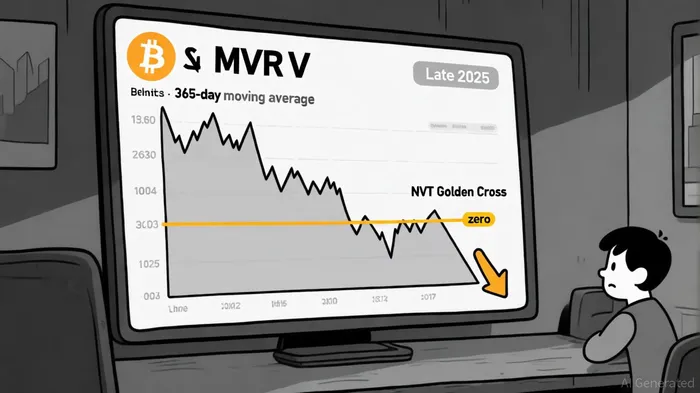
The MVRV ratio, a critical gauge of speculative excess, has fallen below its 365-day moving average, a pattern observed before major bull runs in mid-2021, June 2022, and early 2024. Historically, such a drop has preceded price rallies of 135%, 100%, and 196%, respectively, suggesting the current correction could be nearing a cyclical bottom. However, this optimism is tempered by the NVT Golden Cross metric, which remains in a neutral zone, with its 30-day EMA hovering near zero, according to a Mitrade article. Unlike previous cycles, Bitcoin's NVT ratio has not entered an "overheated" territory, indicating the market may not yet be overvalued but also lacks the speculative fervor seen in prior cycles.
Whale positions further underscore bearish sentiment. Unrealized losses for large holders across BTC, ETH, SOL, and HYPE have exceeded $20 million as of November 3, 2025, Coinotag reports, reflecting weakened risk appetite. This aligns with broader capital outflows from crypto into traditional equities, particularly in AI and semiconductors, according to a Bitget report, which have dampened market confidence.
Miner Behavior: Selling Pressure and Hash Rate Volatility
Bitcoin miners are under increasing pressure as the market consolidates. The proportion of BitcoinBTC-- held for over a year has dropped from 70% to below 61%, signaling heightened selling activity from long-term holders, according to a Forex.com outlook. This trend is exacerbated by macroeconomic uncertainties, including the U.S. Federal Reserve's ambiguous policy path and shifting capital flows into gold and equities, as noted by Bitget.
While miner insolvencies have not spiked in Q4 2025, hash rate fluctuations reveal underlying stress. A 9% monthly increase in global hashrate, coupled with MARA Holdings' 5% rise in block production, highlights miners' efforts to adapt to rising operational costs. However, these adjustments may not offset broader selling pressure, particularly as the 4-year halving cycle potentially marks the end of a bullish phase, according to the Forex.com outlook.
Macroeconomic Catalysts: Gold Rotation and CPI Dynamics
A key potential catalyst for Bitcoin's rebound lies in capital rotation from gold to crypto. Gold's 8.5% decline from its peak suggests it may have topped out, creating room for inflows into Bitcoin, according to a TradingView write-up. Bitwise analysts estimate that a 5% shift in capital from gold to Bitcoin could propel BTC to $242,000, a scenario previously highlighted by Bitbo. This scenario hinges on the upcoming U.S. CPI report, which could influence risk appetite and monetary policy (as Bitbo also noted).
Conclusion: Navigating the Bearish Correction
Bitcoin's bearish correction in Q4 2025 is shaped by a complex interplay of on-chain metrics and miner behavior. While the MVRV ratio hints at a cyclical bottom and historical precedents suggest a potential rebound, the NVT Golden Cross and whale selling pressure indicate lingering caution. Investors should monitor the NVT Golden Cross for signs of overheating and track miner outflows as leading indicators of further price direction. In the short term, macroeconomic factors-particularly gold's performance and CPI data-will remain pivotal in determining Bitcoin's trajectory.





Comentarios
Aún no hay comentarios