
The Bitcoin for America Act and Its Implications for U.S. Crypto Adoption and Capital Gains Tax Policy
Strategic Bitcoin Reserve: A Hedge Against Inflation and a Catalyst for Resilience
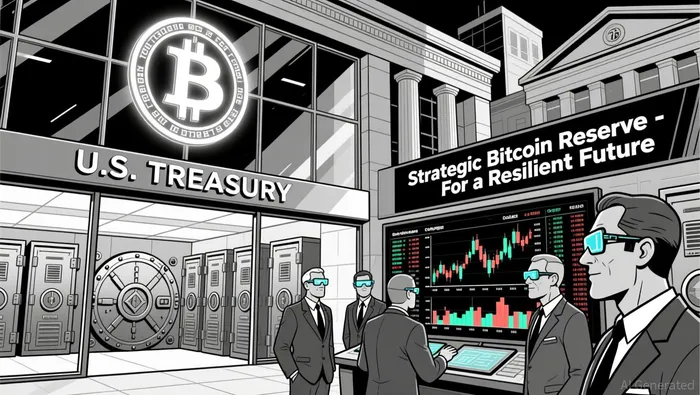
The SBR, a key component of the Act, is designed to hold Bitcoin acquired through tax payments for a minimum of 20 years, with strict custody protocols such as cold storage and multi-signature wallets ensuring security according to reports. By diversifying the U.S. balance sheet with a fixed-supply asset, the SBR aims to hedge against inflation and economic volatility. Bitcoin's inherent scarcity-capped at 21 million coins-positions it as a counterweight to fiat devaluation, a logic mirrored by private entities like TetherUSDT--, which has allocated $12.4 billion to Bitcoin reserves.
The Act's alignment with broader trends in financial resilience is evident. For instance, Massachusetts is considering a state-level Bitcoin reserve bill, reflecting growing institutional confidence in crypto as a strategic asset. Similarly, ZOOZ Power Ltd. has adopted a Bitcoin treasury reserve strategy, underscoring the asset's appeal for long-term value preservation. These developments suggest that the SBR could catalyze a shift in how governments and corporations view Bitcoin, not merely as a speculative tool but as a foundational component of financial stability.
Tax Policy Innovations: Incentivizing Adoption and Reducing Friction
The Act's most groundbreaking provision is the capital gains tax exemption for Bitcoin tax payments. By crediting taxpayers based on Bitcoin's fair market value at the time of transfer-akin to foreign currency transactions-the legislation removes a significant barrier to adoption according to Blockonomi. This exemption effectively transforms Bitcoin into a "tax-advantaged" asset, encouraging individuals and corporations to allocate funds to the SBR rather than traditional budgetary expenditures like foreign aid according to reports.
This policy aligns with broader regulatory shifts in 2025, including the rescission of the IRS's controversial "broker rule," which had imposed reporting burdens on DeFi platforms according to Galaxy. By reducing compliance costs, the Act and related reforms create a more investor-friendly environment. A 2025 study by Tony Zhang and colleagues further highlights the interplay between tax transparency and investor behavior, noting that KYC requirements and reporting obligations can deter speculative trading while encouraging responsible investment strategies according to research. The Bitcoin for America Act's streamlined approach may thus amplify these effects, fostering a more stable and mature crypto market.
Investor Incentives and Global Competitive Dynamics
The Act's tax incentives are poised to reshape investor behavior in two key ways. First, by allowing taxpayers to "vote with their dollars" for the SBR, the legislation introduces a novel mechanism for aligning individual and national interests. Taxpayers who pay in Bitcoin effectively signal support for a reserve that could bolster U.S. financial sovereignty, a dynamic that mirrors the UAE's strategic Bitcoin accumulation efforts. Second, the capital gains exemption reduces the tax drag on Bitcoin holdings, making it more attractive for long-term investors compared to traditional assets.
Globally, the U.S. is not alone in recognizing Bitcoin's strategic value. Tether's $1 billion Bitcoin reserve addition in 2025 and ZOOZ's $60 million purchase illustrate a growing consensus that Bitcoin can serve as a digital gold standard. The Act's passage could accelerate this trend, positioning the U.S. as a leader in integrating crypto into sovereign wealth strategies. However, challenges remain, including potential regulatory fragmentation as countries adopt divergent approaches to Bitcoin governance according to analysis.
Conclusion: A New Era for U.S. Financial Policy
The Bitcoin for America Act represents more than a legislative curiosity-it is a strategic framework for embedding Bitcoin into the U.S. financial ecosystem. By combining tax incentives with a long-term reserve, the Act addresses both immediate investor needs and broader macroeconomic goals. While risks such as regulatory uncertainty and market volatility persist, the legislation's emphasis on financial resilience and innovation aligns with a global shift toward digital assets. As the U.S. navigates this transition, the SBR could emerge as a symbol of a new era-one where crypto is not just tolerated but embraced as a pillar of national economic strategy.






Comentarios
Aún no hay comentarios