
Bitcoin's 7-Month Low: Is This a Buying Opportunity or a Warning Sign?
Macroeconomic Catalysts: Fed Policy and Global Liquidity Shifts
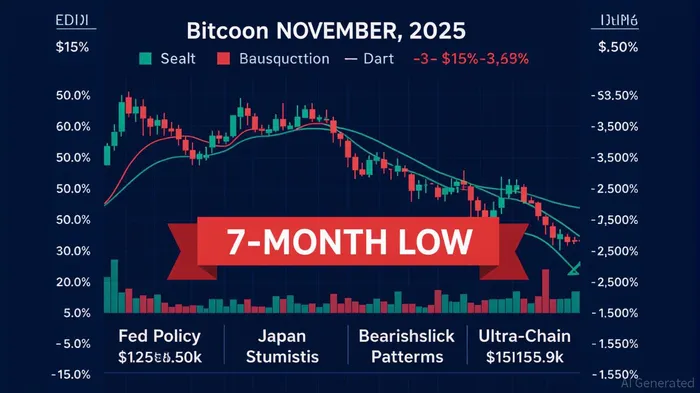
The Federal Reserve's evolving stance has been a primary driver of Bitcoin's selloff. While the central bank (QT) program , , investors remain anxious about the timing of rate cuts. This uncertainty has fueled a risk-off market environment, with BitcoinBTC-- falling victim to broader asset de-risking. . further amplified fears of systemic deleveraging, dragging crypto markets into a tailspin.
Meanwhile, , , has introduced a mixed bag of implications. While yen weakness could boost demand for Bitcoin as an inflation hedge, , . This interplay between liquidity expansion and rising borrowing costs creates a volatile backdrop for risk assets.
Regulatory Pressures and Institutional Retreat
Global regulatory ambiguity has compounded the sell-off. Over 65 crypto organizations have urged President Donald Trump to clarify digital asset regulations, highlighting a fragmented and often hostile policy landscape. In the U.S., weakened inflows into spot Bitcoin ETFs and heavy liquidations . Regulatory uncertainty, coupled with rising volatility, has led to a retreat by large-cap buyers, exacerbating downward pressure.
Contrarian Signals: Whale Activity and Hash Rate Resilience
Despite the bearish narrative, contrarian indicators suggest the market may be nearing a turning point. Market expert . The Bitcoin network's hash rate hitting all-time highs amid the price drop further signals miner confidence, with infrastructure investment outpacing short-term price action.
Negative funding rates in perpetual futures markets and rising stablecoin inflows also hint at institutional positioning for a rebound. , driven by post-Halving supply constraints and growing institutional demand. These metrics challenge the prevailing bearish sentiment, suggesting the selloff may be correcting overbought conditions rather than signaling a new bear market.
Technical Dilemmas: Death Cross and Market Sentiment
Technically, ", . However, such signals often precede oversold conditions. , . Whether this becomes a catalyst for accumulation or capitulation depends on how macroeconomic and regulatory risks evolve in early 2026.
Conclusion: A Tipping Point for Contrarian Investors?
Bitcoin's seven-month low presents a paradox: macroeconomic and regulatory headwinds suggest caution, while on-chain and institutional signals hint at resilience. For contrarian investors, the key lies in balancing short-term volatility with long-term fundamentals. If the Fed's rate-cut cycle materializes as expected and regulatory clarity emerges, Bitcoin could rebound on renewed liquidity and institutional adoption. However, a delayed policy response or further regulatory crackdowns could prolong the downturn.
In this environment, disciplined investors might consider dollar-cost averaging into dips, hedging against downside risks while positioning for a potential post-Halving rally. As Anslem argues, "The market is pricing in a worst-case scenario"-it's time to bet on the resilience of Bitcoin's infrastructure and the ingenuity of its participants.






Comentarios
Aún no hay comentarios