
Bitcoin's 2025 Institutional Revolution: A New Era for Wealth Preservation
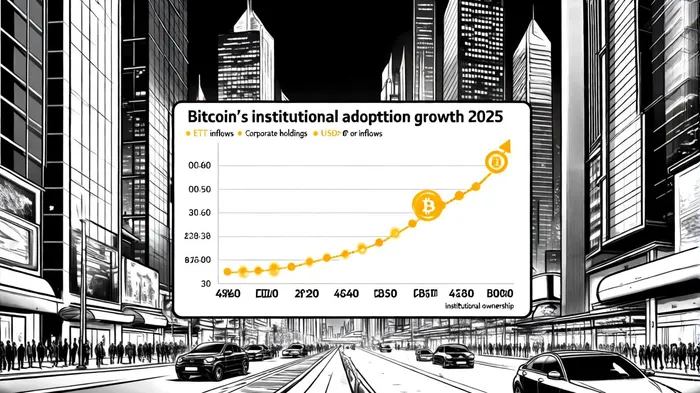
In 2025, BitcoinBTC-- has transcended its speculative origins to become a cornerstone of institutional portfolios and a critical tool for wealth preservation. This transformation is driven by a confluence of macroeconomic tailwinds, regulatory clarity, and unprecedented institutional adoption. As global markets grapple with inflationary pressures and geopolitical uncertainty, Bitcoin's unique properties—scarcity, decentralization, and programmability—are reshaping how investors approach long-term capital protection.
Institutional Adoption: From Skepticism to Mainstream Embrace
The institutional adoption of Bitcoin in 2025 has been nothing short of seismic. U.S. spot Bitcoin ETFs alone have attracted over $14.8 billion in inflows, with BlackRock's iShares Bitcoin Trust (IBIT) leading the charge by securing $1.3 billion in net inflows within two days in July 2025 [2]. These ETFs now hold over 410,000 BTC, up from 310,000 BTC in Q1 2025, with institutions accounting for 33% of total U.S. ETF holdings—a record high [1].
The appeal lies in Bitcoin's regulatory-friendly access. ETFs eliminate the need for direct custody, offering liquidity and tax efficiency while aligning with traditional market infrastructure. For example, the State of Wisconsin's Investment Board has allocated capital to Bitcoin ETFs, reflecting a broader shift in pension fund strategies [2]. Meanwhile, corporations like MicroStrategy continue to accumulate Bitcoin, holding 190,000 BTC as of 2025, signaling confidence in its role as a corporate store of value [2].
Macroeconomic Tailwinds: Bitcoin as a Hedge Against Systemic Risks
Bitcoin's rise in 2025 is inextricably linked to macroeconomic trends. With the U.S. Federal Reserve projecting 3.0% PCE inflation and 1.6% GDP growth for 2025 [1], investors are increasingly seeking assets that outpace fiat devaluation. Gold, Bitcoin's traditional rival, has surged 30% year-to-date, reaching $3,700 per ounce [1]. However, Bitcoin's institutional adoption has positioned it as a complementary hedge.
While gold excels as a safe-haven asset during equity sell-offs, Bitcoin has shown resilience in bond market stress scenarios, such as rising U.S. Treasury yields [3]. This divergence suggests that Bitcoin and gold are not substitutes but tools for hedging different macroeconomic risks. For instance, Bitcoin's correlation with gold has fluctuated between 0.6 and -0.2 in 2025, reflecting its growing influence from crypto-specific factors like regulatory news and technological upgrades [5].
Regulatory Clarity and Global Diversification
Regulatory developments in 2025 have further legitimized Bitcoin's role in wealth preservation. The U.S. Senate's passage of the Genius Act in June 2025, which mandates 1:1 USD reserve backing for stablecoins, has reduced systemic risks in the crypto ecosystem [1]. Simultaneously, the U.S. Strategic Bitcoin Reserve—holding over 200,000 BTC—has mirrored gold's sovereign role, signaling a shift in how nations diversify reserves [4].
Globally, countries like Bhutan, El Salvador, and Japan have integrated Bitcoin into their sovereign reserves, leveraging its anti-inflationary properties amid currency devaluation risks [4]. This trend underscores Bitcoin's appeal as a hedge against geopolitical instability, particularly in emerging markets where fiat currencies face structural vulnerabilities.
The Future of Bitcoin in Wealth Preservation
Looking ahead, Bitcoin's trajectory is poised to accelerate. Analysts project the asset could reach $200,000 by late 2025 or early 2026, driven by sustained institutional demand and favorable regulatory tailwinds [5]. Retail adoption has also surged, with 50 million Americans (14.3% of the population) owning Bitcoin by early 2025, including 55% of those aged 18–34 [4]. This generational shift reflects a growing recognition of Bitcoin's utility in combating inflation and preserving purchasing power.
Conclusion
Bitcoin's 2025 institutional revolution has redefined its role from speculative asset to a legitimate pillar of wealth preservation. By aligning with macroeconomic realities—such as inflation, currency devaluation, and geopolitical risk—Bitcoin has carved out a unique niche alongside gold and traditional equities. As regulatory frameworks mature and global adoption accelerates, Bitcoin is no longer a fringe investment but a strategic tool for institutional and retail investors alike.





Comentarios
Aún no hay comentarios