
Bitcoin's 2024 Halving: A Confluence of Scarcity, Institutional Demand, and Macroeconomic Tailwinds
The 2024 Halving: A Catalyst for Structural Change
Bitcoin's fourth halving event, which occurred on April 19, 2024, reduced block rewards from 6.25 BTC to 3.125 BTC, marking a pivotal moment in its monetary policy. Historically, halvings have acted as catalysts for price appreciation by reducing supply issuance, thereby enhancing Bitcoin's scarcity profile. For instance, the 2020 halving saw BitcoinBTC-- surge from $8,500 to $69,000 within 14 months, according to a Bitcoin halving timeline. The 2024 event, however, unfolded against a backdrop of unprecedented institutional adoption and macroeconomic shifts, amplifying its potential impact.
Historical Precedents and Scarcity Dynamics
Bitcoin's price history reveals a consistent post-halving pattern of appreciation, driven by its engineered scarcity. The 2012 halving triggered an 8,858% price increase to $1,000 within a year, while the 2016 halving preceded a 294% surge to $2,560, according to a Forbes analysis. The 2020 halving, occurring amid the pandemic-induced flight to safe-haven assets, saw Bitcoin rise to $69,000 by late 2021, per a Coinlib review. These trends underscore how reduced supply, combined with growing demand, creates upward pressure on price.
The 2024 halving further tightened supply, reducing annual issuance by 50%. This scarcity effect is compounded by Bitcoin's fixed 21 million supply cap, making it a hedge against fiat devaluation. As noted by a 2024 study, Bitcoin's price returns correlate inversely with the U.S. dollar index and positively with Treasury yields, reflecting its role as a counterparty-free store of value.
Macroeconomic Catalysts: Inflation, Interest Rates, and Institutional Demand
Macroeconomic conditions in 2024 amplified Bitcoin's appeal. With global inflation peaking at 7.2% in Q1 2024 (per IMF data) and central banks adopting dovish policies, Bitcoin's fixed supply became a compelling alternative to depreciating fiat currencies. A report by OKX highlights that institutional investors allocated $5 billion to Bitcoin ETFs in Q3 2024 alone, driven by its inflation-hedging properties, according to an OKX report.
Interest rates also played a critical role. The U.S. Federal Reserve's pause on rate hikes in mid-2024 reduced the cost of capital, encouraging risk-on behavior; as lower rates made speculative assets more attractive, Cointelegraph noted. By September 2025, Bitcoin had surged past $118,000, with institutions controlling 14% of the total supply-a stark contrast to the 2% institutional ownership observed in 2020, according to a SpeakerDeck presentation.
Institutional Adoption: ETFs and Corporate Treasury Shifts
The approval of U.S. spot Bitcoin ETFs in January 2024 marked a paradigm shift. BlackRock's iShares Bitcoin Trust (IBIT) alone attracted $54.75 billion in net inflows by mid-2025, reducing Bitcoin's volatility and enhancing liquidity, according to a MarketMinute article. These ETFs provided institutional-grade custody and regulatory clarity, transforming Bitcoin from a speculative asset to a mainstream portfolio staple.
Corporate adoption further accelerated demand. Over 1 million BTC was accumulated by publicly listed companies by August 2025, with firms like MicroStrategy and Tesla treating Bitcoin as a strategic treasury asset, as reported by OKX. This trend mirrored gold's historical adoption by central banks, signaling Bitcoin's growing acceptance as a reserve asset.
Regulatory Clarity and Technological Innovation
Regulatory developments in 2024–2025 also bolstered confidence. The EU's Markets in Crypto-Assets (MiCA) framework, enacted in June 2024, provided a clear legal framework for institutional participation, while Hong Kong and the UAE introduced favorable crypto policies, as noted in the SpeakerDeck presentation. Technological advancements, such as Bitcoin Runes and the Lightning Network, expanded its utility beyond payments, enabling DeFi-like applications and enhancing on-chain activity, as also discussed in the SpeakerDeck presentation.
Future Outlook and Risks
While the confluence of scarcity, macroeconomic tailwinds, and institutional demand positions Bitcoin for further gains, risks remain. Regulatory uncertainty in the U.S., geopolitical tensions (e.g., U.S.-China trade dynamics), and potential Fed rate hikes could dampen momentum. However, historical patterns suggest that Bitcoin's post-halving peaks typically occur 19–24 months after the event, with the next potential peak projected for late 2025 or early 2026, according to the MarketMinute piece.
Conclusion
Bitcoin's 2024 halving, combined with macroeconomic catalysts and institutional adoption, has created a powerful tailwind for price appreciation. As the asset transitions from speculative niche to institutional-grade reserve, its role in global portfolios is set to expand. Investors should remain cognizant of macroeconomic shifts and regulatory developments, but the fundamentals-scarcity, demand, and utility-remain robust.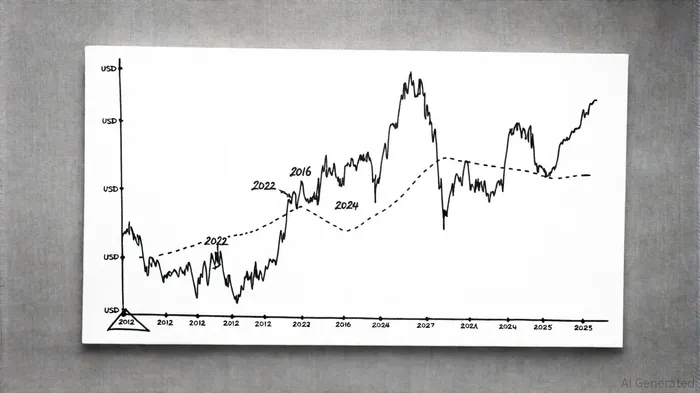






Comentarios
Aún no hay comentarios