
Bitcoin's $125K Ascent: Macro Drivers and Institutional Adoption in 2025
Bitcoin's journey toward $125,000 by 2025 is not a speculative leap but a logical outcome of converging macroeconomic forces and institutional adoption. As the world grapples with inflationary pressures, monetary policy shifts, and a redefinition of value storage, Bitcoin's role as a digital hedge is becoming increasingly indispensable.
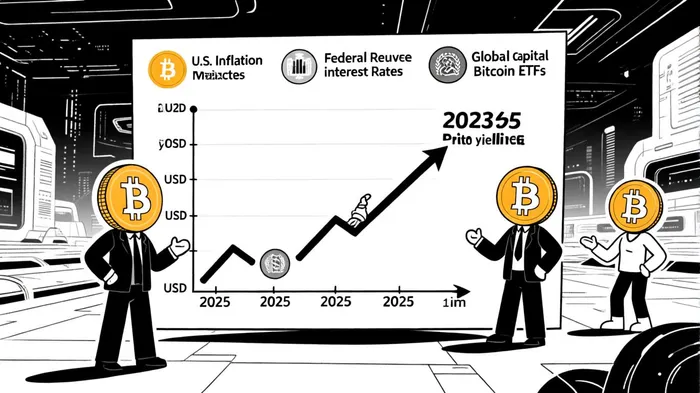
Macroeconomic Tailwinds: Inflation, Dollar Weakness, and Policy Easing
Bitcoin's price action in 2025 is inextricably linked to global inflation dynamics. Countries like Turkey (36.76% inflation) and Argentina (2,614% cumulative inflation since 2020) have become laboratories for BitcoinBTC-- adoption, as citizens flee depreciating fiat currencies, according to a Bozy analysis. Even in developed economies, the U.S. CPI inflation of 2.65% and the U.K.'s 3.95% rate, per Trading Economics, underscore a broader trend: central banks are struggling to anchor purchasing power.
The Federal Reserve's September 2025 rate cut-lowering the federal funds rate to 4.00%–4.25%-signals a shift toward easing, as noted in the Fed minutes. This move, driven by a softening labor market and persistent inflation above 2%, has reduced borrowing costs and incentivized capital rotation into risk assets like Bitcoin, according to the Invezz outlook. Historically, Bitcoin thrives when real yields (inflation-adjusted returns) turn negative, as they did in 2025, pushing investors toward assets that outpace inflation, per a Coinpedia forecast.
The U.S. Dollar Index (DXY) has also weakened, a critical tailwind for Bitcoin. A weaker dollar amplifies demand for alternative stores of value, particularly in regions with high inflation. For example, Japan's decades-long monetary stagnation has driven institutional and retail investors to Bitcoin and gold, with similar trends expected to spread globally, a pattern Coinpedia highlights.
Institutional Adoption: ETFs and Capital Inflows Normalize Bitcoin
The approval of spot Bitcoin ETFs in 2025 has been a game-changer. These products have reduced friction for institutional investors, enabling seamless allocation of Bitcoin within traditional portfolios, as Bozy documents. Inflows into these ETFs have surged, with BlackRock's product alone attracting $2.1 billion in its first month, according to a Gate analysis. This normalization has shifted Bitcoin from a speculative asset to a legitimate portfolio diversifier, particularly in low-interest-rate environments.
Moreover, Bitcoin's integration into DeFi via sidechains like Rootstock has expanded its utility beyond payments. Total value locked (TVL) in Bitcoin-adjacent DeFi protocols rose 400% in 2025, reflecting growing institutional confidence in Bitcoin's programmability, as reported by Bozy.
Technological Advancements: Scalability and Sustainability
Bitcoin's infrastructure is evolving to meet global demand. The Lightning Network has enabled microtransactions in El Salvador, while renewable energy adoption in mining operations has reduced environmental concerns, trends Bozy also documents. These improvements are critical for Bitcoin to function as both a store of value and a medium of exchange.
Risks and Technical Considerations
While the case for $125K is compelling, risks persist. A surprise tightening cycle, regulatory crackdowns, or systemic financial shocks could derail momentum. Technically, Bitcoin remains in a strong accumulation phase, with key support levels intact. However, sustained gains depend on continued institutional adoption and macroeconomic stability, as the Invezz outlook emphasizes.






Comentarios
Aún no hay comentarios