
Biotech Innovation in Hospital-Acquired Infection Solutions: High-Growth Defensive Plays in the Healthcare Sector
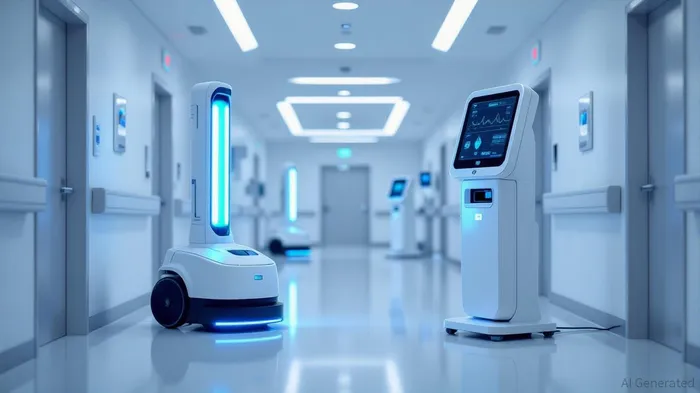
The hospital-acquired infection (HAI) market is undergoing a transformative phase, driven by the urgent need to address antimicrobial resistance (AMR), rising healthcare costs, and technological advancements. With the global HAI diagnostics market projected to grow at a 7.8% CAGR, reaching $8.2 billion by 2030[1], and the infection control market expected to expand to $44.42 billion by 2029[5], investors are increasingly turning to biotech firms that combine innovation with defensibility. This analysis identifies high-growth defensive plays in the sector, leveraging recent market trends, technological breakthroughs, and financial metrics.
Market Drivers and Technological Shifts
The HAI landscape is shaped by three key forces: regulatory pressure, technological innovation, and economic incentives. Governments worldwide are mandating HAI reporting and stricter infection control protocols, creating a regulatory tailwind for companies offering compliance solutions[1]. Simultaneously, advancements in molecular diagnostics (e.g., PCR, NGS) and AI-driven surveillance systems are redefining early detection and treatment paradigms[3]. For instance, AI algorithms now achieve over 90% accuracy in predicting surgical site infections, enabling proactive interventions[3].
Economically, the burden of HAIs—$29,000 per patient in treatment costs and $1 trillion globally annually[2]—has spurred demand for cost-effective solutions. This is particularly evident in the hydrogen peroxide airborne disinfection market, which is growing at 8.3% CAGR, driven by its non-toxic efficacy against multidrug-resistant organisms (MDROs)[3].
High-Growth Defensive Plays
1. STERIS and Bioquell: Leaders in Disinfection Innovation
STERIS and Bioquell dominate the hydrogen peroxide-based disinfection market, with their systems achieving >99.9% pathogen kill rates[3]. These companies benefit from recurring revenue streams (e.g., consumables for disinfection cycles) and a first-mover advantage in IoT-enabled systems. For example, STERIS's integration of disinfection devices with building management systems allows automated protocols based on occupancy data[4]. With the global airborne disinfection market projected to reach $971 million by 2032[3], these firms are well-positioned for sustained growth.
2. Aksense: Point-of-Care Diagnostics for Rapid Pathogen Detection
British startup Aksense has developed a portable biosensor capable of detecting HAIs like E. coli and P. aeruginosa in minutes[1]. This addresses a critical unmet need in hospitals, where delays in diagnosis exacerbate mortality risks. Aksense's technology aligns with the $8.2 billion diagnostics market's shift toward point-of-care (PoC) solutions, which reduce lab dependency and accelerate treatment[1].
3. LivOnyx: Automated Hand Hygiene Compliance
LivOnyx's thinSpray technology automates hand disinfection, inactivating MRSA and VRE in seconds[1]. Hand hygiene non-compliance remains a leading cause of HAIs, and LivOnyx's real-time compliance tracking offers a data-driven solution. With the infection surveillance market growing at 13.9% CAGR[5], companies like LivOnyx are capitalizing on the demand for real-time analytics to reduce infection rates.
4. Chain Antimicrobials: Antimicrobial-Coated Medical Devices
Chain Antimicrobials' peptide-coated catheters reduce biofilm formation, a major driver of catheter-associated urinary tract infections (CAUTIs)[1]. This aligns with the $56.4 billion antibacterial drugs market's pivot toward narrow-spectrum therapies and anti-virulence agents[5]. By targeting device-related infections, Chain Antimicrobials taps into a niche with high unmet need and strong reimbursement potential.
Financial and Strategic Considerations
Defensive plays in the HAI sector are characterized by high margins, recurring revenue models, and regulatory tailwinds. For example, the hydrogen peroxide disinfection market's $605 million 2025 valuation[3] reflects its non-toxic profile and broad adoption in critical environments. Similarly, AI-driven infection surveillance systems, which integrate with electronic health records (EHRs), offer scalable solutions with low marginal costs[5].
Investors should also consider geographic diversification. While North America dominates the HAI market (40% of global revenue in 2025[3]), Asia-Pacific's 5.1% CAGR[3] presents growth opportunities as emerging economies adopt advanced infection control technologies.
Conclusion
The HAI sector is a compelling arena for investors seeking high-growth defensive plays, combining urgent public health needs with technological innovation. Companies like STERISSTE--, Aksense, and Chain Antimicrobials exemplify the sector's potential, leveraging AI, molecular diagnostics, and advanced materials to address AMR and reduce healthcare costs. As regulatory and economic pressures intensify, these firms are poised to deliver both market leadership and long-term value.







Comentarios
Aún no hay comentarios