
Biotech Innovation and CSR: Navigating Pandemic Crises to Protect Shareholder Value
The global pandemic has reshaped the biotech industry, testing companies' ability to balance innovation, financial resilience, and corporate social responsibility (CSR). For investors, the interplay between these factors has become a critical lens for evaluating long-term value creation. Recent research underscores that biotech firms with robust CSR strategies not only mitigated pandemic-related risks but also positioned themselves for sustained profitability, even as market dynamics shifted dramatically.
The Pandemic's Dual Impact on Biotech
The post-2020 period saw biotech companies face unprecedented challenges and opportunities. Revenue surged for firms aligned with pandemic response efforts, such as BioNTechBNTX-- and ModernaMRNA--, whose mRNAMRNA-- vaccine development drove industry-wide revenue growth from $16% in 2020 to 35% in 2021, reaching nearly $217 billion total [3]. However, this success was uneven. Smaller firms without pandemic-related products faced liquidity constraints, highlighting the sector's reliance on innovation cycles and market timing.
Amid this volatility, CSR emerged as a stabilizing force. A study in the International Review of Economics & Finance found that CSR activities moderated the negative impact of the pandemic on firm risk and shareholder value, particularly for biotech companies [1]. By maintaining stakeholder trust through ethical practices and community support, firms reduced reputational damage and retained investor confidence during economic uncertainty.
CSR as a Strategic Investment
Biotech companies leveraged CSR to align pandemic response efforts with long-term value creation. For instance, 68% of public biotechs increased R&D spending during the pandemic, with firms like AmgenAMGN-- and NovavaxNVAX-- prioritizing therapies for underserved populations [4]. These investments not only addressed public health needs but also enhanced brand equity, a critical asset in competitive markets.
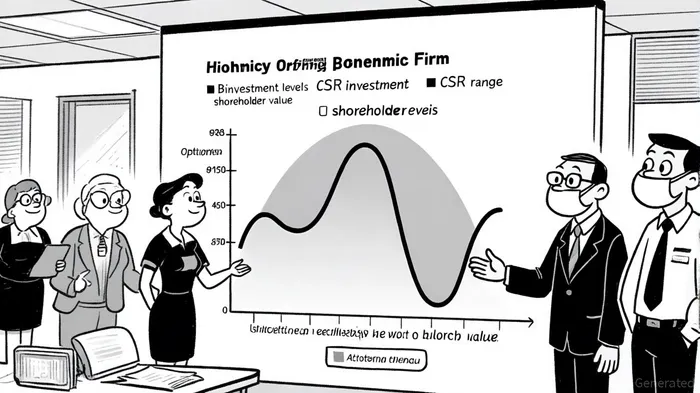
However, the relationship between CSR and profitability is nuanced. Research from the National Institutes of Health reveals an inverted U-shaped curve: moderate CSR engagement protected shareholder value, but excessive CSR—such as overcommitting to costly initiatives—reduced returns for firms with limited cash flow or weak cost-adjustment capabilities [5]. This suggests that investors should scrutinize the balance between CSR expenditures and operational efficiency.
ESG Reporting and Stakeholder Trust
The pandemic accelerated ESG disclosure trends in biotech, with firms increasingly transparent about their social and environmental impacts. A Harvard Law School analysis notes that ESG reporting has become a cornerstone of stakeholder engagement, particularly for biotech companies navigating ethical dilemmas around pricing and access [4]. For example, firms that prioritized equitable vaccine distribution, such as those collaborating with COVAX, saw stronger post-pandemic partnerships and regulatory support.
Yet, ESG metrics alone do not guarantee profitability. A European study found that while high ESG scores correlated with resilience during the pandemic, the link to profitability remained statistically insignificant [4]. This underscores the importance of aligning CSR with core business objectives rather than treating it as a compliance exercise.
Implications for Investors
For investors, the key takeaway is clear: biotech firms that integrate CSR into their innovation strategies—without overextending resources—are best positioned to thrive. The pandemic demonstrated that CSR can act as a buffer against market shocks, but its effectiveness depends on a company's financial flexibility and strategic focus.
Conclusion
The post-pandemic era has redefined the role of CSR in biotech. While revenue booms driven by pandemic-related products are unlikely to recur, the lessons from this period remain relevant. Companies that balance ethical commitments with financial prudence—investing in R&D, equitable access, and stakeholder communication—will likely outperform peers in the long run. For investors, the challenge lies in identifying firms that treat CSR as a strategic lever rather than a cost center.







Comentarios
Aún no hay comentarios