
Biomea Fusion Inc: Pioneering Untapped Potential in GLP-1 Therapies for Non-Responders
In the rapidly evolving landscape of obesity and metabolic disease therapeutics, Biomea Fusion Inc (NASDAQ: BIOM) has emerged as a compelling case study in innovation. While GLP-1 receptor agonists (GLP-1 RAs) like Novo Nordisk's Ozempic and Eli Lilly's Mounjaro dominate headlines, Biomea is targeting a critical but overlooked segment: patients who fail to respond to existing therapies. With an $80 billion unmet need in metabolic diseases, according to Biomea's second-quarter 2025 update, the company's dual focus on next-generation GLP-1 RAs and novel non-GLP-1 mechanisms positions it to address a $34.1 billion market, according to a peptide market report that is projected to grow at a 14.1% CAGR through 2029.
A Dual-Pronged Pipeline: BMF-650 and Icovamenib
Biomea's lead candidate, BMF-650, is an oral GLP-1 RA designed to overcome the limitations of injectable therapies. Preclinical trials in obese non-human primates demonstrated a 12–15% weight reduction over 28 days at doses of 10–30 mg/kg, outperforming many existing GLP-1 RAs. The company plans to file an IND application by late 2025, with Phase I trials in humans expected to begin in the fourth quarter (per the peptide market report). This oral formulation could disrupt the market, where patient adherence to injectables remains a barrier.
Equally promising is icovamenib, a non-GLP-1 therapy targeting type 2 diabetes patients unresponsive to current treatments. In a 52-week Phase II trial, icovamenib achieved a 1.8% placebo-adjusted HbA1c reduction in patients who had failed to meet glycemic targets with GLP-1 RAs, according to Biomea's 52‑week Phase II results. Notably, the drug's effects persisted for nine months post-treatment, suggesting durable metabolic benefits. This differentiates Biomea from competitors like Eli Lilly, whose tirzepatide (a dual GIP-GLP-1 agonist) focuses on responders rather than non-responders, as noted in a peptide drugs market analysis.
Beyond GLP-1: A Market Shift Toward Diversification
The peptide-based therapies market is witnessing a paradigm shift. While GLP-1 RAs remain foundational, triple agonists like retatrutide-targeting GLP-1, GIP, and glucagon receptors-are redefining efficacy benchmarks. In a phase 2 trial, retatrutide achieved an 82.4% reduction in liver fat and 24.4% weight loss over 48 weeks, as reported in a Nature study, underscoring the potential of multi-target approaches. Biomea's focus on non-GLP-1 pathways aligns with this trend, particularly as small-molecule GLP-1 RAs (e.g., orforglipron) gain traction for their oral convenience, highlighted in a Lancet article01201-1/fulltext).
However, Biomea's edge lies in its precision targeting of non-responders. While triple agonists aim to enhance outcomes for broad populations, Biomea's icovamenib is explicitly designed for patients who derive no benefit from GLP-1 RAs-a group estimated to comprise 20–30% of the type 2 diabetes population, per Biomea's 52‑week Phase II release. This niche, though smaller, is underserved and ripe for disruption.
Strategic Financial Discipline and Market Positioning
Biomea's recent strategic pivot-from oncology to metabolic diseases-has streamlined its operations and extended its cash runway to mid-2026, according to the company's second-quarter 2025 update. The company raised $42.8 million in June 2025 and reduced operational expenses by 40%, prioritizing its core programs. This financial discipline contrasts with peers like Rhythm Pharmaceuticals, which have faced cash burn challenges despite promising pipelines.
Moreover, Biomea's decision to pursue partnerships for non-core programs (e.g., BMF-500) reflects a pragmatic approach to capital allocation. By focusing on high-impact assets like BMF-650 and icovamenib, the company is positioning itself to attract co-development or acquisition interest from larger players seeking to diversify their metabolic disease portfolios.
Risks and Challenges
Despite its strengths, Biomea faces hurdles. The high attrition rate in GLP-1 development-exacerbated by gastrointestinal side effects and regulatory scrutiny-poses a risk for BMF-650. Additionally, the market for non-GLP-1 therapies is still nascent, with reimbursement models and payer acceptance uncertain.
On the financial front, Biomea's $42.8 million raise, while sufficient for 2025–2026, may not cover late-stage trials. The company will need to secure additional funding or partnerships to advance icovamenib into Phase III trials.
Conclusion: A Hidden Gem in a Crowded Space
Biomea Fusion's dual focus on next-generation GLP-1 RAs and non-GLP-1 therapies for non-responders positions it as a unique player in a $57.13 billion market by 2029, as noted in the peptide market report. While larger competitors like Novo NordiskNVO-- and Eli Lilly dominate headlines, Biomea's precision targeting of underserved patient populations and its disciplined financial strategy offer a compelling risk-rebalance proposition. For investors seeking exposure to the obesity and metabolic disease boom without overpaying for crowded GLP-1 bets, Biomea represents an overlooked innovation story with significant upside.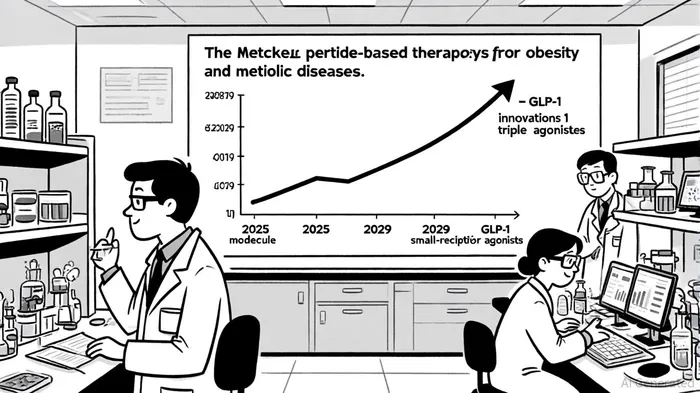





Comentarios
Aún no hay comentarios