
Binance's Strategic Yield Adjustments for WBETH and BNSOL in Response to Market Depeg Crises
The Depeg Crisis: A Systemic Failure
The depegging event on October 10, 2025, was catalyzed by a combination of macroeconomic shocks and flawed internal pricing models. President Trump's announcement of 100% tariffs on China triggered a broader market downturn, but Binance's Unified Account margin system amplified the crisis. By allowing any supported asset to act as collateral, the platform exposed itself to cascading liquidations when WBETH, BNSOL, and USDEUSDe-- plummeted to 20 cents, 13 cents, and $0.65, respectively according to analysis. The root cause lay in Binance's reliance on internal order book data for margin pricing, which failed to account for thin liquidity during the crisis.
Yield Recalibration: Index Weights and Redemption Anchors
Binance's immediate response included a $283 million compensation plan for affected users according to reports, but the exchange also implemented structural changes to prevent future depegs. On October 14, 2025, Binance recalibrated the price indices for WBETH and BNSOL by shifting their valuation sources from internal spot prices to external staking-derived rates. For WBETH, the weight of WBETHUSDT in the index was reduced from 20% to 0%, while WBETHETHETHUSDT increased to 100%. Similarly, BNSOL's index now derives 100% of its weight from BNSOLSOLSOLUSDT according to Binance's announcement.
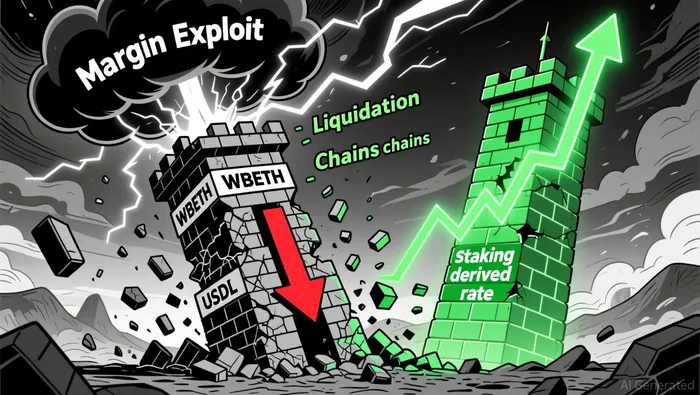
These adjustments aim to align the tokens' prices more closely with their underlying staking yields, reducing the risk of decoupling during liquidity crunches. By incorporating redemption prices into index calculations, Binance has created a more robust pricing mechanism that reflects real-time staking value rather than speculative order book activity.
Liquidity Resilience: External Data and Minimum Price Floors
Beyond yield recalibration, Binance introduced liquidity resilience measures to address the fragility of its cross-margin system. The exchange updated the price sources for WBETH/ETH and BNSOL/SOL to external market data, effective October 11, 2025. This shift ensures that liquidation prices are no longer dictated by Binance's internal order book, which proved unreliable during the depeg. Additionally, Binance set a minimum price floor for USDE to prevent extreme deviations.
These changes reflect a broader commitment to decentralizing pricing authority. According to industry analysis, by leveraging external data, Binance reduces its exposure to localized liquidity imbalances, a critical step in an era where cross-chain and cross-exchange arbitrage can rapidly destabilize centralized oracles.
Implications for Volatile Markets
Binance's recalibrations highlight a strategic pivot toward hybrid pricing models that balance centralized efficiency with decentralized resilience. While the adjustments may not eliminate all risks-such as macroeconomic shocks or coordinated attacks-they significantly reduce the likelihood of cascading liquidations. For investors, the updated yield structures for WBETH and BNSOL now offer a clearer link to staking rewards, enhancing transparency in an asset class historically plagued by opaque mechanisms according to industry experts.
However, challenges remain. The reliance on external data introduces new dependencies on third-party platforms, which could become single points of failure. Moreover, the effectiveness of these changes will depend on sustained liquidity in the underlying staking markets. If staking yields themselves become volatile, the new index weights may not fully insulate WBETH and BNSOL from depegging.
Conclusion
Binance's response to the October 2025 depeg crisis underscores the evolving nature of crypto market infrastructure. By recalibrating yield structures and integrating external liquidity sources, the exchange has taken meaningful steps to stabilize its wrapped assets. For investors, these changes signal a maturing approach to risk management-one that acknowledges the inherent volatility of crypto markets while striving to build resilience through transparency and diversification. As the industry navigates an uncertain macroeconomic landscape, Binance's adjustments may serve as a blueprint for balancing innovation with stability.







Comentarios
Aún no hay comentarios