
Binance's Strategic Support for Altcoin Network Upgrades: Implications for Ecosystem Growth and Investor Opportunity
Binance has emerged as a pivotal force in shaping the blockchain ecosystem through its infrastructure support for altcoin network upgrades. By prioritizing scalability, performance, and developer-friendly tools, the exchange has not only enhanced the technical capabilities of blockchain networks but also catalyzed broader adoption and investor interest. This analysis explores how Binance's strategic interventions-from technical upgrades to liquidity provision-have driven measurable growth in altcoin ecosystems and what this means for long-term investors.
Binance's Infrastructure-Driven Ecosystem Expansion
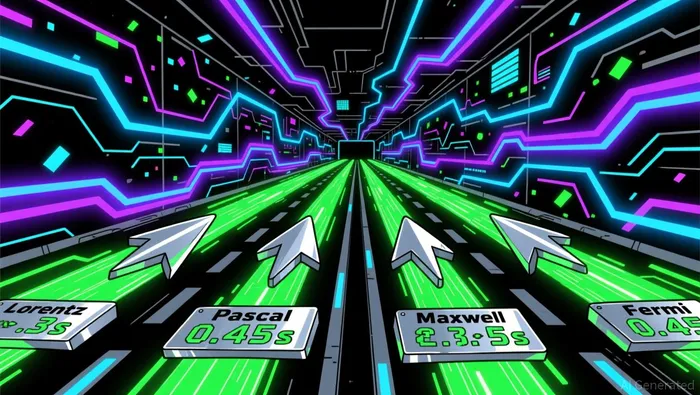
Binance's infrastructure support has been most visible in its role as a technical enabler for altcoin upgrades. For instance, the exchange's full support for the BNB Smart Chain (BEP20) network upgrade in 2025 included a series of hard forks-Lorentz, Pascal, Maxwell, and Fermi-that reduced block times from 3 seconds to as low as 0.45 seconds. These optimizations allowed the chain to process 31 million daily transactions with zero downtime, while features like Parallel Execution and Super Instructions enabled complex use cases in DeFi and AI. The result? A surge in daily active users to 4.8 million by December 2025, supported by initiatives like the "0 Fee Carnival" for stablecoin transfers.
Beyond BNBBNB-- Chain, Binance has extended its infrastructure expertise to other projects. For example, the exchange announced full technical support for the Neutron (NTRN) network upgrade, ensuring seamless user experiences and reducing barriers to adoption. Such efforts underscore Binance's role as a bridge between developers and end-users, fostering ecosystems that prioritize scalability and efficiency.
Case Studies: Altcoin Growth and Binance's Influence
While BNB and NTRNNTRN-- are central to Binance's infrastructure narrative, the exchange's influence extends to other altcoins. Solana (SOL), for instance, emerged as a high-performance network in 2025, processing $40 billion in daily transaction volume and capturing 7% of global DeFi value locked. Solana's architecture, optimized for speed and capital efficiency, aligns with Binance's focus on infrastructure innovation. The network's inclusion in the CoinShares Altcoins ETF (DIME)-which targets infrastructure-oriented projects like Solana, Avalanche, and Cardano-further highlights its institutional credibility.
Other altcoins, such as Sui Network (SUI), BlockDAG (BDAG), and Toncoin (TON), have also gained traction in 2025, with Binance Research identifying them as candidates for 100x growth potential. These projects represent diverse use cases, from blockchain scalability (SUI) to novel consensus mechanisms (BDAG and TON). Binance's liquidity provision and listing strategies have amplified their visibility, enabling retail and institutional investors to capitalize on their growth trajectories.
Investor Implications: Opportunities and Risks
Binance's infrastructure support creates clear opportunities for investors. For example, the RIVER cryptocurrency saw a dramatic price surge in early 2025, reaching $15 and attracting $1.4 billion in Binance-driven futures trading volume. This liquidity influx, coupled with Binance's marketing and technical support, positioned RIVER as a potential catalyst for broader market recovery. Similarly, altcoins like VeChain (VET), Cosmos (ATOM), and Polygon (MATIC) have demonstrated robust fundamentals, with Binance Research emphasizing their alignment with macro trends like institutional adoption and regulatory clarity.
However, the October 2025 crypto crash revealed systemic risks tied to infrastructure vulnerabilities. During the downturn, oracle system failures and cross-margin cascades amplified Bitcoin's 10% decline into a $19 billion liquidation event, with Binance implicated in price feed dysfunction. This underscores the importance of due diligence for investors: while Binance's infrastructure can drive growth, it also introduces dependencies on centralized pricing mechanisms and exchange-specific risks.
The Broader Market Context
Binance's infrastructure initiatives are part of a larger trend toward hybrid finance, where high-performance chains like SolanaSOL-- and BNB Chain complement Ethereum's role in institutional settlement. This diversification has expanded the altcoin market's total addressable value, with stablecoin adoption (e.g., USDT on TRON reaching $80 billion in circulation) and DeFi innovation driving demand. For investors, this means opportunities are no longer confined to BitcoinBTC-- but are spread across a maturing ecosystem of infrastructure-focused projects.
Conclusion: Strategic Investing in a Binance-Driven Ecosystem
Binance's infrastructure support has redefined the altcoin landscape, enabling networks to scale, attract users, and generate investor returns. However, the October 2025 crash serves as a cautionary tale: infrastructure improvements must be paired with robust risk management. For long-term investors, the key lies in identifying altcoins with strong fundamentals, real-world utility, and Binance's backing-while remaining vigilant about systemic risks. As the crypto market continues to evolve, Binance's role as an infrastructure enabler will likely remain central to both ecosystem growth and investor opportunity.






Comentarios
Aún no hay comentarios