
Binance's Strategic Expansion of Leverage Trading: What It Means for Brevis (BREV) and Market Volatility in 2026
Binance's 2026 roadmap underscores a bold vision for growth, with a particular focus on expanding leverage trading options and integrating emerging assets like Brevis (BREV) into its ecosystem. As the crypto market evolves, the interplay between leverage accessibility and asset liquidity has become a critical driver of short-term momentum. This analysis explores how Binance's strategic moves-such as introducing high-leverage futures for select tokens-could reshape the trajectory of projects like BREV while amplifying market volatility in 2026.
The LIT Case Study: Leverage as a Catalyst for Liquidity
Binance's recent listing of LIT perpetual futures with 5x leverage offers a microcosm of its leverage-driven strategy. By enabling traders to amplify positions on LIT, the platform not only boosted liquidity but also signaled institutional confidence in the asset's viability. The pre-market listing of this contract allowed early participation, creating a feedback loop where increased trading volume attracted further speculative and strategic capital. This approach aligns with Binance's broader goal of democratizing access to high-liquidity assets while fostering market depth.
For emerging projects, such leverage tools act as a double-edged sword. On one hand, they accelerate price discovery and attract retail and institutional traders seeking amplified returns. On the other, they heighten exposure to volatility, as leveraged positions can exacerbate price swings during periods of uncertainty. 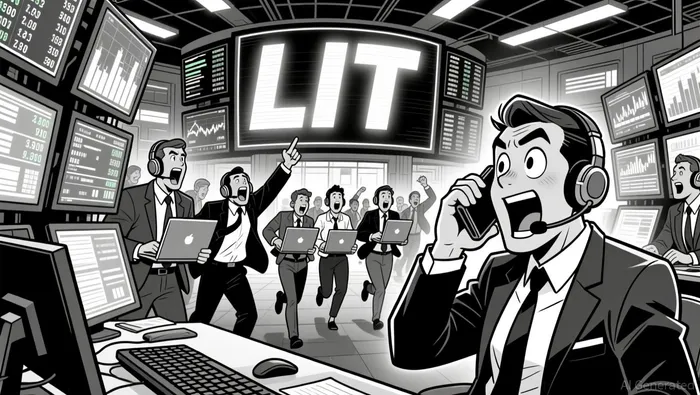 The LIT example demonstrates how Binance's leverage framework can transform a relatively niche token into a market-moving force within weeks of listing.
Brevis (BREV): A Cross-Chain Contender in the Spotlight
Brevis (BREV) has emerged as a key player in the cross-chain data-proof space, with Coinbase recently adding it to its public listing roadmap. This development, coupled with BREV's transaction speeds rivaling centralized exchanges, positions it as a prime candidate for Binance's leverage-focused strategy. While no official Binance listing has been announced, the platform's structured approach to asset onboarding-via its website and social media channels-suggests that BREV could follow a similar trajectory to LIT.
If Binance introduces leveraged trading for BREV, the implications could be profound. The token's utility in enabling secure, privacy-preserving cross-chain data access for dApps aligns with 2026's broader industry trends, including AI-driven blockchain integration as highlighted in recent reports. However, the success of such a move hinges on Binance's ability to balance innovation with risk management.
Risk Mitigation and the Leverage Paradox
Binance's recent adjustments to leverage ratios-reaching a 30-day low-highlight its efforts to curb excessive speculation. By reducing maximum leverage tiers and introducing stricter collateral requirements, the platform aims to stabilize markets during volatile periods. This strategy, while prudent, creates a paradox: tighter leverage controls may deter speculative inflows but could also stifle the liquidity needed to sustain emerging assets like BREV.
The challenge for Binance lies in calibrating leverage access to foster growth without triggering cascading liquidations. The 2026 roadmap's emphasis on regulatory compliance, including applications for an ATS license, suggests the platform is preparing for a future where leverage trading operates within a more structured framework. This could lead to a hybrid model where high-leverage options are reserved for institutional-grade assets, while retail traders gain access to more conservative tiers.
Strategic Implications for 2026
The convergence of Binance's leverage expansion and BREV's technological promise paints a compelling picture for 2026. If BREV is listed with leveraged trading options, it could experience a surge in short-term momentum, driven by traders capitalizing on its cross-chain utility and Binance's liquidity infrastructure. However, this scenario also raises concerns about market volatility, particularly if leveraged positions outpace fundamental demand.
Investors must weigh these dynamics carefully. While leverage can amplify returns, it also magnifies downside risks. For BREV, the key will be whether its adoption in dApps and cross-chain ecosystems can sustain long-term value creation, independent of speculative trading activity. Binance's role as a gatekeeper-determining which assets receive leverage access-will be pivotal in shaping this outcome.
Conclusion
Binance's strategic expansion of leverage trading in 2026 represents both an opportunity and a test for emerging crypto assets. Projects like BREV stand to gain unprecedented liquidity and visibility, but their success will depend on aligning with Binance's evolving risk management priorities. As the platform navigates regulatory and market challenges, the interplay between leverage accessibility and asset fundamentals will define the next phase of crypto's growth story. Investors should monitor Binance's listing announcements and leverage adjustments closely, as these signals will likely dictate the volatility and momentum of tokens like BREV in the months ahead.







Comentarios
Aún no hay comentarios