
Binance's Strategic Expansion of Altcoin Listings in 2026: Assessing Risks and Opportunities in Early-Stage Crypto Projects
Binance's 2026 altcoin listing strategy reflects a nuanced balance between innovation and caution, positioning the exchange as a pivotal player in shaping the next phase of the crypto market. As the industry matures, Binance has shifted its focus from speculative hype to projects with real-world utility, institutional-grade fundamentals, and alignment with macroeconomic and technological trends. This analysis explores the opportunities and risks inherent in Binance's 2026 altcoin expansion, drawing on recent data, case studies, and market dynamics.
Opportunities in Altcoin Listings: Derivatives, Institutional Adoption, and Emerging Trends
Binance's 2026 strategy emphasizes high-leverage derivatives products, such as the USDⓈ-backed XAGUSDT Perpetual Futures Contract, which offers up to 50x leverage. These instruments amplify profit potential for traders but also underscore the exchange's role in catering to sophisticated investors. However, the broader altcoin market remains volatile, with the average YTD return of the top 500 altcoins likely to stay negative. This highlights the critical need for disciplined risk management and timely exits during downturns.
Institutional adoption is reshaping the crypto landscape, with Bitcoin and Ethereum increasingly integrated into corporate treasuries and institutional portfolios. This trend is supported by the growth of digital-asset treasury (DAT) companies and crypto ETPs, which are normalizing digital assets as part of traditional finance. Binance's altcoin selection in 2026 is likely to prioritize projects that align with these institutional shifts, such as Ethereum-based tokenization of real-world assets (RWAs) and AI-focused blockchains like Bittensor (TAO).
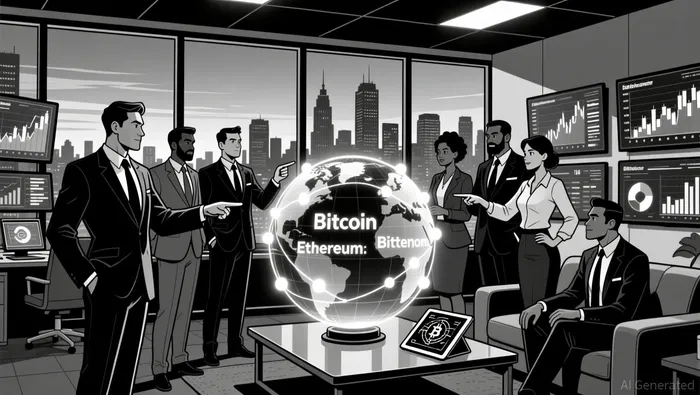
Decentralized finance (DeFi) and stablecoin-driven commerce are further reinforcing Ethereum's dominance, while AI-driven blockchain projects are gaining traction due to their utility in decentralized machine learning and controlled supply models. Binance's tiered approach to altcoin listings ranks projects by upside potential while balancing risk levels, offering a framework for investors to evaluate opportunities.
Risks in Early-Stage Projects: Volatility, Manipulation, and Weak Fundamentals
Despite Binance's rigorous criteria, early-stage altcoins remain inherently risky. A 2026 case study involving the failed manipulation of BROCCOLI (714) on Binance illustrates how market anomalies can create both risks and opportunities. A hacker's attempt to artificially inflate the token's price led to a 30% surge in under an hour, which trader Vida exploited through disciplined shorting after detecting order-book irregularities. This event underscores the importance of automated systems and real-time analytics in mitigating manipulation risks.
Weak tokenomics and lack of real-world utility are recurring failure points for altcoins listed on Binance. Projects with high inflation rates or poor utility often collapse post-listing, despite initial visibility. For instance, low-cap tokens like The AI Prophecy (ACT) and Peanut the Squirrel (PNUT) saw explosive gains but raised concerns about volatility and market integrity. Binance's 2026 criteria now prioritize projects with sustainable revenue models, robust technical foundations, and active community engagement.
Binance's Due Diligence Process: Metrics and Strategic Alignment
Binance employs a multi-pathway approach to evaluate early-stage projects, including Binance Alpha incubation, Futures tests, and direct Spot integration. In 2025, Binance Alpha processed 221 token launches, with an average airdrop value of $1,076 per user. Projects like BitcoinBTC-- Hyper (HYPER), which integrates a Bitcoin Layer-2 solution with SolanaSOL-- Virtual Machine (SVM), and MaxiDoge (MAXI), a competition-focused token with burn mechanics, exemplify Binance's preference for utility-driven innovation.
Key metrics for due diligence include user base growth, tokenomics, technical quality, and team credibility. Binance also prioritizes projects with measurable traction and alignment with its strategic goals, such as infrastructure tokens or AI-driven platforms. For example, Solana (SOL) is expected to dominate altcoin allocations in 2026, with a suggested 40% portion of the 30% altcoin cap in a crypto portfolio.
Strategic Implications for Investors: Allocation and Risk Mitigation
Investors must balance exposure to high-potential altcoins with risk management. A 2026 allocation strategy recommends capping altcoins at 30% of a crypto portfolio, with Solana, SUISUI--, and Ethereum-based projects as core holdings. Automated trading strategies, such as dollar-cost averaging grids and momentum breakout systems, have demonstrated consistent profitability in 2026, outperforming manual trading.
However, the market's complexity demands vigilance. On-chain data indicates robust active address growth but low circulating market value, signaling a fragmented landscape for value capture. Investors should prioritize projects with clear use cases, regulatory compliance, and strong community engagement while avoiding speculative tokens with weak fundamentals.
Conclusion: A Matured Ecosystem in 2026
Binance's 2026 altcoin strategy reflects a maturing crypto ecosystem, where institutional adoption, technological innovation, and regulatory alignment are reshaping value creation. While opportunities abound in derivatives, AI-driven blockchains, and RWA tokenization, risks from volatility, manipulation, and weak fundamentals persist. By adhering to Binance's tiered evaluation framework and leveraging automated risk management tools, investors can navigate this dynamic landscape with greater confidence.
As Binance's Asia-Pacific leadership notes, 2026 is poised for a "bullish reset", where real-world utility and sustainability will define success. For early-stage projects, the path to Binance listing is no longer a shortcut to hype but a rigorous test of innovation and resilience.






Comentarios
Aún no hay comentarios