
Binance and the Meme Coin Controversy: Implications for Crypto Market Integrity and Investor Strategy
The crypto market's rapid evolution has brought memeMEME-- coins to the forefront of speculative trading, but the role of platforms like Binance in facilitating these assets has sparked intense regulatory and operational scrutiny. As the U.S. and global authorities tighten their grip on crypto compliance, the intersection of Binance's meme coin offerings and market integrity risks demands a closer look. For investors, understanding these dynamics is critical to navigating a landscape rife with volatility, manipulation, and regulatory uncertainty.
Regulatory Pressures on Binance: A New Era of Jurisdictional Accountability
Binance's legal challenges in 2025 underscore a paradigm shift in how regulators are addressing offshore exchanges. A Florida appeals court recently revived a lawsuit accusing Binance of failing to recover $80 million in stolen BitcoinBTC--, ruling that the exchange's U.S. operations-such as its use of Amazon Web Services-justify jurisdiction. This decision signals a broader trend: courts are no longer deferring to offshore claims, instead asserting authority over platforms with even indirect U.S. ties.
Compounding this, Binance faces a federal lawsuit from families of the October 2023 Hamas attack victims, alleging the exchange enabled $1 billion in crypto transfers to terror-linked groups. While Binance denies these claims, the case highlights vulnerabilities in compliance frameworks, particularly for high-risk assets like meme coins, which often lack the institutional safeguards of traditional cryptocurrencies. 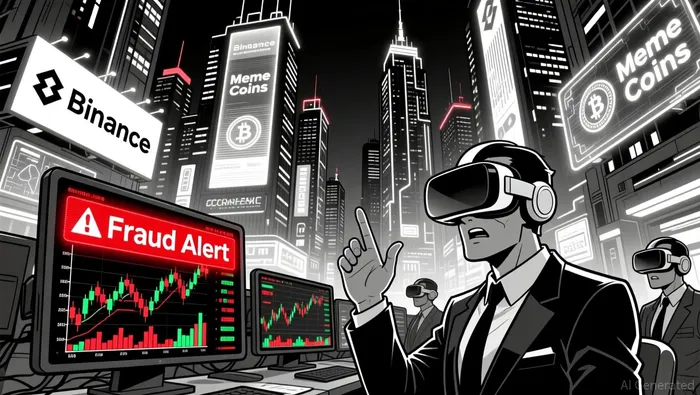
These pressures follow a $4.3 billion DOJ fine and a $2.7 billion CFTC settlement, yet Binance's founder, Changpeng Zhao, received a presidential pardon in October 2025. This paradox-severe penalties paired with political leniency-reflects the fragmented regulatory landscape and raises questions about the long-term accountability of crypto platforms.
Meme Coins: A Volatile Ecosystem with Systemic Risks
The BNBBNB-- Chain memecoinMEME-- market has become a microcosm of the broader crypto industry's challenges. Recent turmoil revealed alarming patterns: token concentration, low liquidity, and suspected manipulation. For instance, a single wallet was found to hold a significant portion of specific memecoins, eroding trust in market fairness. Blockchain analytics also identified suspicious trading activity, including potential insider trading linked to Binance officials' public announcements.
The SEC's stance on meme coins adds another layer of complexity. While the agency clarified that most meme coins are not securities, this classification leaves investors without protections against fraud or market manipulation. The absence of regulatory oversight has enabled "pump-and-dump" schemes and rug pulls, where developers abandon projects after siphoning funds. Platforms like Pump.fun exacerbate these risks by enabling rapid token creation with minimal barriers to entry.
Investor Behavior and Strategic Implications
Investor behavior in the meme coin space is equally volatile. While some view Binance Coin (BNB) as a long-term opportunity, others remain cautious due to regulatory uncertainty. For example, BNB's 4% dip in September 2025 followed fresh U.S. regulatory scrutiny, illustrating how legal risks can directly impact asset prices. Meanwhile, the October 2025 $20 billion liquidation event on Binance exposed the fragility of leveraged positions in low-liquidity markets.
Academic research further underscores the risks. A study on the $LIBRA meme coin revealed how influencers and centralized exchanges can distort markets, often to the detriment of retail investors. This highlights the need for stricter regulatory interventions to balance innovation with investor protection.
Navigating the Risks: A Call for Caution and Clarity
For investors, the meme coin market demands a disciplined approach. Experts advise to limit investments to what one can afford to lose. Tools like scam checkers and real-time analytics can help identify red flags, but they are no substitute for thorough due diligence. Regulators, meanwhile, must address gaps in oversight. While the SEC has stepped back from securities classifications, the CFTC and FTC could play a role in curbing fraud and manipulation. Proposals like the MEME Act, which aim to prevent public officials from endorsing meme coins, signal growing awareness of the sector's risks.
Conclusion
Binance's entanglement with meme coins epitomizes the crypto market's duality: innovation and instability. As regulatory scrutiny intensifies and operational risks persist, investors must tread carefully. The future of the meme coin ecosystem will likely hinge on whether platforms can balance speculative appeal with robust compliance-and whether regulators can enforce accountability without stifling innovation. For now, the message is clear: in the world of meme coins, hype is a double-edged sword.






Comentarios
Aún no hay comentarios