
Binance's Keyless Wallet Innovation and Its Implications for Web3 Adoption
The crypto wallet landscape in 2025 is undergoing a seismic shift, driven by Binance's Keyless Wallet-a product that redefines security paradigms and challenges the status quo of self-custody. By leveraging Multi-Party Computation (MPC) technology, Binance has eliminated the need for seed phrases, a critical vulnerability in traditional wallets, while addressing the usability gap that has long hindered mass adoption of Web3. This innovation not only reshapes competitive dynamics but also signals a pivotal moment in the evolution of crypto security and user trust.
Keyless Wallets: A Security Revolution
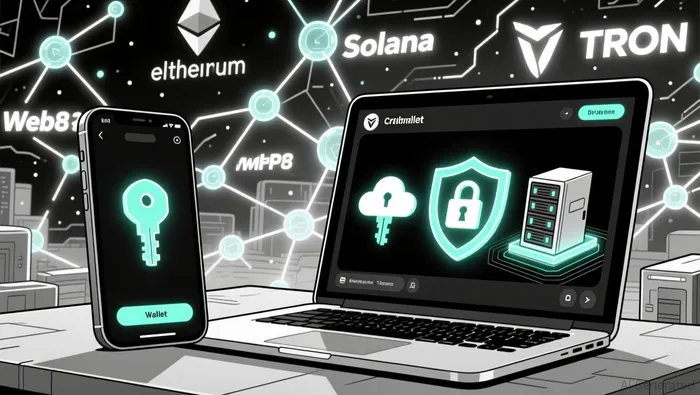
Binance's Keyless Wallet splits cryptographic keys into shares distributed across user devices, secure servers, and the cloud, ensuring no single entity can access the full key. This architecture removes the single point of failure inherent in traditional wallets, which rely on users to store and protect seed phrases-a process prone to human error and theft. For instance, data from 2025 reveals that 41% of users still prefer custodial solutions due to their ease of use and recovery mechanisms, but non-custodial wallets now dominate 59% of the market, reflecting a growing demand for self-sovereign control. Binance's Keyless Wallet bridges this divide by offering custodial-like convenience with non-custodial security, a hybrid model that could accelerate adoption among mainstream users.
The wallet's integration of MPC also mitigates risks associated with phishing, rug pulls, and private key exposure. Real-time risk alerts and QR-based login via the Binance App further enhance user experience, reducing friction for onboarding. This is critical in a year where 2024 saw $2.2 billion lost to crypto hacks, underscoring the urgency for robust security solutions. By decentralizing key management, Binance's approach aligns with the core principles of Web3 while addressing the practical needs of a risk-averse audience.
Competitive Dynamics: Innovation vs. Governance
Binance's Keyless Wallet has forced competitors to recalibrate their strategies. Platforms like Trust Wallet and MetaMask, which prioritize non-custodial self-custody, now face a hybrid challenger that combines institutional-grade security with user-friendly design. Trust Wallet, for example, reported 60 million monthly active users in 2025, bolstered by its multichain support and ISO certifications. However, Binance's cross-chain capabilities (EVM, SolanaSOL--, TRON) and 297 million Web3 users position it as a formidable player in the race for mass adoption.
Yet, Binance's custodial model has drawn scrutiny. In Q3 2025, Kraken, Crypto.com, and Coinbase outperformed Binance in governance and data quality scores, ranking higher for institutional users. This highlights a tension between innovation and regulatory compliance-a challenge Binance must navigate as global scrutiny of crypto infrastructure intensifies. Competitors are also doubling down on AI-driven security features and decentralized governance models to differentiate themselves.
Web3 Adoption: Security as a Catalyst
The Keyless Wallet's impact on Web3 adoption is evident in user behavior shifts. By 2025, 71% of crypto users expressed heightened awareness of non-custodial solutions, driven by a desire for control and transparency. Binance's product caters to this trend by simplifying key management without compromising security, a critical factor for attracting mainstream users. Mobile wallets now account for 72% of global crypto activity, with 820 million unique wallets active. Binance's browser extension and QR login streamline access to dApps, staking, and NFTs, reducing the learning curve for Web3 participation.
However, the rise of Keyless Wallets also raises questions about centralization. While MPC mitigates single-point failures, the reliance on Binance's infrastructure introduces a degree of trust in the platform-a trade-off that may appeal to convenience-driven users but could alienate purists. This duality reflects the broader tension in Web3: balancing decentralization with usability.
Conclusion: A New Era of Wallet Innovation
Binance's Keyless Wallet is more than a technical innovation-it is a strategic move to redefine the crypto wallet ecosystem. By addressing security pain points and simplifying user experience, it accelerates Web3 adoption while challenging competitors to innovate. Yet, the long-term success of this model will depend on Binance's ability to maintain trust, comply with evolving regulations, and adapt to user preferences. As the market evolves, the interplay between custodial convenience and non-custodial sovereignty will remain a defining narrative in the journey toward a decentralized future.





Comentarios
Aún no hay comentarios