
Binance and Franklin Templeton: A Strategic Alliance Redefining Institutional Crypto Adoption
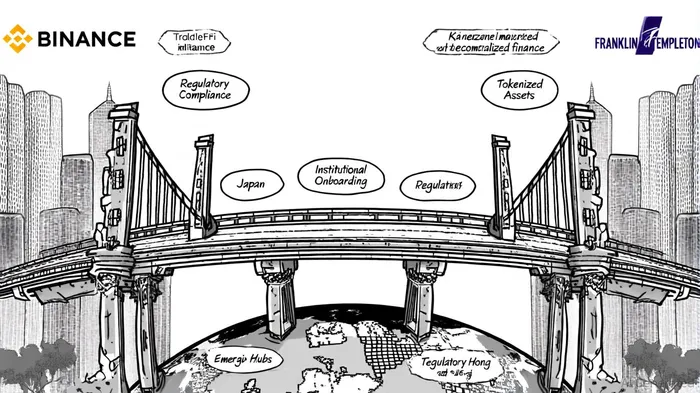
The institutional crypto landscape is undergoing a seismic shift. As regulatory frameworks mature and institutional demand for digital assets intensifies, two titans—Binance and Franklin Templeton—are positioning themselves to redefine the industry's trajectory. While no official partnership announcement has emerged, their parallel initiatives in institutional onboarding and regulatory compliance suggest a latent synergy that could catalyze a new era of trust and adoption.
The Evolving Crypto Infrastructure: Binance's Regulatory Resilience
Binance, the world's largest cryptocurrency exchange by trading volume, has faced relentless scrutiny from global regulators. Yet, its strategic pivot toward compliance has positioned it as a critical infrastructure player for institutional clients. By 2023–2025, Binance implemented Proof of Reserves to transparently verify asset holdings, a move that directly addresses institutional concerns about counterparty risk [1]. Simultaneously, the exchange has adapted to shifting regulatory tides: Japan's easing of crypto regulations in 2025[2], coupled with proactive engagement in the UAE and Hong Kong, underscores Binance's commitment to aligning with evolving legal standards. These efforts are not merely defensive—they are foundational to building a trust layer for institutional capital.
Franklin Templeton's TradFi-DeFi Convergence
On the traditional finance side, Franklin Templeton has emerged as a pioneer in tokenizing real-world assets (RWA) and integrating blockchain into legacy systems. By 2025, the firm launched on-chain mutual funds, leveraging tokenization to streamline settlement processes and reduce operational friction [1]. This innovation bridges the gap between TradFi's liquidity demands and DeFi's programmable infrastructure. For instance, tokenized government securities and money market funds now offer institutional investors instant access to digital assets without sacrificing regulatory oversight. Franklin Templeton's approach is pragmatic: it embraces blockchain's efficiency while adhering to the compliance frameworks that anchor institutional confidence.
The Unspoken Synergy: A Strategic Alliance Narrative
While no direct collaboration has been confirmed, the alignment of Binance's compliance-driven infrastructure and Franklin Templeton's RWA innovation hints at a potential partnership. Consider the following:
1. Regulatory Credibility: Binance's Proof of Reserves and regional compliance efforts could serve as a backbone for Franklin Templeton's tokenized funds, ensuring institutional-grade transparency.
2. Institutional Onboarding: Franklin Templeton's expertise in asset management, combined with Binance's global exchange network, could create a seamless on-ramp for institutions to access tokenized assets.
3. Market Expansion: As Japan, UAE, and Hong Kong liberalize crypto regulations[2], a joint venture could accelerate cross-border adoption by harmonizing TradFi and DeFi standards.
Risks and Realities
Critics argue that such an alliance would face hurdles, including divergent corporate cultures and regulatory scrutiny. However, the urgency of institutional adoption—driven by inflationary pressures and the rise of tokenized assets—demands bold collaboration. Both firms have demonstrated agility in navigating regulatory complexity, suggesting they are well-positioned to mitigate risks.
Conclusion: A New Paradigm for Institutional Adoption
The convergence of Binance's compliance-first infrastructure and Franklin Templeton's TradFi-DeFi integration marks a pivotal moment in crypto's institutionalization. While a formal partnership remains unannounced, their individual trajectories suggest a latent alliance that could redefine how institutions engage with digital assets. For investors, this dynamic underscores a critical thesis: the future of crypto adoption lies not in isolation but in strategic bridges between innovation and regulation.







Comentarios
Aún no hay comentarios