
Binance's FDUSD Delisting: Strategic Implications for Altcoin Traders in 2026
Binance's ongoing delistings of FDUSD-paired trading options in late 2025 and early 2026 have sparked significant debate among altcoin traders. These moves, framed as part of the exchange's "routine maintenance and evaluation" of trading pairs based on volume, liquidity, and market stability, signal a broader recalibration of Binance's product offerings. For traders, the implications are twofold: liquidity risks for FDUSD-dependent positions and the need to adapt position management strategies in a rapidly shifting market.
Liquidity Risks: A Closer Look
The delistings primarily target margin trading pairs such as BCH/FDUSD, AVAX/FDUSD, and EIGEN/FDUSD, with Binance citing "low trading volume and insufficient liquidity" as key factors. For example, BCH/FDUSD averaged $2.1 million in daily trading volume in the 30 days prior to its January 2026 delisting, a figure far below the thresholds Binance deems viable for margin trading. This trend reflects a strategic consolidation of liquidity into core markets, but it also exposes traders to heightened risks.
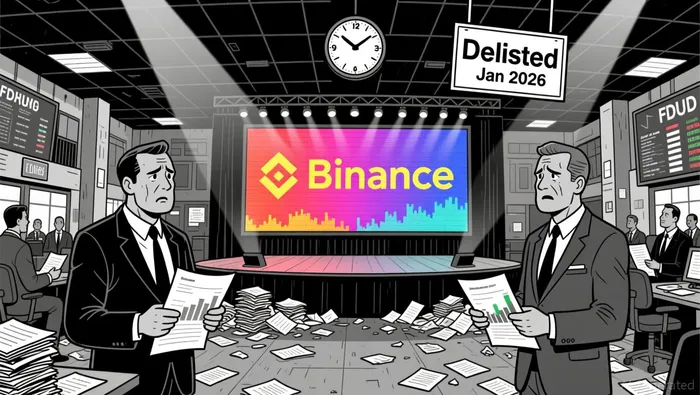
When Binance announced the delisting of 14 FDUSD margin pairs in January 2025, open positions in these pairs were automatically closed, and pending orders canceled. This forced traders to either exit positions prematurely or face potential liquidations. The impact was amplified by the fact that margin trading pairs often attract leveraged positions, where liquidity constraints can exacerbate slippage and volatility. For instance, the delisting of AVAX/FDUSD led to a temporary reallocation of trading activity to USDT/AVAX pairs, creating short-term price dislocations.
Position Management: Adapting to a New Normal
Traders must now adopt proactive strategies to mitigate the fallout from these delistings. One key approach is diversification. As Binance's actions suggest, a reduced role for FDUSDFDUSD-- in margin trading, traders are advised to shift exposure to more liquid stablecoins like USDTUSDT-- or USDCUSDC--. This is particularly critical for automated trading systems, which require API updates to avoid operational disruptions post-delisting.
Another critical strategy involves portfolio rebalancing. Smaller crypto firms and individual traders are encouraged to leverage maintenance windows-periods before delisting deadlines to close underperforming positions and reallocate capital to higher-liquidity pairs. For example, the delisting of TAO/FDUSD in January 2026 prompted traders to migrate to TAO/USDT, where order-book depth and trading volumes were more robust.
Regulatory and market trends further complicate position management. Binance's delistings align with a broader industry shift toward compliance-driven offerings, where exchanges prioritize quality over quantity. Traders must stay informed about evolving exchange policies and regulatory developments, particularly in regions like Europe, where FDUSD's adoption by SMEs remains strong.
Strategic Implications for Altcoin Markets
While Binance's actions do not directly impact FDUSD's role as a stablecoin for spot trading, they raise questions about its competitive positioning. Analysts note that the delistings could accelerate a shift toward USDT and USDC in margin trading, where liquidity and user demand are more established. For altcoin traders, this means FDUSD may lose its edge in leveraged strategies, forcing a reevaluation of risk-return profiles.
However, the delistings also highlight the resilience of decentralized finance (DeFi) ecosystems. Traders are increasingly diversifying to decentralized exchanges (DEXs) to avoid centralized exchange risks. This trend underscores the importance of multi-platform strategies, where liquidity is not tied to a single exchange's policies.
Conclusion
Binance's FDUSD delistings are not a death knell for the stablecoin but a recalibration of its role in the crypto ecosystem. For altcoin traders, the key takeaway is clear: liquidity risks are rising, and position management must evolve to address these challenges. By diversifying stablecoin exposure, rebalancing portfolios, and staying attuned to exchange-driven market shifts, traders can navigate the 2026 landscape with greater agility. As Binance continues to refine its offerings, the ability to adapt will separate successful traders from those left behind.







Comentarios
Aún no hay comentarios