
Binance's Delisting Strategy and Its Impact on Liquidity and Portfolio Management
Binance, the world's largest cryptocurrency exchange by trading volume, has increasingly leveraged delistings as a tool to curate its ecosystem, prioritizing liquidity, regulatory compliance, and market quality. In 2025, the platform removed tokens such as FlamingoFLM-- (FLM), KadenaKDA-- (KDA), and Perpetual ProtocolPERP-- (PERP), citing low trading volume, regulatory risks, and lack of project utility as primary criteria. These actions have triggered significant shifts in token value perception, liquidity dynamics, and investor behavior, reshaping trading strategies and portfolio management approaches across the crypto market.
Delisting Criteria and Market Reactions
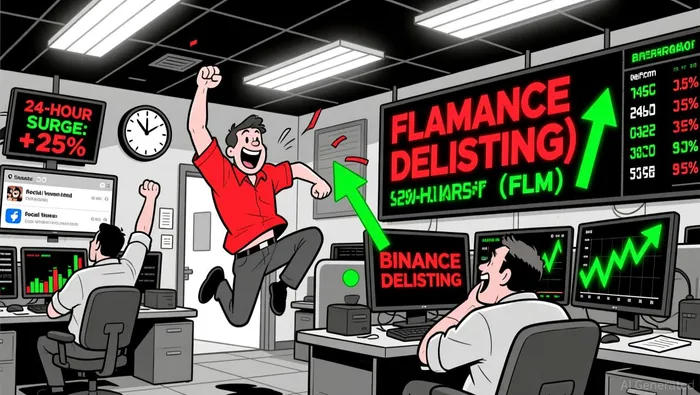
Binance's delisting policy for 2025 emphasizes removing assets that fail to meet liquidity thresholds or regulatory standards. For instance, the delisting of FLMFLM--, KDAKDA--, and PERPPERP-- on November 12, 2025, followed a pattern of prioritizing compliance with evolving European regulations, such as the Markets in Crypto-Assets (MiCA) framework. Tokens like KDA and PERP experienced sharp price declines-30% and 15%, respectively- immediately after the announcement, reflecting investor concerns over reduced liquidity and perceived project instability. Conversely, FLM defied expectations by surging 25% in 24 hours, illustrating how speculative trading and short-term sentiment can drive divergent outcomes.
The delisting of margin trading pairs, including BCH/FDUSD and AVAX/FDUSD, further underscored Binance's focus on liquidity optimization. Traders were forced to close positions or transfer assets by January 6, 2025, to avoid automatic liquidation. Such abrupt adjustments highlight the exchange's role in consolidating trading activity into high-liquidity markets, a strategy that stabilizes prices but also increases volatility for delisted assets.
Liquidity Constraints and Investor Sentiment
Delistings often act as signals of project weakness, triggering panic selling and liquidity crunches. For example, WRX's 59% price drop post-delisting in 2025 demonstrated how reduced exchange visibility can erode investor confidence. Similarly, tokens like KaonKAON-- (AKRO) and Bluzelle (BLZ), delisted in late 2024, saw diminished trading activity as holders migrated to alternative platforms. This liquidity drain not only affects price discovery but also amplifies volatility, as seen in the case of FLOW/BTC, which faced delisting due to insufficient trading volume.
Investor sentiment plays a pivotal role in shaping these outcomes. A report by Finance Feeds notes that delistings are frequently interpreted as red flags, prompting risk-averse investors to divest holdings. This behavioral response is compounded by the broader trend of Binance listings no longer guaranteeing strong returns- only 11.1% of 2025-listed tokens posted positive returns. Such dynamics force traders to reassess their reliance on Binance as a liquidity provider and seek diversified exposure.
Portfolio Management Adjustments
The delistings have necessitated proactive portfolio management strategies. Token holders are advised to convert delisted assets into stablecoins or established cryptocurrencies to mitigate liquidity risks. For example, the delisting of 14 margin trading pairs in January 2025 compelled traders to rebalance their positions, transferring assets to maintain exposure while avoiding forced liquidation. Additionally, investors are increasingly prioritizing compliance-aligned projects, aligning with Binance's regulatory focus.
Long-term adjustments include diversifying across exchanges and leveraging alternative trading platforms to avoid over-reliance on Binance. The unexpected surge in FLM's price post-delisting also highlights the potential for speculative rebounds, prompting traders to adopt agile strategies that capitalize on short-term volatility. However, these tactics require careful risk management, as delistings can lead to rapid value erosion, as seen with KDA and PERP.
Broader Implications for the Crypto Ecosystem
Binance's delisting strategy reflects a broader industry shift toward regulatory compliance and market quality. By removing underperforming tokens, the exchange aims to foster a more resilient ecosystem, though this comes at the cost of increased volatility for affected assets. For investors, the key takeaway is the need for dynamic portfolio management, emphasizing liquidity, diversification, and regulatory alignment. As the crypto market matures, delistings will likely remain a double-edged sword-promoting standards while challenging traders to adapt to an increasingly fragmented and regulated landscape.






Comentarios
Aún no hay comentarios