
Binance's $400 Million Relief Initiative and the Future of Stablecoin Resilience in Crypto Markets
The October 14, 2025 depeg event involving Ethena's USDeUSDe-- and other tokens like BNSOLBNSOL-- and WBETHWBETH-- exposed critical vulnerabilities in crypto market infrastructure, triggering over $19 billion in liquidations and shaking investor confidence. Binance's subsequent $400 million relief initiative, dubbed the "Together Initiative," has sparked debates about stablecoin resilience, exchange accountability, and the long-term stability of digital asset markets. This analysis examines the strategic implications of Binance's response, the structural weaknesses revealed by the depeg, and actionable insights for investors navigating an increasingly volatile landscape.
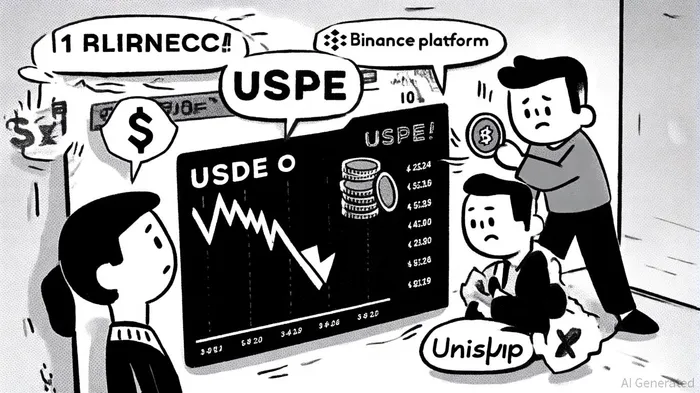
The Depeg Event: A Systemic Shock Amplified by Exchange Infrastructure
The depeg of USDe on October 10–11 was notNOT-- a failure of the stablecoin itself but a breakdown in Binance's pricing oracle, which relied on distorted order book data during a period of extreme liquidity stress[1]. As market volatility spiked due to U.S.-China trade tensions and cascading leveraged positions, Binance's internal mechanisms failed to account for thin liquidity and deposit/withdrawal bottlenecks, causing USDe's price to plummet to $0.65 on the platform-despite remaining stable at $1 on decentralized exchanges like Curve and Uniswap[2]. Ethena's founder, Guy Young, emphasized that USDe's minting and redemption systems operated without interruption and that the stablecoin was fully collateralized[3].
This event underscores a critical lesson: stablecoin resilience is not solely dependent on collateralization but also on the robustness of exchange-specific infrastructure. Binance's admission that the depeg stemmed from a "malfunction in its pricing system"[4] highlights the fragility of centralized pricing oracles in high-stress environments. For investors, this signals the need to scrutinize not just the stablecoins themselves but also the platforms where they are traded.
Binance's Relief Initiative: A Strategic Move to Rebuild Trust
Binance's $400 million relief package, including $300 million in USDCUSDC-- for individual traders and $100 million in low-interest loans for institutional clients, was framed as a commitment to "long-term industry growth"[5]. While the exchange explicitly disclaimed legal liability for the losses incurred[6], the initiative served a dual purpose: mitigating immediate harm to users and signaling to regulators and investors that Binance is taking proactive steps to address systemic risks.
The technical safeguards introduced-such as incorporating redemption prices into token price-index weights and increasing risk-parameter review frequency-aim to prevent similar distortions in the future[7]. However, critics argue that these measures address symptoms rather than root causes, such as the lack of cross-market liquidity governance and transparency in collateral management[8]. For investors, Binance's actions reflect a broader trend of exchanges doubling down on crisis management to preserve their dominance in a fragmented market.
Investor Strategies: Diversification, Transparency, and Regulatory Preparedness
The depeg event has reinforced the importance of diversification and risk mitigation in stablecoin exposure. Experts recommend spreading investments across multiple stablecoins and asset classes to minimize the impact of any single depeg[9]. For instance, blue-chip stablecoins like USDC and USDTUSDT--, which are backed by transparent reserves and undergo regular audits, remain preferable to algorithmic or synthetic alternatives[10].
Regulatory clarity is another critical factor. The proposed GENIUS Act, which mandates stablecoins to be backed by U.S. dollars or highly liquid assets, has already attracted traditional institutions like Santander and Société Générale to the space[11]. Investors must stay informed about evolving regulations, as uncertainty can exacerbate depeg risks. For example, the EU's Markets in Crypto-Assets (MiCA) framework and Hong Kong's licensing requirements could reshape stablecoin risk profiles in 2025[12].
Proactive risk management tools, such as stop-loss orders and portfolio rebalancing, are also essential. The depeg event demonstrated how stablecoin instabilities can trigger price jumps in other cryptoassets, such as BitcoinBTC--, with a TetherUSDT-- depeg increasing BTC/USD jump probabilities nearly fivefold[13]. Investors should maintain liquidity cushions and avoid over-leveraging, particularly in strategies like Loop Lending, which expose portfolios to systemic risks[14].
Binance's Role in Market Stability: A Double-Edged Sword
Binance's dominance in stablecoin and Bitcoin inflows-holding 59% of centralized exchange stablecoin reserves as of May 2025[15]-positions it as a linchpin of crypto market stability. The platform's $180 billion in stablecoin inflows year-to-date reflects strong user trust in its liquidity and security features[16]. However, this concentration of power also raises concerns about systemic risk. If Binance's pricing mechanisms or collateral management practices falter, the ripple effects could be catastrophic.
For investors, Binance's role is a double-edged sword: its scale and innovation drive market growth, but its centralization introduces vulnerabilities. Diversifying across exchanges and monitoring Binance's post-depeg reforms will be crucial for mitigating risks.
Strategic Implications for Investors
The October 2025 depeg and Binance's response offer three key takeaways for investors:
1. Prioritize Transparency: Favor stablecoins with auditable reserves and clear governance structures.
2. Diversify Exposure: Avoid over-reliance on synthetic or algorithmic stablecoins during volatile periods.
3. Monitor Exchange Infrastructure: Assess the robustness of pricing oracles and risk management practices on platforms where stablecoins are traded.
As the crypto industry evolves, stablecoins will remain a cornerstone of digital finance-but their resilience will depend on both technological innovation and regulatory oversight. Binance's relief initiative is a step toward addressing these challenges, but investors must remain vigilant in navigating a landscape where stability is never guaranteed.






Comentarios
Aún no hay comentarios