
Binance's $283M Compensation Plan: A Blueprint for Crypto Exchange Resilience
In October 2025, Binance faced one of the most severe crises in its history: a "Black Swan" event triggered by acute market volatility and technical failures that led to the depegging of critical assets like USDEUSDe--, BNSOL, and WBETH. The incident caused widespread forced liquidations and eroded user trust. Yet, within 24 hours, Binance announced a $283 million compensation plan, distributed in two batches, to restore affected users to their pre-crisis positions, according to a post-mortem report. This rapid response, funded by its Secure Asset Fund for Users (SAFU), underscores a critical lesson for crypto exchanges: capital resilience and transparent risk management are not just defensive strategies-they are existential imperatives.
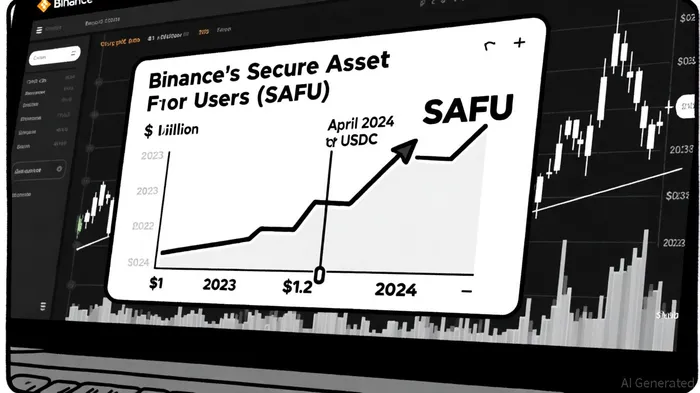
The SAFU Framework: A Pillar of Trust
Binance's SAFU, established in 2018, is a 10% allocation of trading fees into a cold-storage reserve. By April 2024, the fund had grown to $1 billion, with a strategic shift to USDC-a stablecoin pegged to the U.S. dollar-to mitigate volatility and align with regulatory expectations. This move enhanced SAFU's reliability, according to Cointelegraph, ensuring it could act as a "financial shock absorber" during crises. The October 2025 compensation was explicitly funded by SAFU, with Binance CEO Richard Teng stating the exchange prioritized "user protection above all else," as PA Daily reported.
The decision to denominate SAFU in USDCUSDC-- was pivotal. Unlike volatile cryptocurrencies, USDC's stability ensured the fund retained its value during the crisis. This shift also addressed U.S. regulatory scrutiny, particularly after Binance's $4.3 billion settlement in late 2023, a point highlighted by CoinGape. By 2025, SAFU's USDC-backed structure had become a benchmark for transparency, with real-time tracking tools allowing users to verify the fund's status.
Compensation as Crisis Mitigation
Binance's compensation plan was not merely reactive-it was a calculated effort to rebuild trust. The exchange analyzed order books and price anomalies to determine eligibility, ensuring payouts reflected the disparity between liquidation prices and fair market values, as described in the post-mortem report. This approach minimized arbitrage opportunities and restored user confidence within a 72-hour window, according to a BlockInsider report.
The speed of the payout-completed in under 24 hours-was equally significant. In a market where panic can amplify losses, Binance's agility demonstrated its operational readiness. As CoinGape noted, this rapid response contrasted sharply with the prolonged uncertainty seen in past crises, such as the FTX collapse, which was examined in a CoinLive piece. By acting decisively, Binance reinforced its reputation as a "systemically important" exchange capable of withstanding extreme shocks, a point reflected in Business of Apps statistics.
Risk Management Reforms: Beyond the Crisis
The October 2025 event also prompted structural reforms. Binance announced adjustments to price index weights, increased risk parameter reviews, and enhanced liquidity safeguards, as the post-mortem report noted. These measures reflect a broader trend in crypto risk management: the need for dynamic, real-time monitoring of stablecoins and derivatives markets, as discussed in a FasterCapital study.
Notably, Binance emphasized cold storage for long-term assets and advocated for diversified stablecoin usage (e.g., USDT and USDC) to reduce single-point failures, consistent with a portfolio stress test. These steps align with the principles of Taleb's "antifragile" systems, where volatility is not just tolerated but leveraged to strengthen resilience, a theme explored in a LinkedIn analysis.
Broader Implications for the Crypto Industry
Binance's case study offers three key takeaways for crypto exchanges:
1. Capital Resilience: A robust SAFU or equivalent fund is non-negotiable. Exchanges must maintain reserves denominated in stable, regulated assets to avoid compounding crises.
2. Transparency: Real-time tracking of compensation processes and fund allocations is essential to rebuild trust post-crisis.
3. Proactive Risk Mitigation: Regular stress tests, diversified asset holdings, and agile governance frameworks are critical to surviving Black Swan events.
Conclusion
Binance's $283 million compensation plan was more than a financial transaction-it was a masterclass in crisis management. By leveraging SAFU's USDC-backed stability, acting with unprecedented speed, and implementing structural reforms, Binance demonstrated how crypto exchanges can transform existential threats into opportunities for systemic improvement. For investors, the lesson is clear: platforms that prioritize capital resilience and user trust will dominate in an industry where volatility is the norm.






Comentarios
Aún no hay comentarios