
Binance's $171M Crypto Shorts Liquidation: A Market Correction or a Buying Opportunity?
The cryptocurrency market's October 2025 liquidation event-cited as the largest in history-has sparked fierce debate: Is this a systemic correction or a golden opportunity for contrarian investors? With over $19.3 billion in leveraged positions wiped out in a single day, including $2.5 billion in short liquidations, according to Binance's compensation plan, the collapse of Binance's unified margin system under pressure has exposed both the fragility and resilience of crypto markets. To answer this question, we must dissect the interplay of leveraged trading risks, macroeconomic triggers, and evolving market sentiment.
The Mechanics of the Liquidation: A Perfect Storm
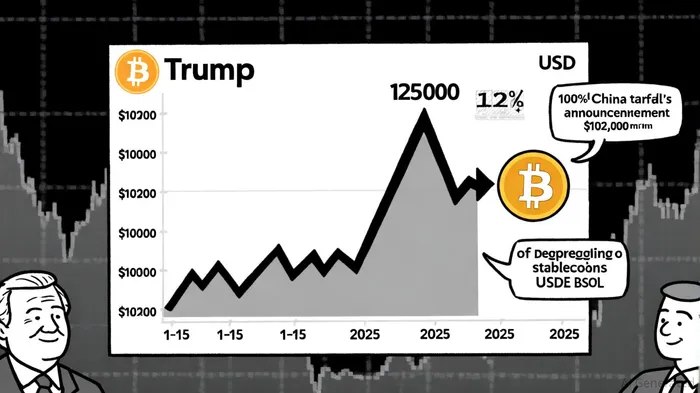
The October 11 crash was not organic but catalyzed by a confluence of factors. U.S. President Donald Trump's 100% tariff on Chinese imports reignited trade war fears, sending global equities and crypto into freefall, after Trump confirmed a 100% tariff. BitcoinBTC--, which had surged past $125,000 during the "Uptober" rally, plummeted 12% in hours. Simultaneously, stablecoins like USDEUSDe-- and wrapped tokens (BNSOL, WBETH) depegged, eroding confidence in collateralized assets.
Binance's unified margin system, designed to optimize collateral efficiency, became a vulnerability. A coordinated exploit allowed attackers to manipulate collateral ratios, triggering cascading liquidations of leveraged long positions-$16.78 billion in total. Short liquidations, while smaller in scale ($982 million on Binance), were equally telling: They revealed the fragility of bearish bets in a market increasingly dominated by bullish momentum.
Leveraged Trading: A Double-Edged Sword
Leveraged trading amplifies both gains and losses, and October's event underscored its risks. In May 2025, Binance already witnessed a $66.3 million short liquidation on BTC/USDT as Bitcoin surged past $105,000. Traders who bet against the market during Uptober were swiftly wiped out when Bitcoin's 48-hour rally from $58,000 to $62,500 triggered margin calls. By October, the pattern repeated on a far larger scale.
The data is stark: Over 90% of liquidated positions were leveraged, with retail traders bearing the brunt. This highlights a critical lesson: In crypto's hyper-volatile environment, leverage is a tool for the disciplined, not the reckless. Binance's compensation plan-reimbursing users for the difference between October 11's 00:00 UTC price and their liquidation price-signals a shift toward protecting retail investors, but it cannot erase the systemic risks inherent in centralized leverage.
Market Sentiment: Fear, FOMO, and the Road Ahead
Post-crash sentiment is a mixed bag. On one hand, the $4.3 trillion-to-$3.74 trillion market cap drop has reignited fear of a broader bear market. On the other, the event has created asymmetric opportunities. For instance, one whale reportedly netted $190 million by shorting Bitcoin and EthereumETH-- during the selloff, illustrating how volatility can reward those with conviction.
Gold's surge above $4,000 per ounce and Bitcoin's eventual rebound to $110,000 suggest investors are still treating crypto as a safe haven amid geopolitical uncertainty. Meanwhile, Binance's swift compensation plan-automatically distributing funds within 72 hours-has bolstered trust in centralized exchanges, countering narratives of systemic fragility.
Is This a Correction or an Opportunity?
The answer lies in perspective. For long-term investors, the crash represents a correction-a necessary reset after Bitcoin's meteoric rise. The depegging of stablecoins and exploit of Binance's margin system have exposed weaknesses, but they've also accelerated innovation in risk management and decentralized finance (DeFi).
For traders, however, the event is a buying opportunity. Bitcoin's 12% drop created a 20% discount relative to its $125,000 peak, while altcoins like Ethereum and SolanaSOL-- were priced at multi-month lows. Yet, caution is warranted: The coordinated exploit that triggered the crash suggests vulnerabilities in centralized infrastructure that could resurface.
Conclusion: Navigating the New Normal
The October 2025 liquidation is a case study in crypto's duality: It's a market of extremes, where leverage and volatility coexist with innovation and resilience. For investors, the key is to balance risk management with opportunism. Short-term pain may pave the way for long-term gains-but only for those who approach the market with discipline, not desperation.
As the dust settles, one thing is clear: The crypto winter of 2025 will test even the most seasoned investors. But history shows that markets recover-and those who buy during the panic often reap the rewards.






Comentarios
Aún no hay comentarios