
Billionaire Philanthropy and Wealth Distribution: Warren Buffett's Trust-Based Model and Its Impact on ESG Investing
Buffett's Trust-Based Philanthropy: A Blueprint for Systemic Impact
Warren Buffett's philanthropy strategy, crystallized in his 2025 announcement of donating 12 million Berkshire Hathaway B sharesBRK.B--, exemplifies a trust-based approach that prioritizes flexibility, transparency, and long-term value creation, as AcquirersMultiple notes. By converting Class A shares to B shares before donation, Buffett ensured liquidity for recipient foundations, enabling them to adapt to evolving global challenges such as climate resilience and education equity, according to the same analysis. This method mirrors ESG principles, where capital is not merely distributed but strategically allocated to maximize measurable impact.
Buffett's model also emphasizes intergenerational stewardship. His recent $1.3 billion donation to four family foundations-Susan Thompson Buffett Foundation, The Sherwood Foundation, The Howard G. Buffett Foundation, and the NoVo Foundation-ensures that his children and successor, Greg Abel, remain central to philanthropic decision-making, according to a Coinotag report. This approach aligns with ESG governance criteria, which stress continuity and accountability in capital deployment. As Buffett transitions from Berkshire Hathaway's CEO role, his philanthropy reinforces a cultural shift toward viewing wealth as a public trust rather than a private asset, as noted in a UPI article.
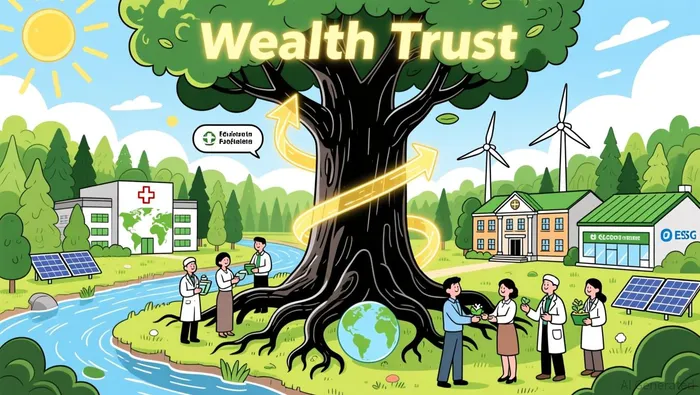
Broader Trends in Family-Led Impact Philanthropy
Buffett's strategy is part of a larger movement toward trust-based philanthropy, where family offices and high-net-worth individuals are reimagining how capital is deployed. The Trust-Based Philanthropy Project, a five-year initiative, has catalyzed sectorwide adoption of this model, with thousands of funders shifting from rigid grantmaking to collaborative, trust-based practices, as a Trust-Based Philanthropy Project report shows. This shift is particularly evident in family-led philanthropy, where values-driven frameworks are increasingly integrated into investment decisions.
For instance, family offices are now allocating 29.2% of their portfolios to private capital-encompassing private debt, equity, and venture capital-to fund ESG-aligned initiatives, according to a O'corian insight. This trend is driven by both ethical imperatives and financial pragmatism: private capital offers greater control over capital deployment and aligns with long-term ESG goals. With $4 trillion in "dry powder" (undeployed private capital) globally, family offices are uniquely positioned to direct funds toward high-impact organizations that address systemic issues like clean energy transitions and social equity, according to the same O'corian analysis.
Implications for ESG Strategies and Capital Deployment
Buffett's model highlights three key implications for ESG-focused investors:
Structural Alignment with High-Impact Organizations: Family offices are embedding ESG criteria into their governance structures, often through investment committees that prioritize measurable outcomes, as Alpadis notes. For example, Buffett's donations to the Bill & Melinda Gates Foundation Trust-a trust-based entity-ensure that capital is directed toward scalable solutions in global health and education, according to AcquirersMultiple. This mirrors ESG fund structures that tie financial returns to social metrics, such as carbon reduction or literacy rates.
Private Capital as a Mechanism for Systemic Change: The rise of specialized fund structures-such as single-investor private funds and protected cell companies-enables family offices to deploy capital in ESG initiatives while maintaining governance control, as O'corian reports. These vehicles are particularly attractive in jurisdictions like the Cayman Islands, where regulatory frameworks support tailored impact investments.
Intergenerational Stewardship: Buffett's emphasis on involving his children in philanthropy underscores the importance of aligning ESG strategies with family values. Younger generations, who prioritize sustainability and social justice, are driving demand for ESG investments that reflect their ethical priorities, according to Alpadis. This generational shift is reshaping capital allocation, with family offices increasingly favoring ventures that balance profit with purpose.
How Investors Can Align with Mission-Driven Philanthropy
For institutional and individual investors, the lessons from Buffett's model are clear. First, adopting trust-based frameworks-where capital is granted flexibility to respond to emerging challenges-can enhance the scalability of ESG initiatives. Second, leveraging private capital through structures like impact funds or foundations allows for targeted deployment in sectors such as renewable energy or affordable housing. Finally, integrating ESG criteria into governance models-through KPIs, stakeholder engagement, and transparent reporting-ensures accountability and long-term impact, as Alpadis notes.
As Buffett's philanthropy demonstrates, the future of ESG investing lies not in transactional donations but in systemic capital deployment that bridges wealth creation with societal progress. For investors, the challenge-and opportunity-is to build portfolios that reflect this duality, ensuring that capital serves both financial and ethical imperatives.







Comentarios
Aún no hay comentarios